26 November 2026 · 6 min read
Do I Need a Bone Graft for a Dental Implant? When and Why
By Dr. Park Junsun, Korean board-certified specialist in Integrated Dentistry
Hello, I'm Dr. Park Junsun, director of The Reborn Dental Clinic in Suwon.
During an implant consultation, many patients are worried when they hear that "a bone graft may be needed." Will the surgery be bigger? How much longer will treatment take?
Not everyone needs a bone graft for an implant. But the amount and shape of the jawbone is an important factor in planning treatment.
This article explains why a bone graft is sometimes needed, how the decision is made, what research says about the results, and what recovery after surgery is like.
- After a tooth is removed, the jawbone usually becomes narrower and lower, with much of the change in the first 3 months.
- A 3D CT scan shows whether there is enough bone and whether grafting can be done at the same time as the implant or beforehand.
- In one 5-year study, implants in grafted bone and natural bone had similar survival rates; smoking raised the risk of failure.
- Grafting can add some discomfort and several months to treatment.
Why is a bone graft sometimes needed?
After a tooth is removed, the jawbone that supported it gradually shrinks over time.
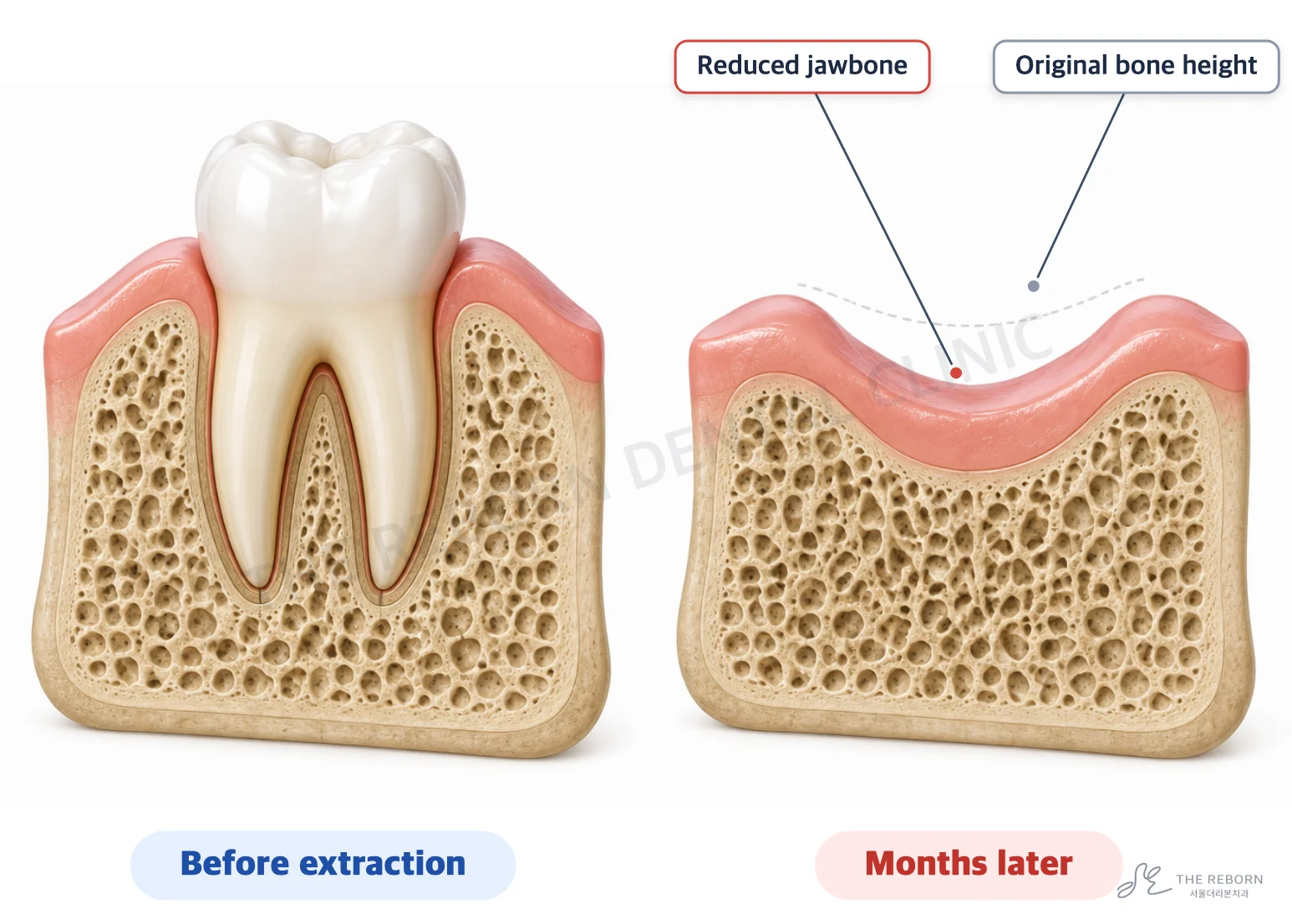
Once the tooth root is gone, the bone no longer receives the stimulation it used to, and both its width and its height tend to decrease.
A literature review published in 2014 summarised the changes in the jawbone after an extraction:
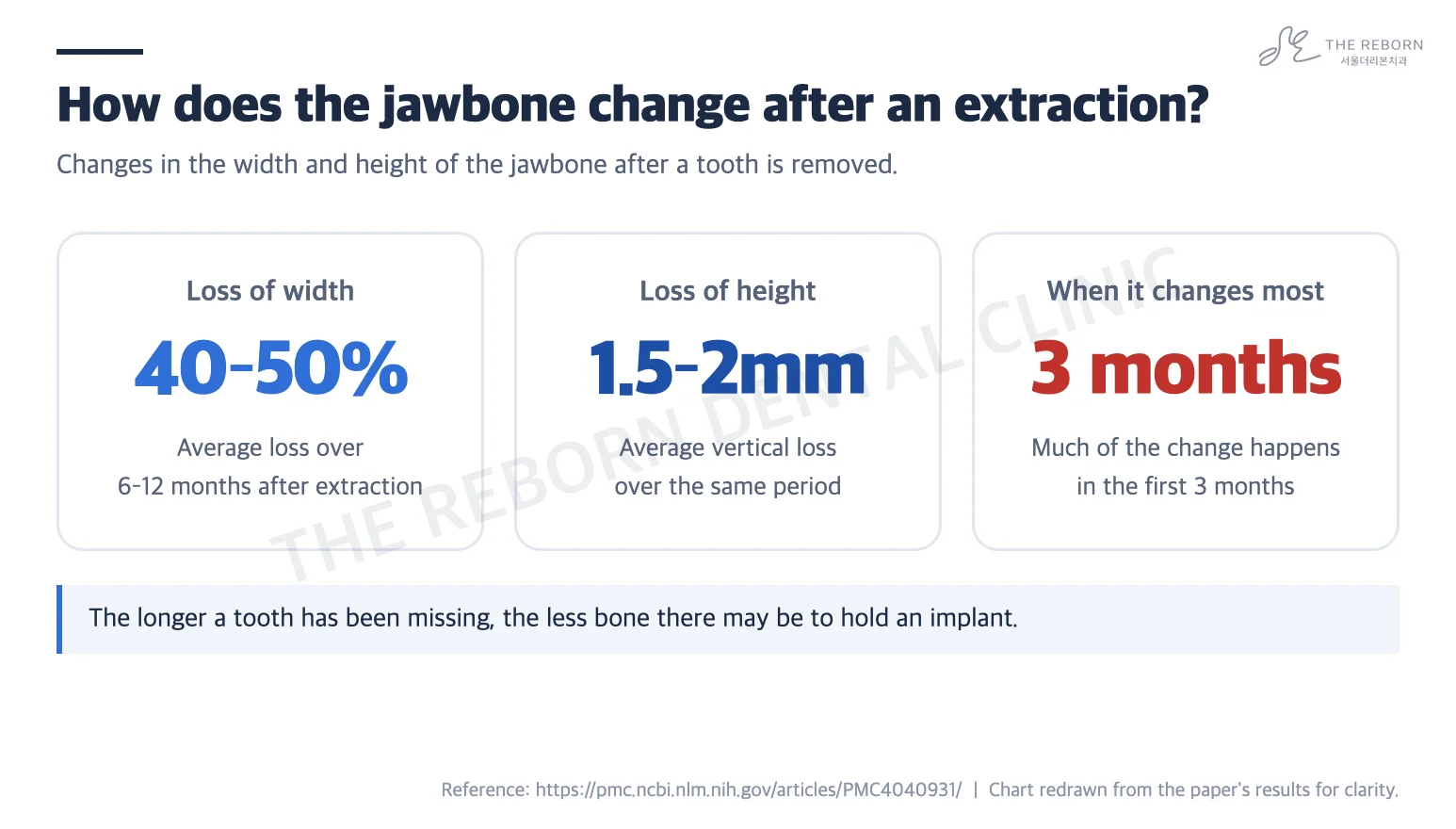
These are averages from the studies the review looked at, so the change in any one person can be different.
If a tooth has been missing for a long time, or bone was lost along with it because of gum disease, there may not be enough bone to hold an implant firmly.
A bone graft for an implant fills in the missing bone so that the implant can settle securely inside the bone.
How does a dentist decide whether there is enough bone?
You can't tell the condition of the jawbone just by looking at the gum, so it is checked with a 3D CT scan.
A CT scan shows the width and height of the bone, as well as the distance to the nerve canal in the lower jaw or to the sinus in the upper jaw, and the density of the bone.
If the bone is thin, part of the implant screw may be left outside the bone when it is placed. That area is then covered with bone graft material.
Depending on how much bone is missing, the graft and the implant may be done together, or the bone may be built up first and the implant placed later.
| At the same time | In stages | |
|---|---|---|
| How it is done | Implant placement and bone graft together | Bone graft first, then the implant after healing |
| When it is considered | When the bone defect is relatively small | When much of the bone width or height is missing |
| Number of surgeries | 1 | 2 |
A review article published in 2026 proposed sorting bone defects into three levels, based on how much of the surrounding bone wall was left to support the graft. It is a classification proposed by the authors with example cases, not a study of treatment results.
It explained that defects with the surrounding bone walls still present can be expected to give relatively predictable results, while defects with no bone walls are more difficult.
Even for the same "bone graft", the method and the length of treatment can differ depending on the shape and size of the defect. That is why an accurate CT diagnosis comes first.
When you plan implant treatment, checking the bone first also helps you get an idea of the order of treatment and how long it will take overall.
Does a bone graft change how well the implant does?
Some patients worry about whether an implant placed in grafted bone will last.
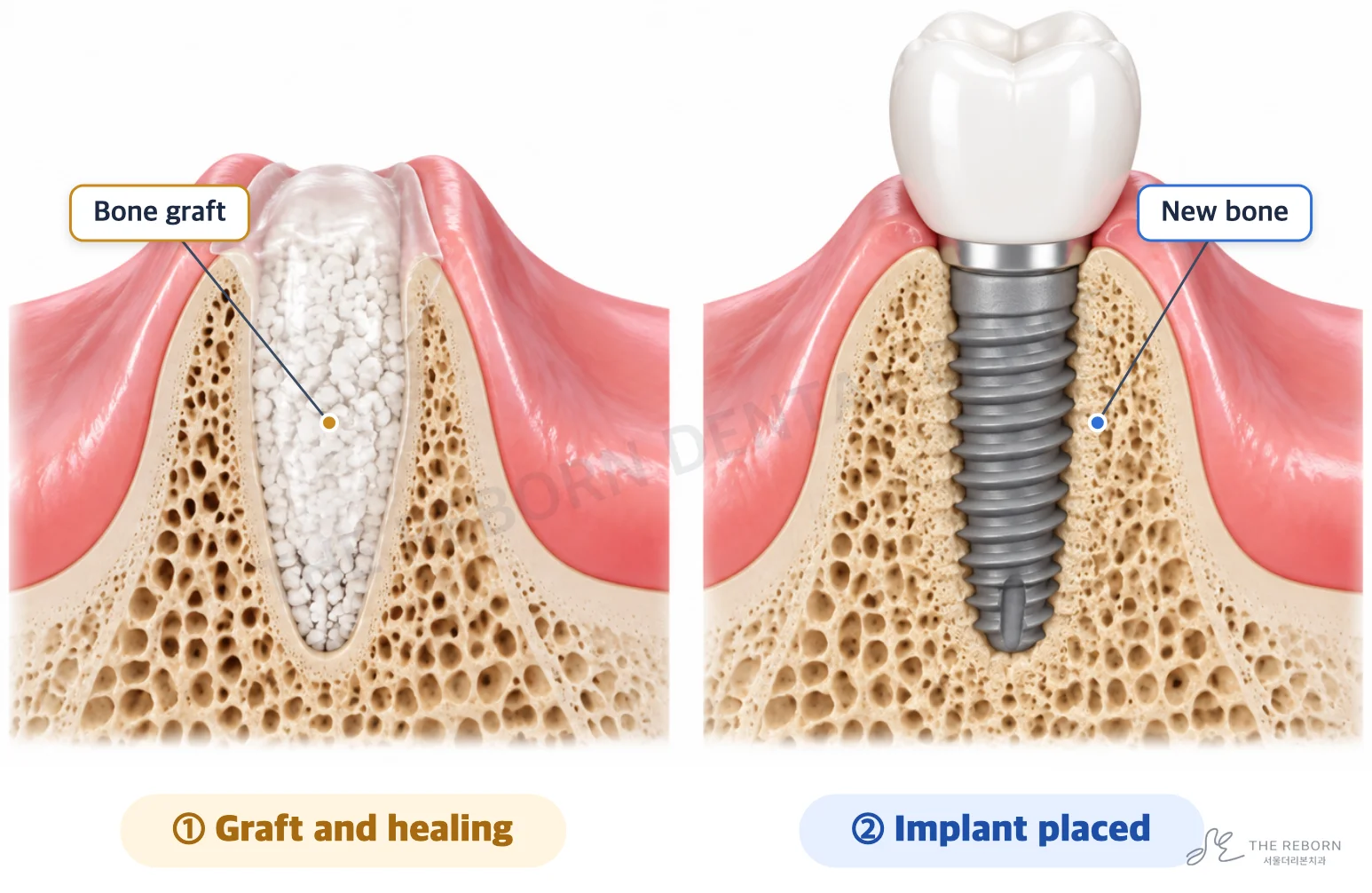
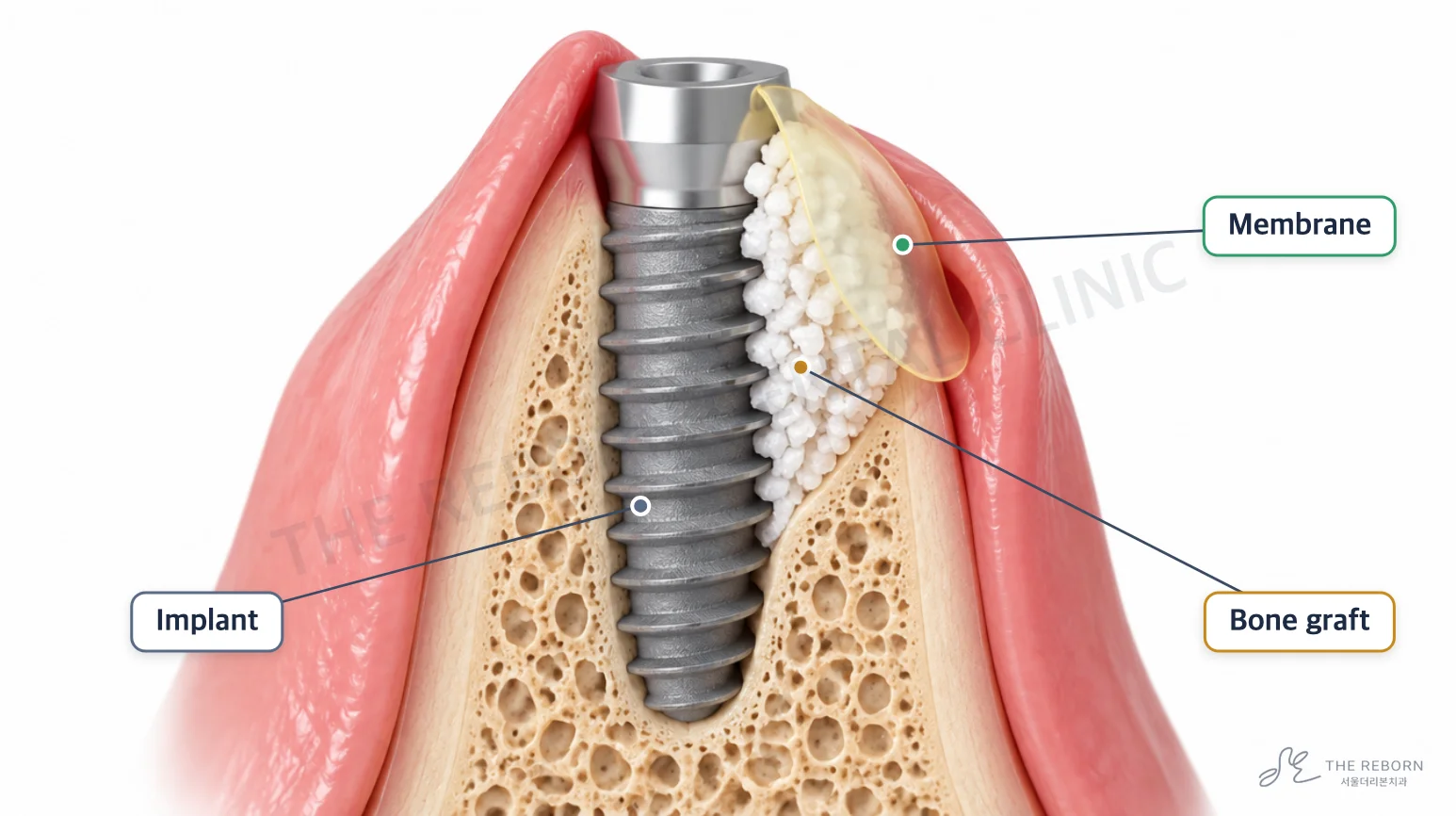
Over time, bone graft material blends with the surrounding bone and keeps the space open so that new bone can grow into it.
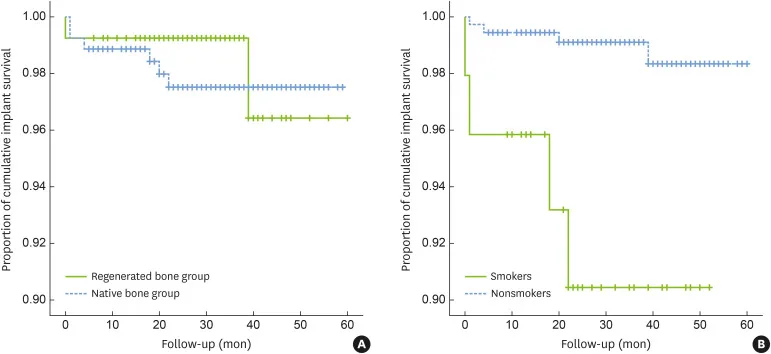
A 2020 study at a Korean university hospital compared the 5-year cumulative survival of 397 implants, depending on whether bone had been grafted.
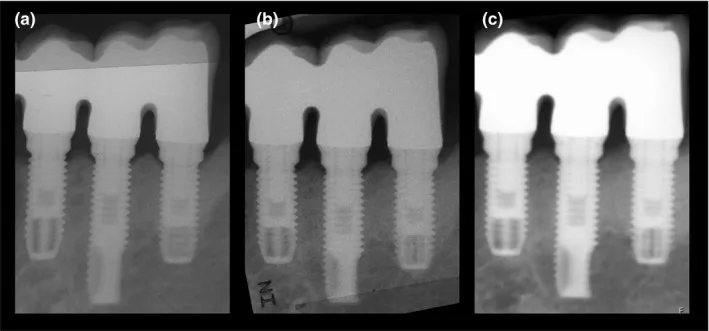
Another study followed implants placed with bone grafting, and implants in untouched bone for comparison, for about 23 years. Survival was 89.3% and 90.2% in the two grafted groups and 93.8% in untouched bone, with no significant difference. Only 39 of the original 72 patients could be followed to the end, so the groups were small.
However, the studies differed in their patients and grafting methods, so they can't predict an individual result. The condition of your bone and your care habits also need to be considered.
Both studies found that smoking affected how well implants lasted. If you are planning a bone graft, it is worth considering stopping smoking as well.
What are pain and recovery like after a bone graft?
When a bone graft is done at the same time, the surgery covers a wider area than a standard implant surgery, so there may be a little more discomfort.
A study published in 2026 recorded pain for 3 days after surgery, on a scale of 0 to 10.
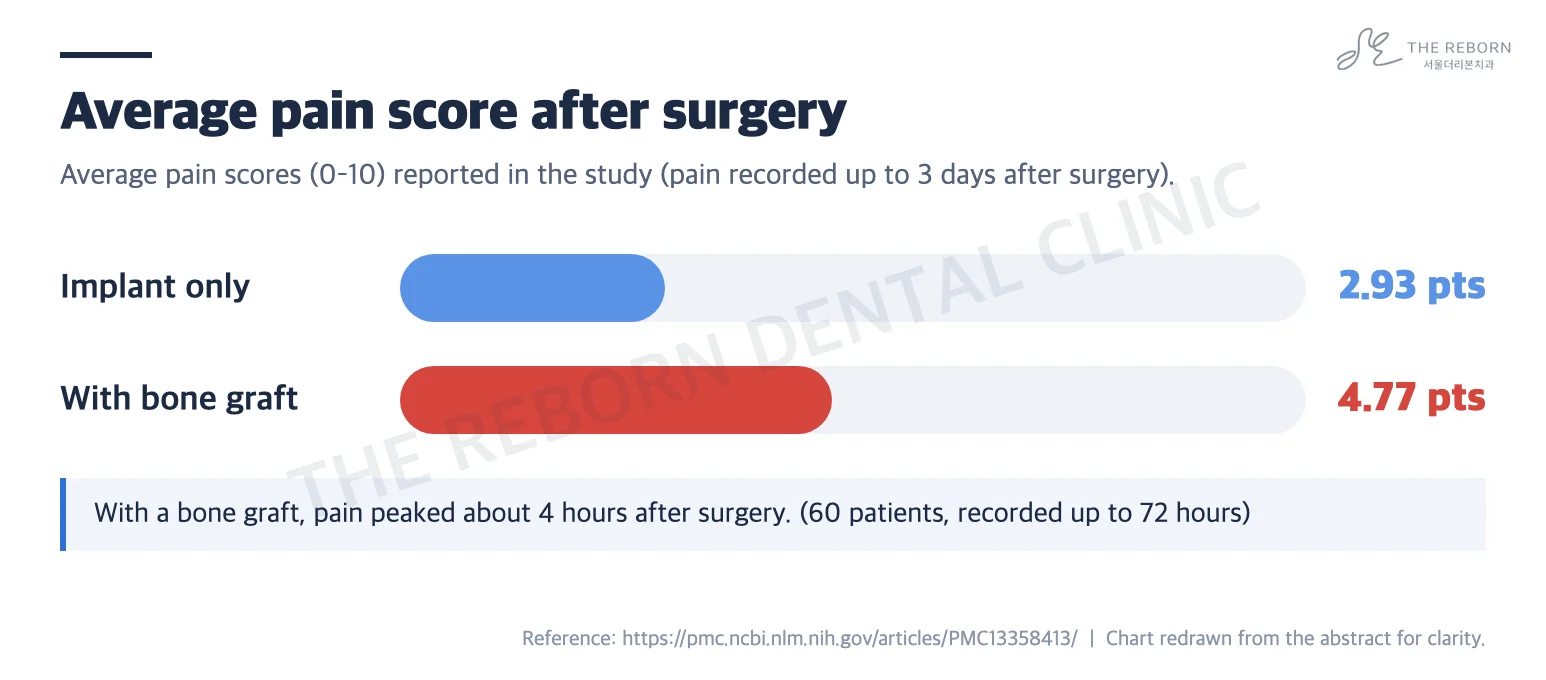
This study included 60 patients, so it gives an idea of the difference rather than a prediction of how much pain any one person will feel.
A separate literature review found that minor opening of the wound was seen at about 9.9% of sites where bone was grafted to add width. This is an average across the studies in the review, which used different methods.
Swelling after surgery often appears over a few days and then gradually goes down.
If the pain keeps getting worse, the swelling doesn't go down, or the wound looks like it has opened, have it checked first rather than waiting for your next appointment.
| When | Keep in mind |
|---|---|
| Day of surgery | Cold compress, take prescribed medication, bite on gauze |
| 1–2 weeks | Don't chew on the surgery side; avoid smoking and alcohol |
| Healing period | Regular visits to check the bone and gum |
It takes several months, depending on the area and its size, for graft material to become solid bone, so implant treatment can take that much longer.
Whether a bone graft is needed for an implant is decided by looking at the amount of jawbone, the shape of the defect and your general health together.
It is best to check the bone fully with a CT scan before treatment, and to keep checking how healing is going after surgery.
Email us at rbdent@naver.com and Dr. Park will reply personally. You can also call 031.225.1410 (+82-31-225-1410) during opening hours. We are near Suwon City Hall Station — directions.
- Jawbone changes after tooth extraction — literature review (2014)
- Classifying bone defects for grafting — review article (2026)
- Implants in grafted vs. natural bone — 5-year survival study (2020)
- Implants with bone grafting — 23-year follow-up of a clinical trial (2021)
- Pain after implant surgery with and without bone graft — clinical study (2026)
- Complications of horizontal bone grafting — systematic review (2020)
This article is general health information about bone grafting for dental implants, not a diagnosis. Whether a graft is needed, the method and the length of treatment depend on the amount and shape of your jawbone, your general health, smoking and your oral hygiene. Research results describe what was observed under each study's conditions and do not guarantee any individual outcome.