GENERAL CARE
Gum Treatment
Left untreated, gum inflammation can damage the bone that supports your teeth. Scaling and root planing remove the cause of the inflammation, and regular maintenance aims to prevent it from returning.
Why gum disease matters
Gum disease begins mildly, with swollen or bleeding gums. Left untreated, the inflammation spreads to the jawbone and the bone supporting your teeth is gradually lost. Because there is often little pain, it can go unnoticed — which is why regular check-ups matter.
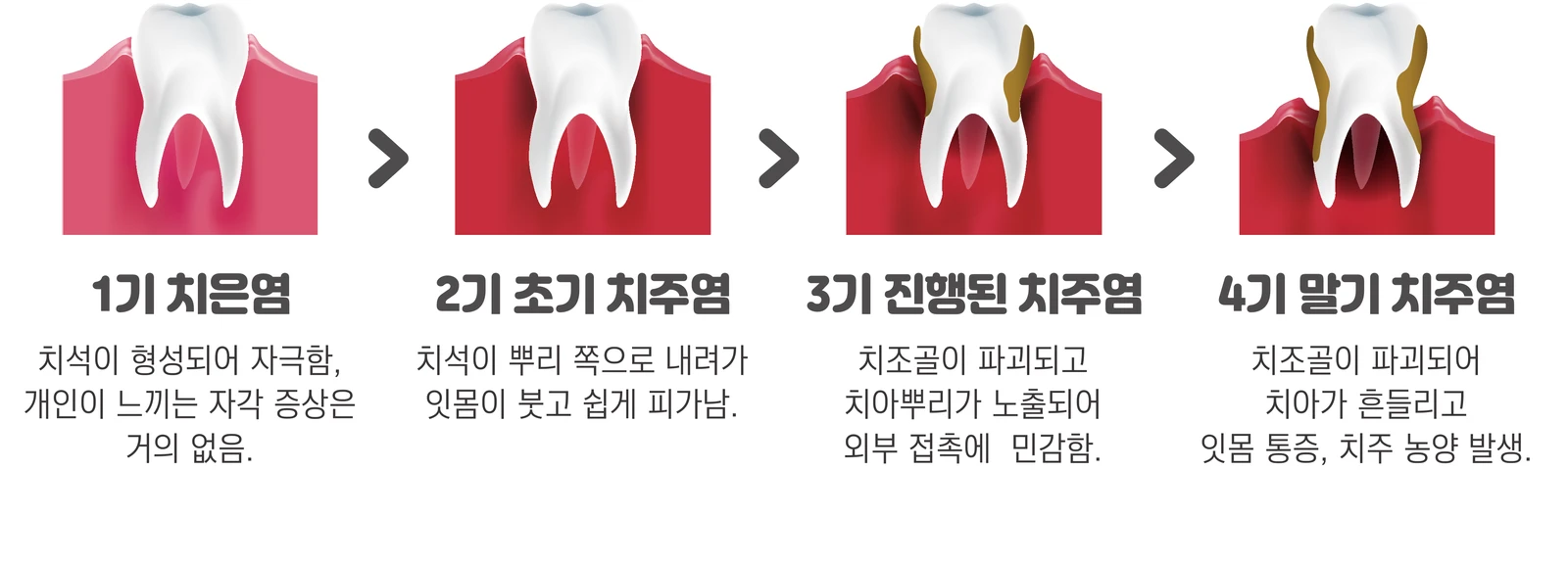
How gum disease is treated
The core principle of gum treatment is removing what does not belong around the tooth — calculus and inflamed tissue. Scaling, root planing and curettage are all non-surgical, performed without cutting the gum; only areas that cannot be reached this way require an incision.
Scaling
Calculus and bacterial plaque built up between the tooth surface and the gum are removed, reducing the cause of inflammation.
Root planing
Calculus deep in the gum pocket is removed and the root surface is smoothed, making it easier for the gum to reattach to the tooth.
Curettage
Inflamed gum tissue that is discharging pus is removed, and the periodontal pocket — the deepened gap between gum and tooth — is eliminated.
Flap surgery
Where curettage cannot reach, the gum is opened so the deeper area can be seen and treated directly.
- After root planing and curettage, the inflammation subsides and swelling and discharge resolve.
- Scaling is covered by national health insurance for those aged 19 and over
- Once per year, from January 1 to December 31
Why ongoing care matters
Inflammation can return if care lapses after treatment. Regular scaling and check-ups to keep an eye on your gums are the surest way to prevent further bone loss.
These are actual cases treated at our clinic. Results vary from person to person, and side effects may occur.
← Back to general care