GENERAL CARE
Wisdom Tooth Extraction
The difficulty of removing a wisdom tooth varies greatly with its position and angle. Panoramic and CT imaging let us confirm the distance to the nerve in advance, so the extraction can be planned safely around how the tooth is impacted.
Wisdom tooth extraction: simple in principle, demanding in practice
Wisdom teeth emerge behind the molars, usually between the ages of about 10 and 21. In Korean they are called "love teeth" because they appear at an age when one first knows love; they are also known as third molars.
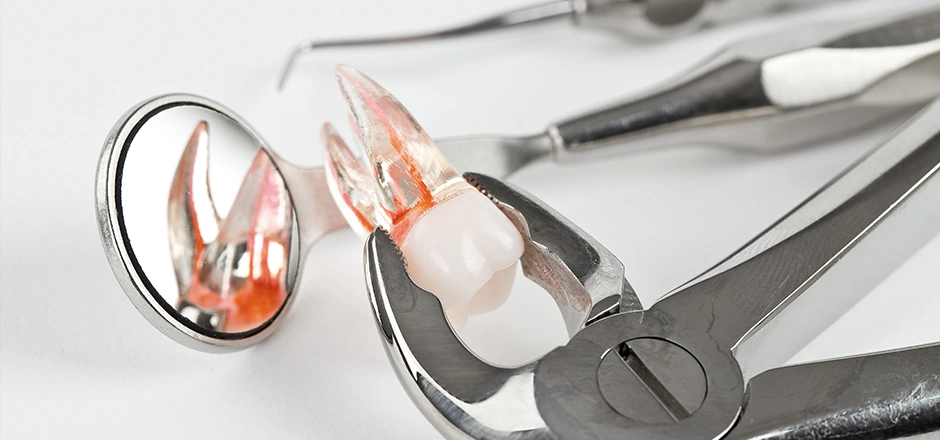
Types of wisdom tooth
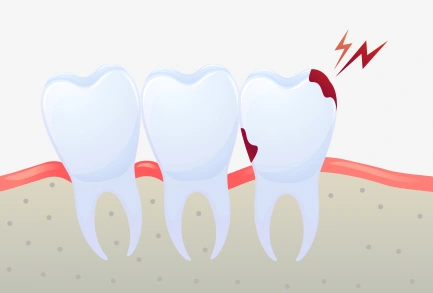
Decayed wisdom tooth
Sitting right at the back, wisdom teeth are hard to reach with a toothbrush, so decay and gum disease develop easily.
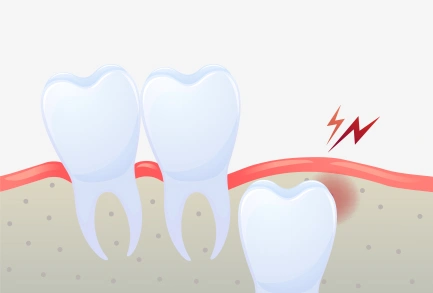
Impacted wisdom tooth
A wisdom tooth trapped in an abnormal position can cause inflammation and pain, so extraction is usually advisable.
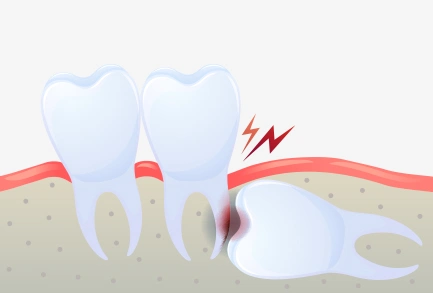
Horizontally impacted wisdom tooth
A wisdom tooth lying on its side presses against the root of the molar in front, and can cause inflammation or damage the nerve in the jaw.
Why wisdom teeth are removed
The wisdom tooth itself decays because a brush cannot reach it
Food traps between the wisdom tooth and the molar next to it, so the neighbouring tooth decays too — and this often causes bad breath.
The gum around the wisdom tooth becomes inflamed, swelling the gum and cheek
Severe inflammation can lead to cysts, tumours or osteomyelitis.
Inflammation causes the bone around the wisdom tooth to resorb
As the bone around the wisdom tooth is lost, the bone supporting the adjacent molar can be lost with it.
The wisdom tooth pushes neighbouring teeth out of position
This can crowd the teeth and lead to a poor bite.
Pressure on the jawbone causes persistent pain
Pain can occur even without decay, and in severe cases the pressure may fracture the jawbone.
Do wisdom teeth have to be removed at a university hospital?
We carry out wisdom tooth extractions safely, drawing on wide experience and detailed dental CT imaging. These are demanding procedures: the tooth is often lying on its side and buried in bone, and it must be removed without damaging the inferior alveolar nerve that runs nearby.
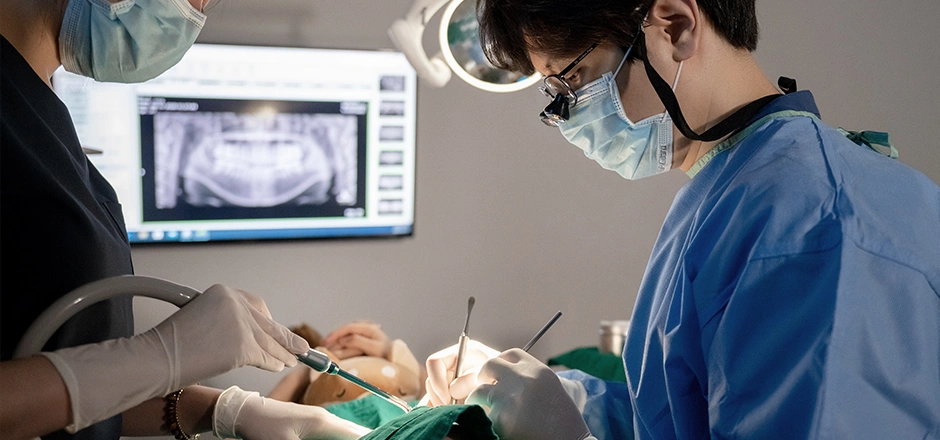
An actual extraction case
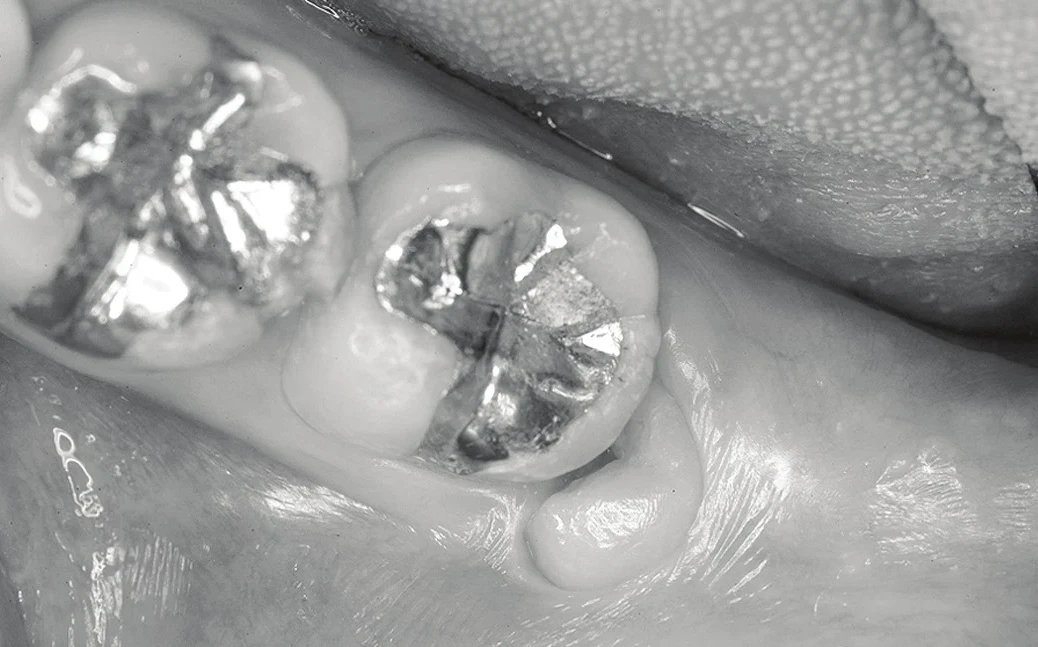
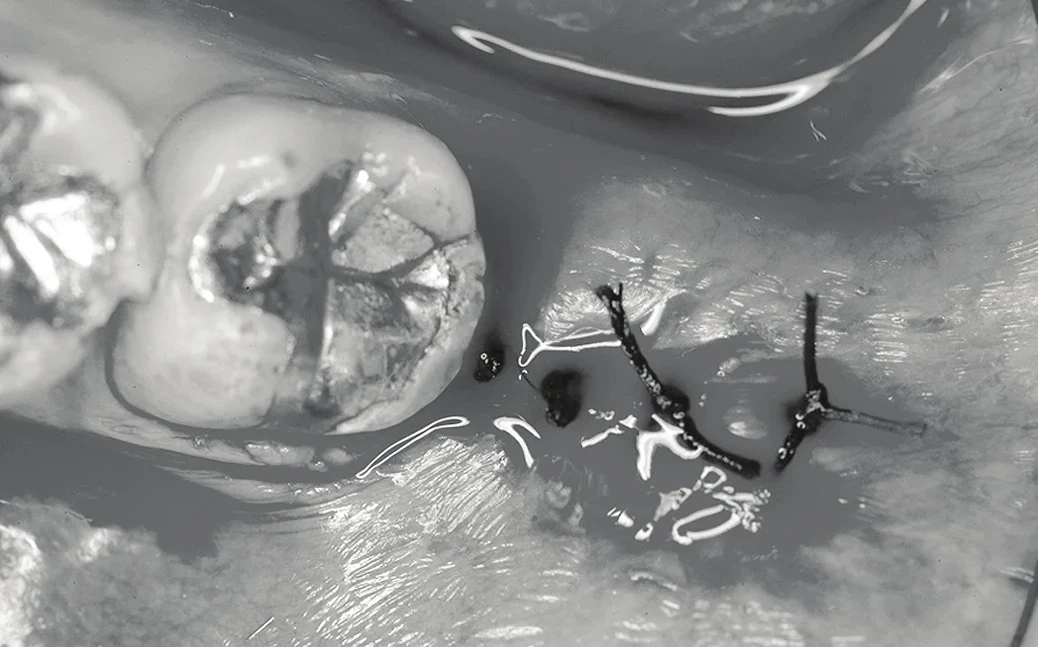
These are actual cases treated at our clinic. Results vary from person to person, and side effects may occur.
← Back to general care