GENERAL CARE
Cracked Tooth
Recurring pain with no visible decay can be a sign of a fine crack in the tooth. The earlier it is found, before it reaches the root, the better the chance of saving the natural tooth.
Tooth pain with no sign of decay
A hairline crack in a tooth — most common from the fifties onward — is usually caused by biting hard foods, clenching or grinding, or an old, large filling. Because the pain tends to come and go early on, it is easily mistaken for decay. Left alone, the crack can spread down to the root and the tooth itself can be lost.
When the tooth can be saved
If the crack has not reached the root, root canal treatment followed by a crown can usually preserve the tooth.
When it becomes difficult
If the crack has already progressed deep into the root, the natural tooth often cannot be saved and extraction may be unavoidable.
Actual treatment cases
Case 1 — root canal treatment, finished with an all-ceramic crown
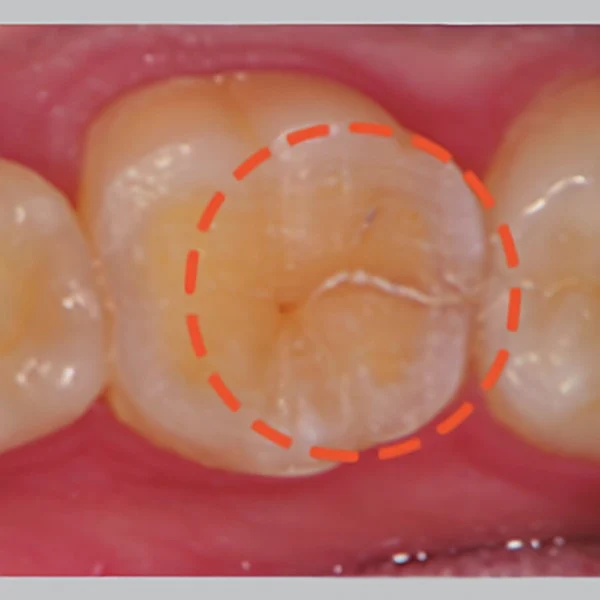 01Initial state — a fine crack begins to show.
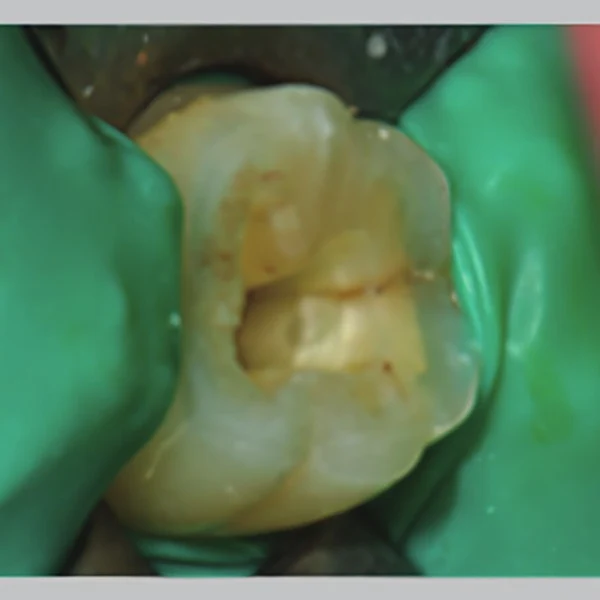 02Checking the crack — the chewing surface is opened to assess how far it extends.
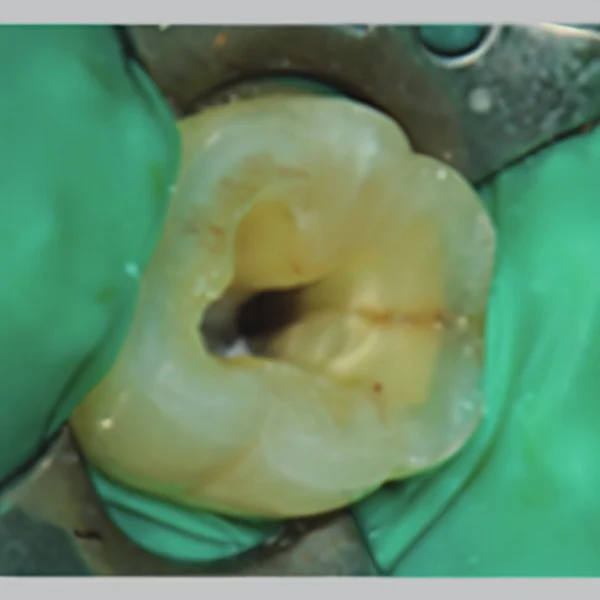 03Root canal treatment — nerve tissue damaged by the crack is removed.
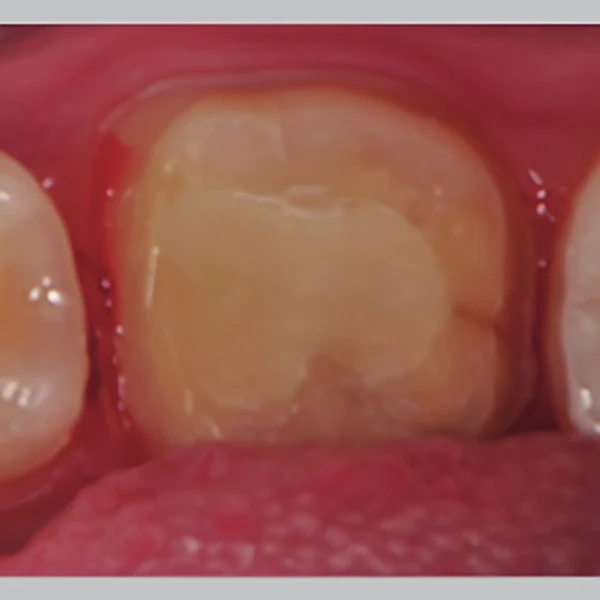 04Core build-up — the weakened tooth structure is filled and reinforced.
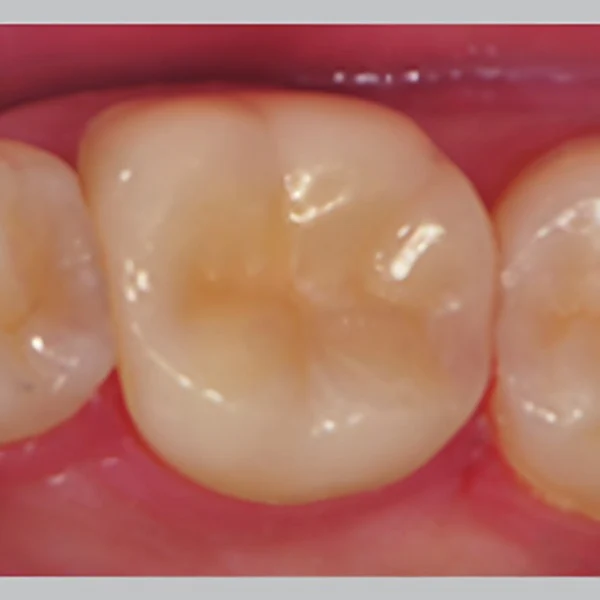 05All-ceramic crown — the tooth is capped to complete the treatment.
Case 2 — root canal treatment, finished with a gold crown
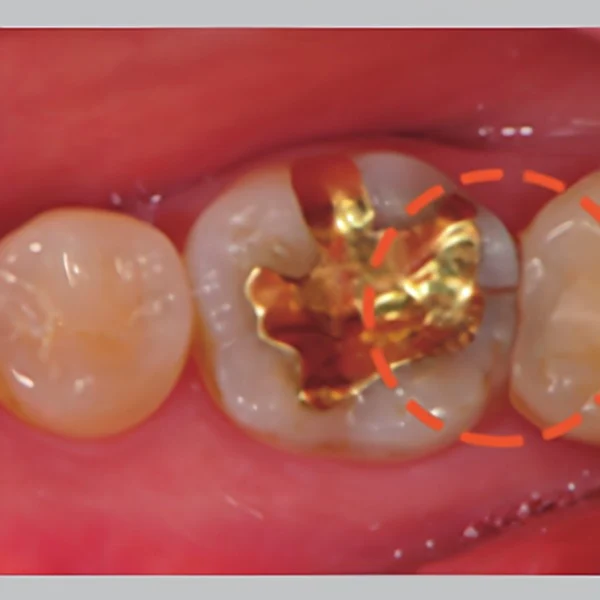 01Initial state — a crack is visible beside an existing filling.
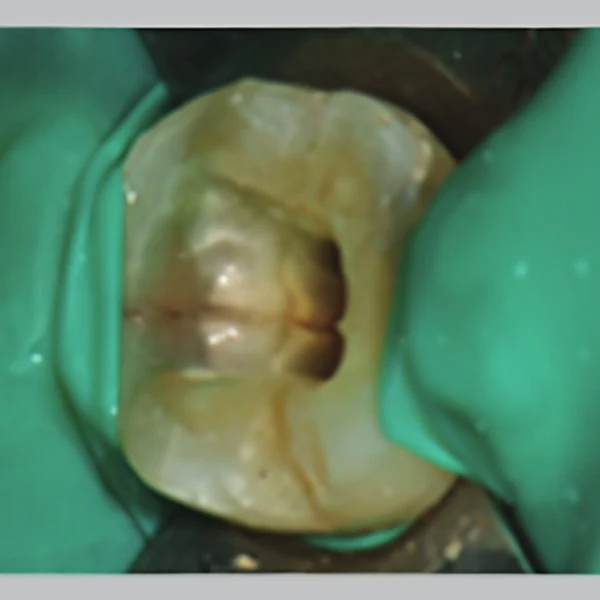 02Checking the crack — the chewing surface is opened to assess how far it extends.
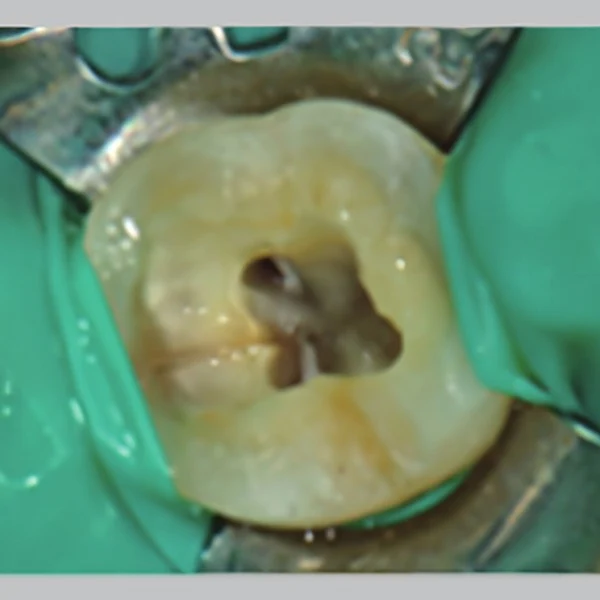 03Root canal treatment — nerve tissue damaged by the crack is removed.
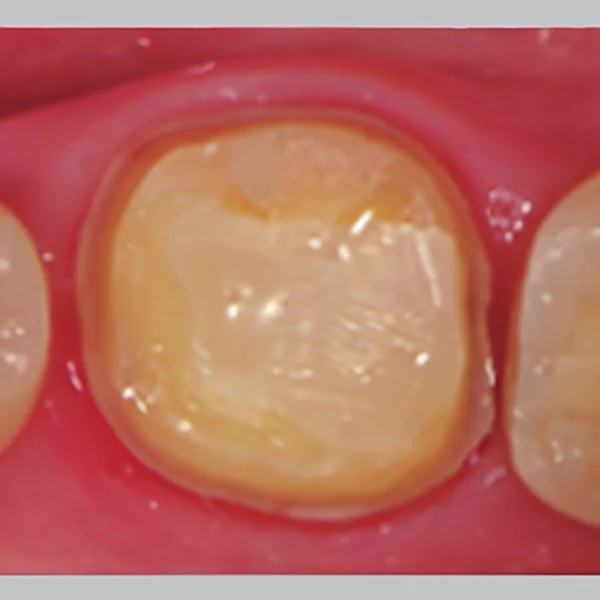 04Core build-up — the weakened tooth structure is filled and reinforced.
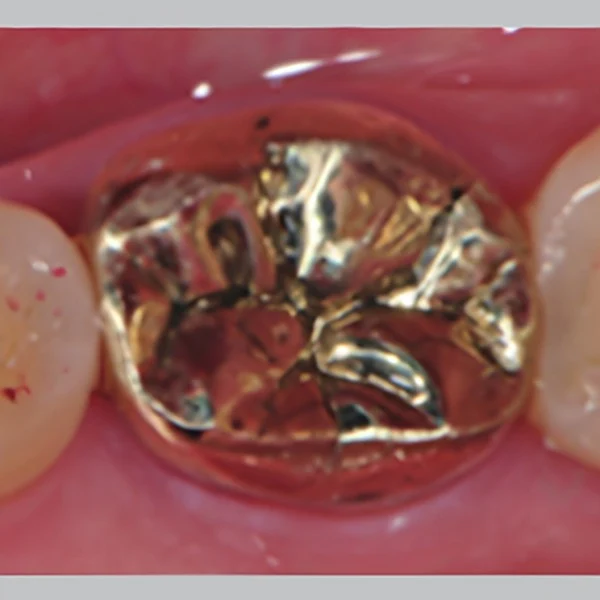 05Gold crown — chosen for this heavy chewing area for its strength and durability.
When treatment was not possible
The case below shows a crack that had already reached deep into the root, so the natural tooth could not be saved and extraction was necessary. It includes an image of the extracted tooth.
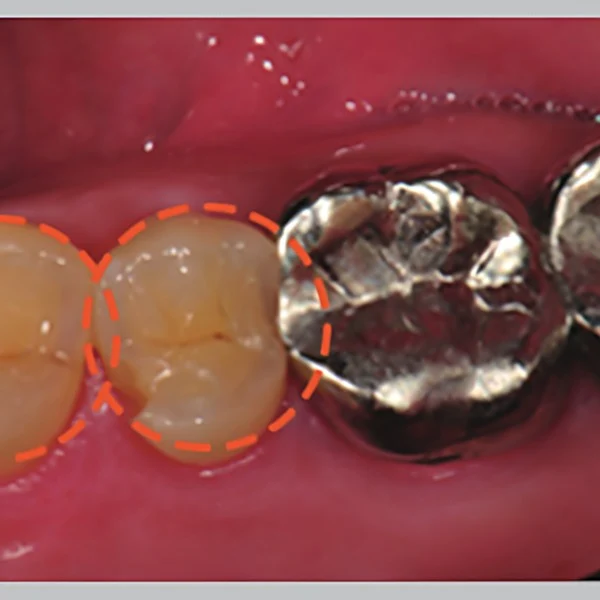 01First visit — a fine crack is visible between the teeth.
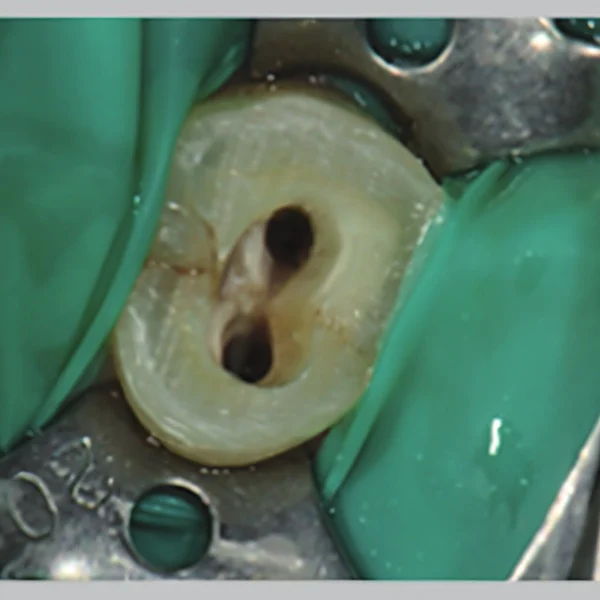 02During root canal treatment — the crack is found to extend down toward the root.
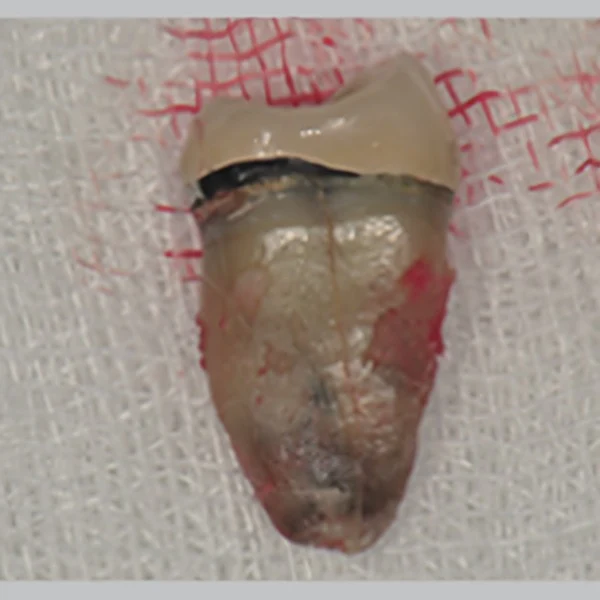 03A crown was placed, but the crack remained deep in the root.
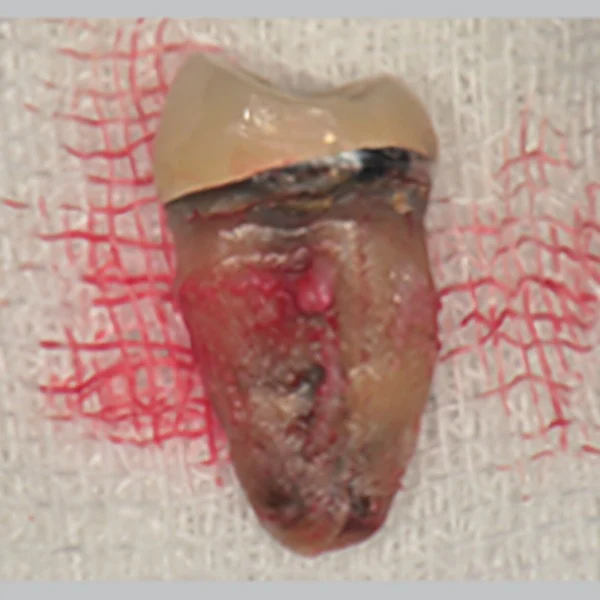 04Pain eventually developed and the tooth had to be extracted.
Not every cracked tooth results in extraction — the earlier it is found, the better the chance of saving the natural tooth.
These are actual cases treated at our clinic. Results vary from person to person, and side effects may occur.
← Back to general care