GENERAL CARE
Root Canal Treatment
When decay or trauma inflames the nerve inside a tooth, root canal treatment preserves the natural tooth. Thorough cleaning and filling reduce the chance of reinfection, and the tooth is then finished with a crown so it can be used for years to come.
Root canal treatment: restoring a damaged tooth
When a tooth hurts because of decay or a fracture, the nerve and blood vessels causing the pain are removed and the canal is filled with biocompatible material to restore the tooth's function. Decay reaching the nerve, or sudden trauma, causes severe pain; the infected nerve itself cannot be saved, but removing and disinfecting it and sealing the canal preserves the natural tooth. Because the tooth is weaker afterwards, a crown is placed to restore its function.

The root canal procedure
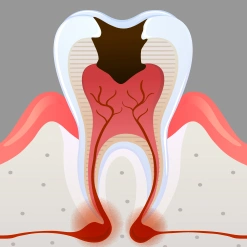 01Removing inflammation — the decay and the nerve at the root are exposed and the inflamed tissue removed.
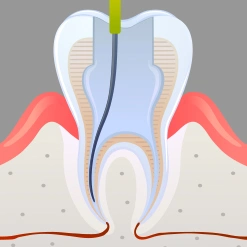 02Removing inflammation — once all inflamed tissue is cleared, the nerve is removed.
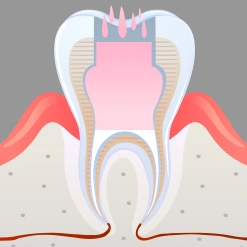 03Filling — the root canal is sealed and the crown portion filled with composite or similar material.
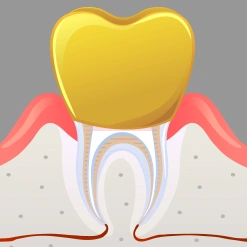 04Finishing — the crown portion is covered with gold or ceramic to complete the treatment.
Benefits of root canal treatment

Your tooth lasts longer
Treating the damaged nerve and restoring the tooth with a crown extends the life of the tooth.
It is more economical
Root canal treatment with a crown costs less than the bridge, denture or implant that would be needed once the tooth is lost.
There is little pain during treatment
Our painless anaesthesia system keeps discomfort during root canal treatment to a minimum.
Intentional replantation
When root canal treatment fails, an apicoectomy can usually save the natural tooth — but towards the back of the mouth the bone becomes thicker and that approach may not be possible. In such cases the tooth is extracted, about 3 mm of the root tip is removed, the canal is treated from the root end, and the tooth is then replanted in its original socket.
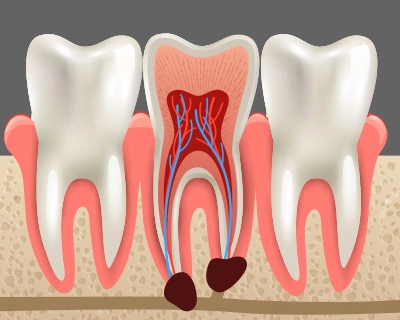 01The inflammation at the root tip is assessed.
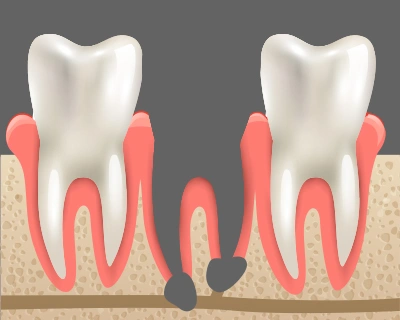 02The tooth is extracted and the inflammation and its cause removed.
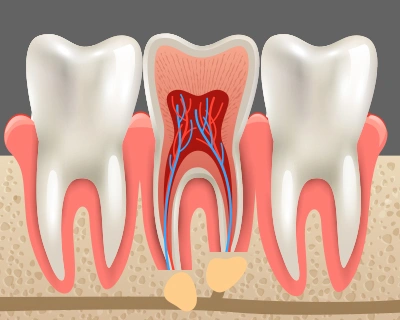 03The tooth is replanted into the socket it came from.
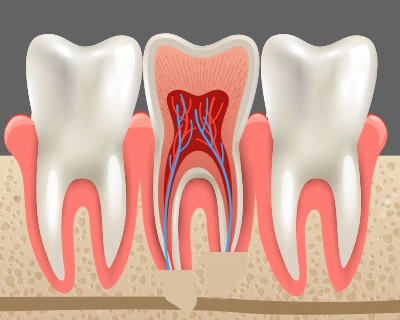 04The tooth is splinted and held in place while it heals.
Actual before & after photographs
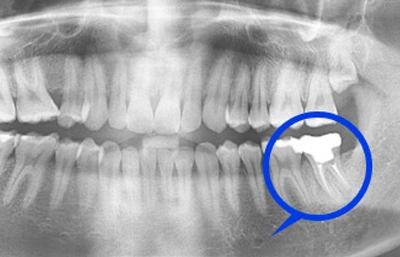
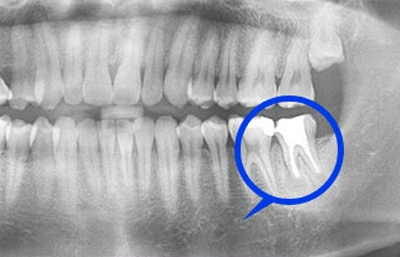
A case in which the tooth was replanted in its original position rather than being lost.
These are actual cases treated at our clinic. Results vary from person to person, and side effects may occur.
← Back to general care