26 November 2026 · 7 min read
Dental Crowns: What to Check Before Getting One
By Dr. Park Junsun, Korean board-certified specialist in Integrated Dentistry
Hello, I'm Dr. Park Junsun, director of The Reborn Dental Clinic in Suwon.
Whether it comes up during a cavity treatment or after a tooth breaks, hearing "this tooth needs a crown" makes many people worried.
Will healthy parts of the tooth be ground down too? How long will the crown last? You probably have quite a few questions.
A dental crown covers and protects a weakened tooth, but it is not applied to every tooth by the same rule. This article covers when a crown is considered, what is checked before it, how much tooth is trimmed, and how the material is chosen.
- A crown is considered when a tooth is too weak to rely on a filling alone.
- Before a crown, the nerve, gums, bone and remaining tooth are checked.
- The more of the tooth a restoration covers, the more of it is trimmed.
- Material is chosen by the tooth's position, biting force, space and colour.
When is a dental crown considered?
A dental crown covers the chewing surface and sides of a tooth like a cap, protecting what is left of the tooth.
It is considered when a tooth has become too weak to rely on a filling alone.
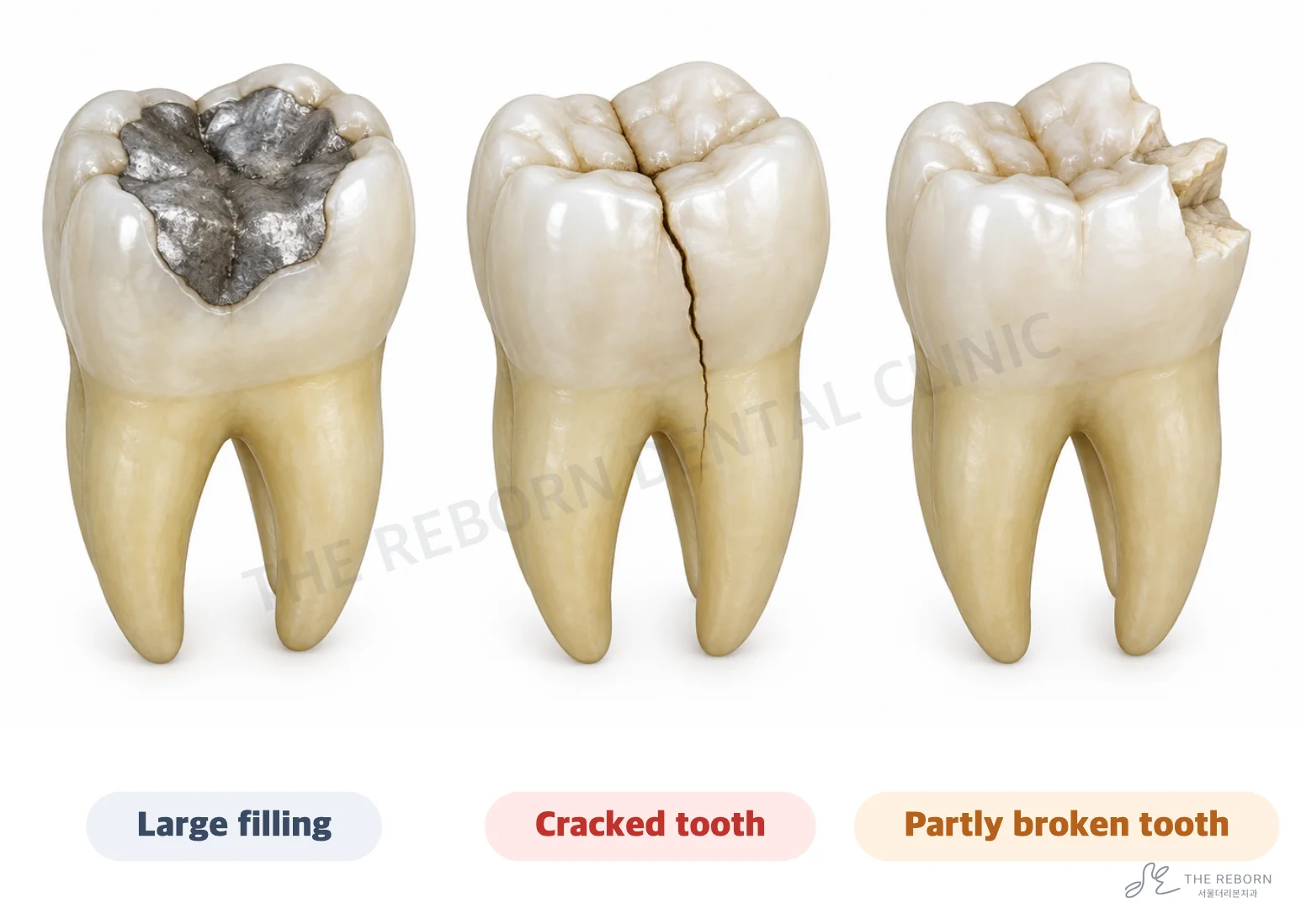
Typical examples are a tooth whose walls have become thin because of a large old filling, a tooth that has partly broken, or a tooth with a crack.
Molars that have had a root canal can also become weaker against biting forces, so a crown is often considered for them.
But a crack doesn't always mean a crown straight away.
A literature review published in 2022 noted that, when a cracked tooth has no symptoms and its structure is intact, there is growing support for monitoring it. It added that evidence for covering the chewing surface is still weak.
Few of the studies had a control group, so this can't be applied directly to everyone. The decision is made by looking at whether there is pain and how deep the crack goes.
What should be checked before getting a crown?
Two teeth can look similar from outside, but the order of treatment can differ depending on what is going on inside.
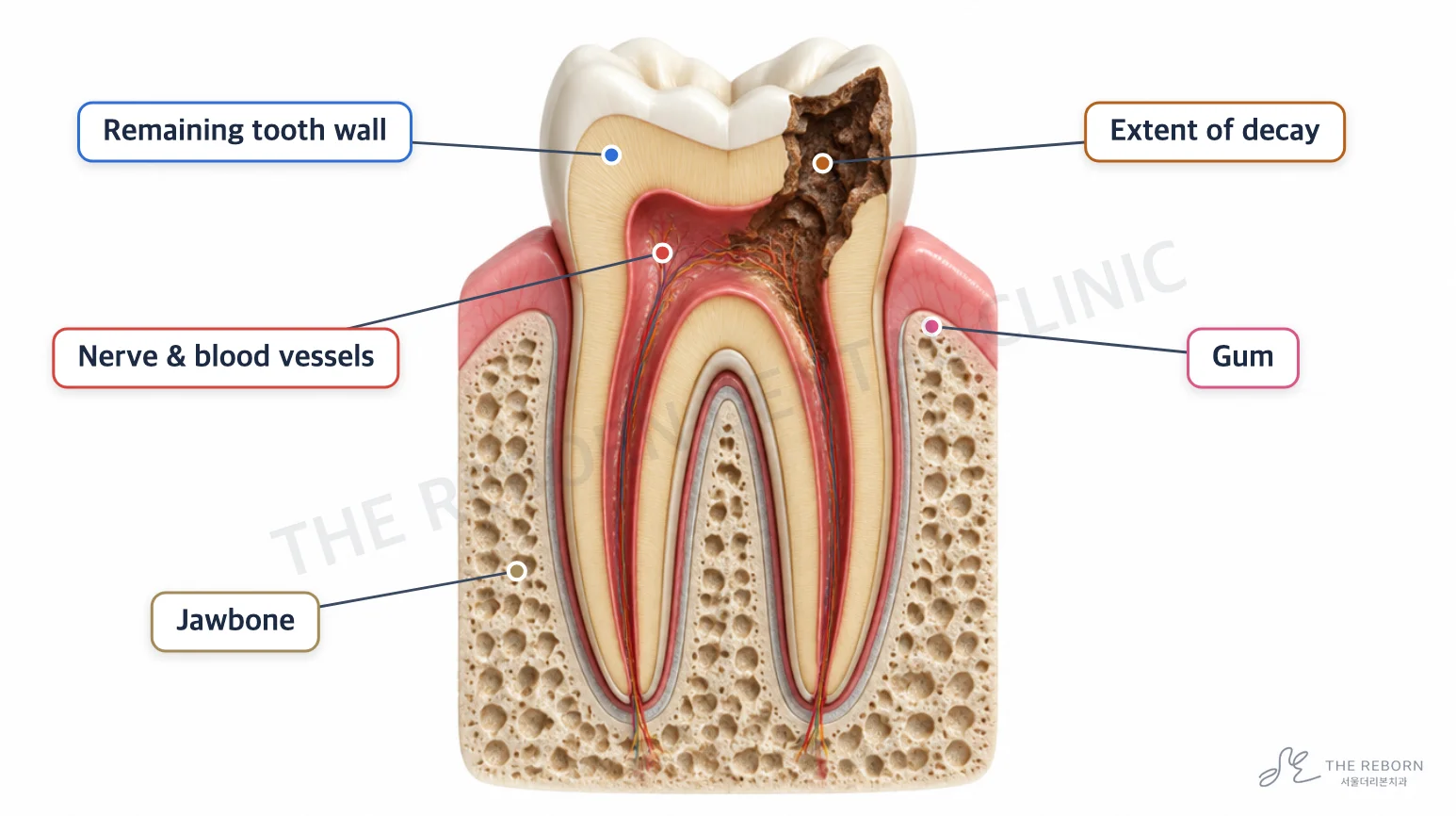
The first things to look at are how close the decay is to the nerve, and whether the gums and bone are healthy.
This is because even when a tooth with a living nerve is crowned, nerve problems can appear over time.
A systematic review published in 2023 analysed 37 studies covering 11,615 teeth. After restorations such as crowns, inlays and bridges, the nerve died in about 5% of teeth.
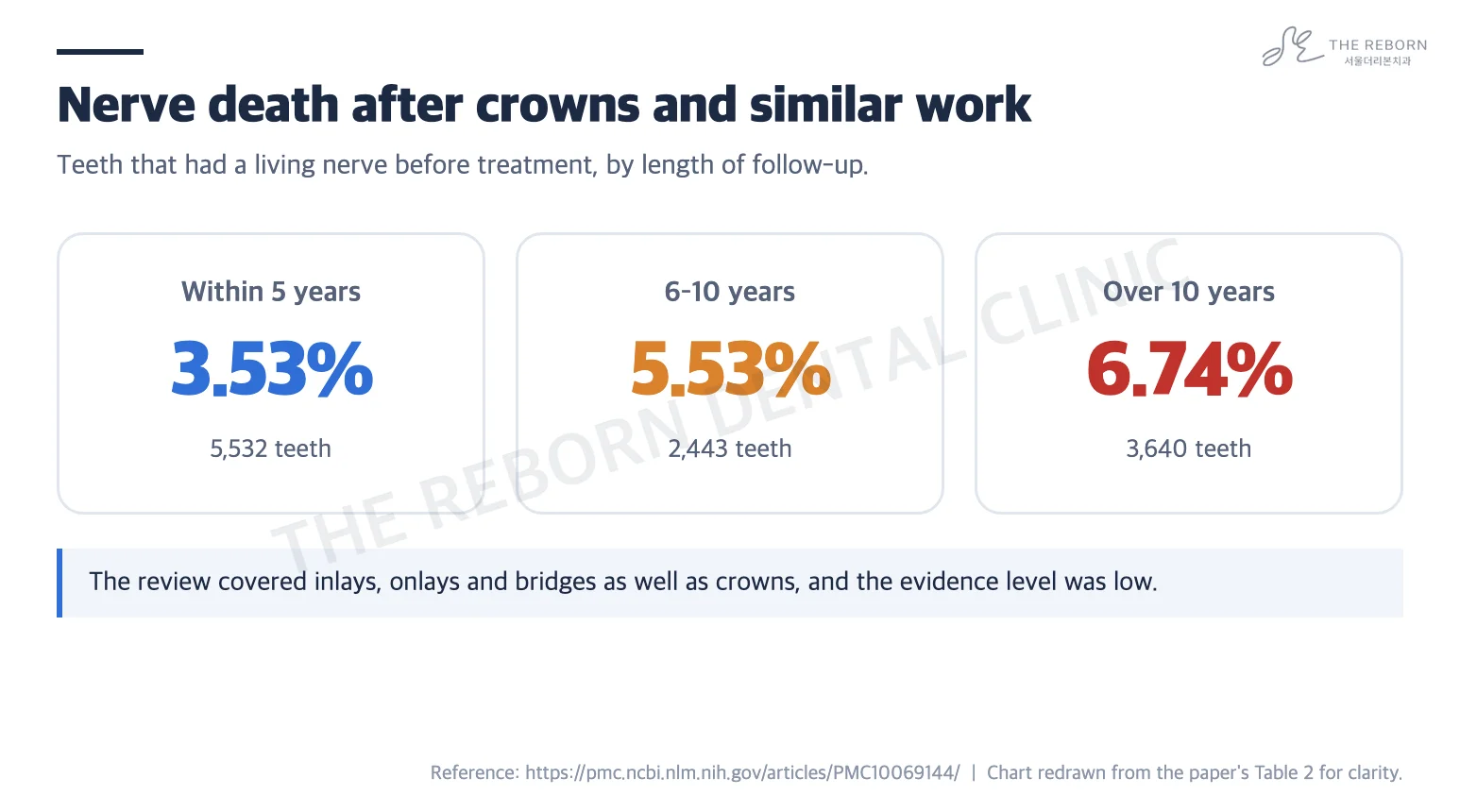
The rate rose with longer follow-up, and was also higher in teeth that had decay or an existing filling before treatment, and when a temporary crown was used for more than two weeks.
However, the evidence level was low and conditions varied between studies, so these figures can't be read as any one person's risk.
That is why a nerve response test and X-rays are checked together before a crown.
The condition of the gums also matters for how long a crown lasts.
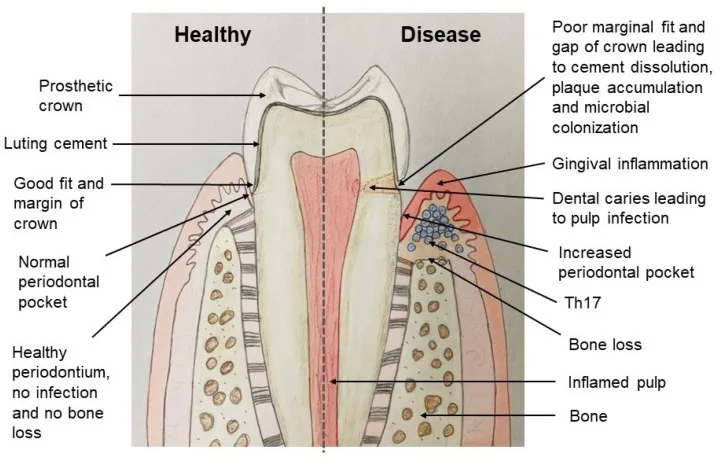
If a gap forms at the crown edge, plaque builds up easily, which can lead to decay and gum inflammation.
A 2026 study of residents in a region of Germany followed the tooth surfaces of 2,158 people for about 7 years.
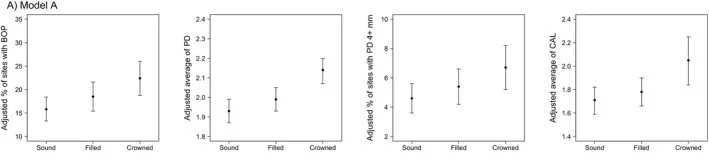
However, this was an observational study in which only about half of those invited took part, so the difference can't be put down to the crown alone.
| Check | What the dentist looks at |
|---|---|
| Extent of decay | How close the decay is to the nerve |
| Nerve | How the nerve responds, and any inflammation at the root tip |
| Gums and bone | Bleeding, gum pocket depth, bone height |
| Remaining tooth | Whether there is enough tooth wall to support a crown |
| Bite | Tooth grinding, and areas where biting force is concentrated |
After checking these points, the dentist decides whether to go ahead with the crown now, or treat the gums or the nerve first.
How much of the tooth needs to be trimmed?
To make room for the crown material, the outside of the tooth is trimmed to an even thickness.
So the more of the tooth a restoration covers, the more of it is trimmed.
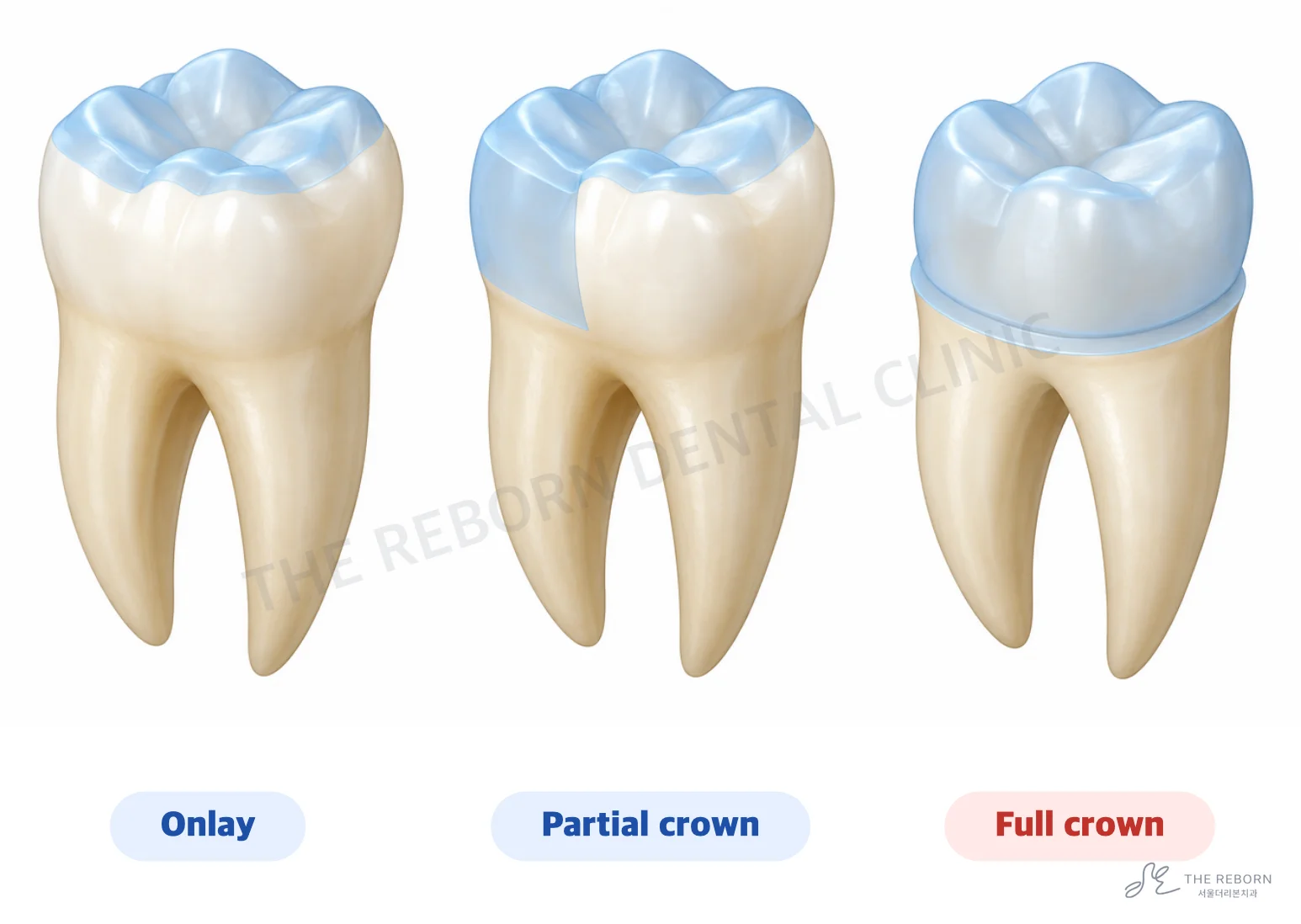
A study published in 2025 compared 720 trimming designs on a model of an upper first molar.
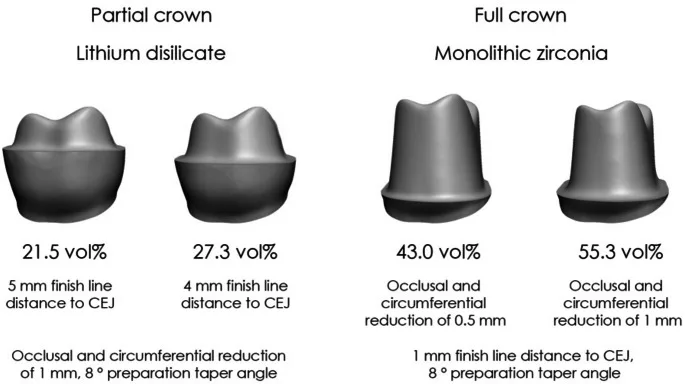
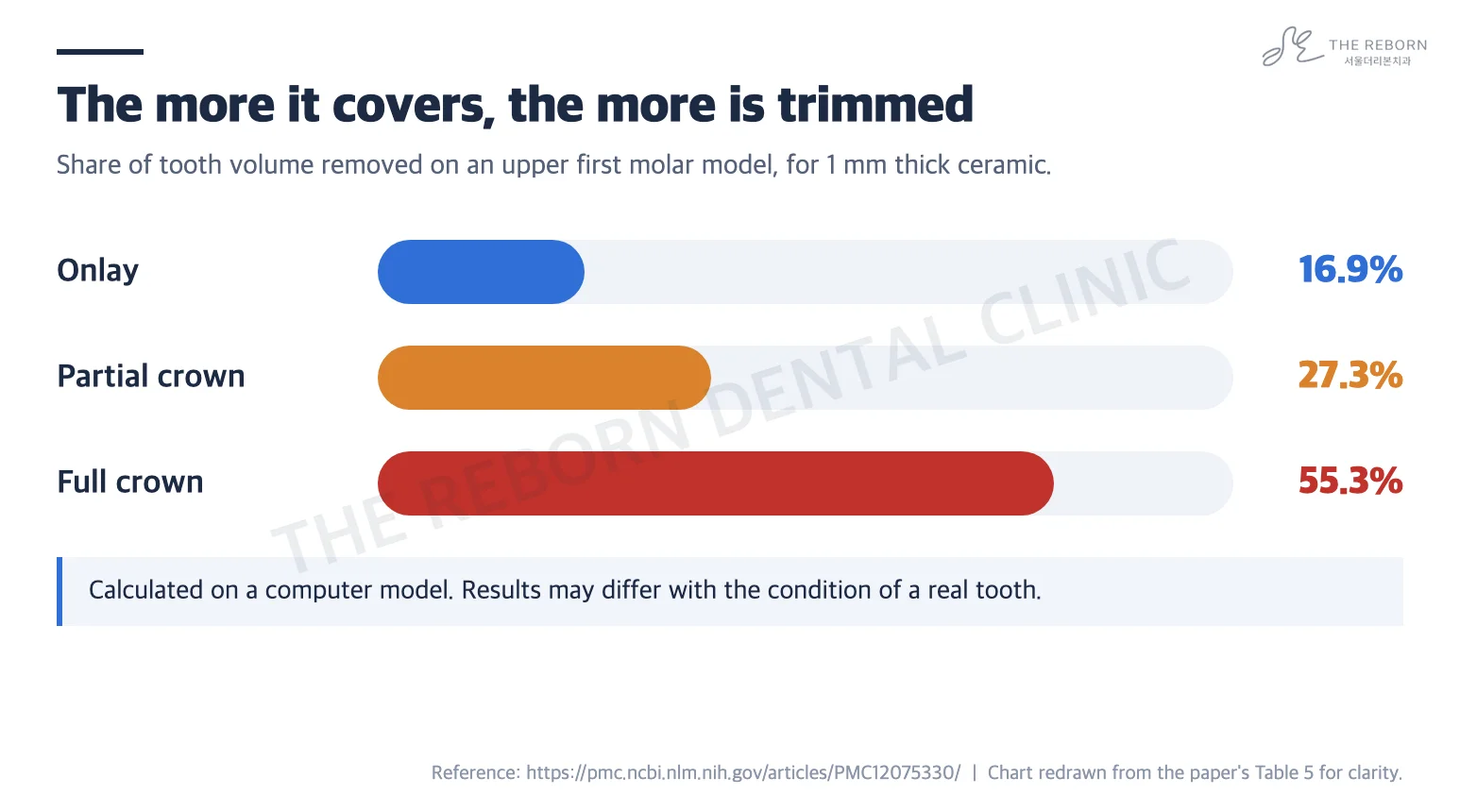
Even with a thinner 0.5 mm zirconia design, a full crown still removed about 43%.
However, these figures come from a single model, and real teeth have often already lost some structure, so the same percentages don't apply directly.
If enough of the tooth is left, options that cover less of it can also be considered.
A 2022 meta-analysis found no clear difference in 3-year survival between onlays or partial crowns and full crowns on back teeth.
However, these were short-term results from 6 studies, so longer-term results still need to be confirmed.
How is the crown material chosen?
The crown material is chosen by looking at the tooth's position, the biting force, the space available and the colour.
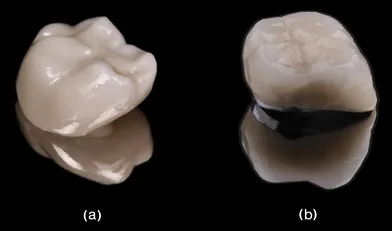
In a randomised clinical trial published in 2025, 60 molar crowns were split between zirconia and metal-ceramic and followed for 5 years.
No crown of either material had to be removed, and one metal-ceramic crown had a small chip in its surface.
However, people who grind their teeth were excluded and the number of patients was small, so it can't be said that one material is better.
| Material | Features | Things to consider |
|---|---|---|
| Zirconia | High strength; often used for back teeth | Translucency differs between products |
| Metal-ceramic | A method used for many years | The porcelain surface can chip; metal can show through |
| Glass ceramic | Natural colour and translucency | Needs enough thickness and good bonding conditions |
Until the final crown is fitted, take care that the temporary crown doesn't come off, and keep to your appointment dates so you don't use it for too long.
Even after a crown is fitted, decay can still start in the tooth at the edge of the crown. Clean along the edge carefully with a toothbrush and floss, and have your gums and bite checked at regular check-ups.
Whether a tooth needs a crown, and how much of it to cover, differs from tooth to tooth. If a tooth has broken or is uncomfortable when you bite, have it checked rather than putting it off.
Email us at rbdent@naver.com and Dr. Park will reply personally. You can also call 031.225.1410 (+82-31-225-1410) during opening hours. We are near Suwon City Hall Station — directions.
- Managing cracked teeth — narrative review (2022)
- Nerve loss after crowns and similar restorations — systematic review (2023)
- Crown edge fit and gum health — narrative review (2022)
- Gum health around crowned and filled teeth — population study (2026)
- Tooth trimming volume for partial and full crowns — model study (2025)
- Partial versus full crowns on back teeth — meta-analysis (2022)
- Zirconia versus metal-ceramic molar crowns — randomised trial (2025)
This article is general health information about the tooth condition, amount of trimming and materials considered for a dental crown, not a diagnosis. The treatment method and how much of the tooth is covered depend on the extent of decay, the condition of the nerve and gums, how much tooth is left and how your teeth bite together. Research results describe what was observed under each study's conditions and do not guarantee any individual outcome.