26 November 2026 · 6 min read
Food Stuck Around a Dental Implant: Why It Happens and What to Do
By Dr. Park Junsun, Korean board-certified specialist in Integrated Dentistry
Hello, I'm Dr. Park Junsun, director of The Reborn Dental Clinic in Suwon.
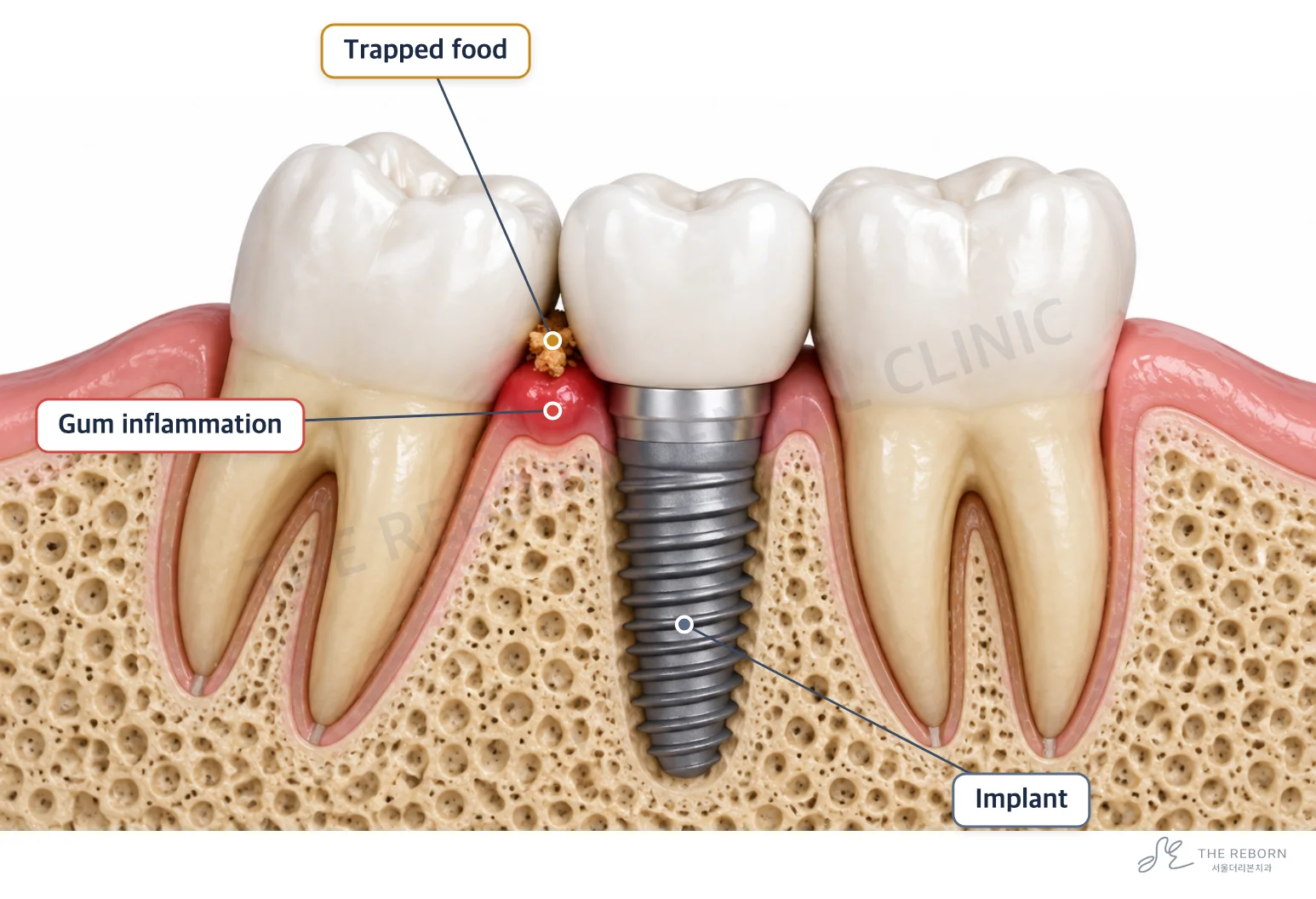
Some patients eat comfortably with their implant for a long time after treatment. Then one day, food such as meat or leafy vegetables starts to get stuck next to it again and again.
It is natural to worry that something went wrong with the original treatment. But food getting stuck around an implant often appears as time passes, and it is something many studies have looked at.
This article explains why it happens, how common it is, what can happen if the food is left there, and how it can be managed.
- An implant is fixed directly to the bone and stays in place, while natural teeth can slowly move over time.
- This can open a small gap between the implant and the tooth beside it, where food gets caught.
- Studies report this kind of gap more often the longer an implant has been in use.
- Food left in the gap can lead to gum inflammation, and check-ups help catch changes early.
Why does food start getting stuck when it was fine at first?
To understand this, it helps to look at how a natural tooth and an implant are attached to the jawbone.
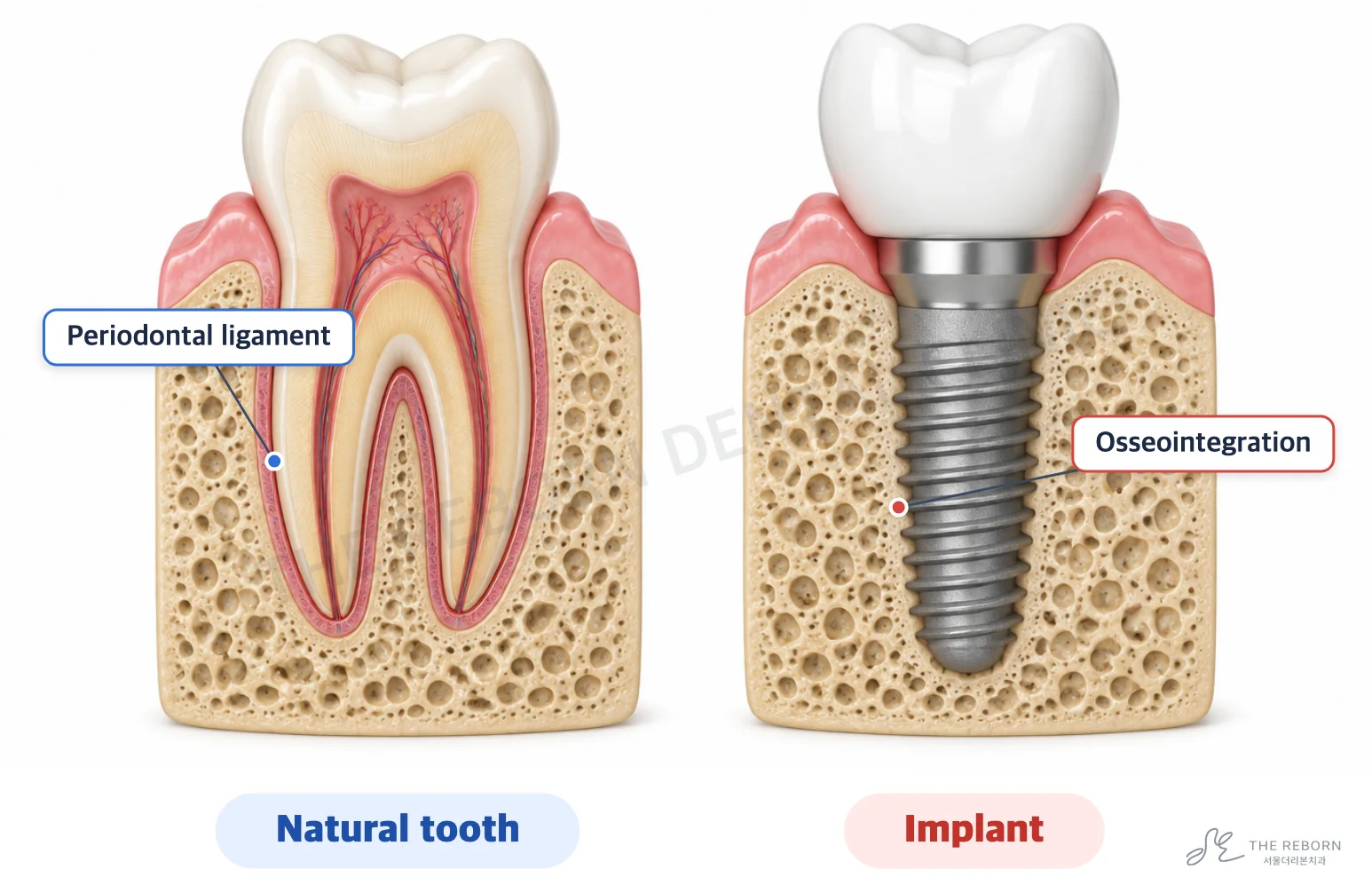
Between the root of a natural tooth and the bone there is a thin layer of fibres called the periodontal ligament. Because of it, a natural tooth can move very slightly.
An implant is different. Its artificial root bonds directly to the jawbone, a process called osseointegration, so it does not change position the way the teeth around it can.
| Natural tooth | Implant | |
|---|---|---|
| How it connects to the bone | Through the periodontal ligament | Bonds directly to the jawbone |
| Tiny movements | Yes | Almost none |
| Position over time | Can shift little by little | Stays where it was placed |
Natural teeth take chewing forces every day and, over many years, they can tend to drift slightly forward. The implant stays where it is, so the contact between the two can slowly loosen, and food gets caught in that gap.
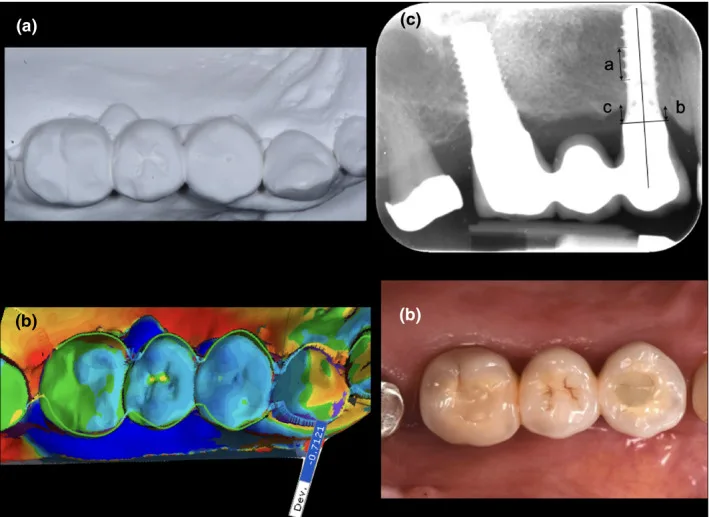
A study published in 2022 followed 80 implants for 10 years or more after the crown was fitted, and compared dental models taken right after treatment with models taken later.
This suggests the change may be linked to the movement of the natural teeth nearby, rather than to a problem with the original treatment. It was one study of 80 implants, though, so the numbers describe that group, not every patient.
How common is it?
A loosening contact between an implant and the tooth next to it is seen more often than many people expect.
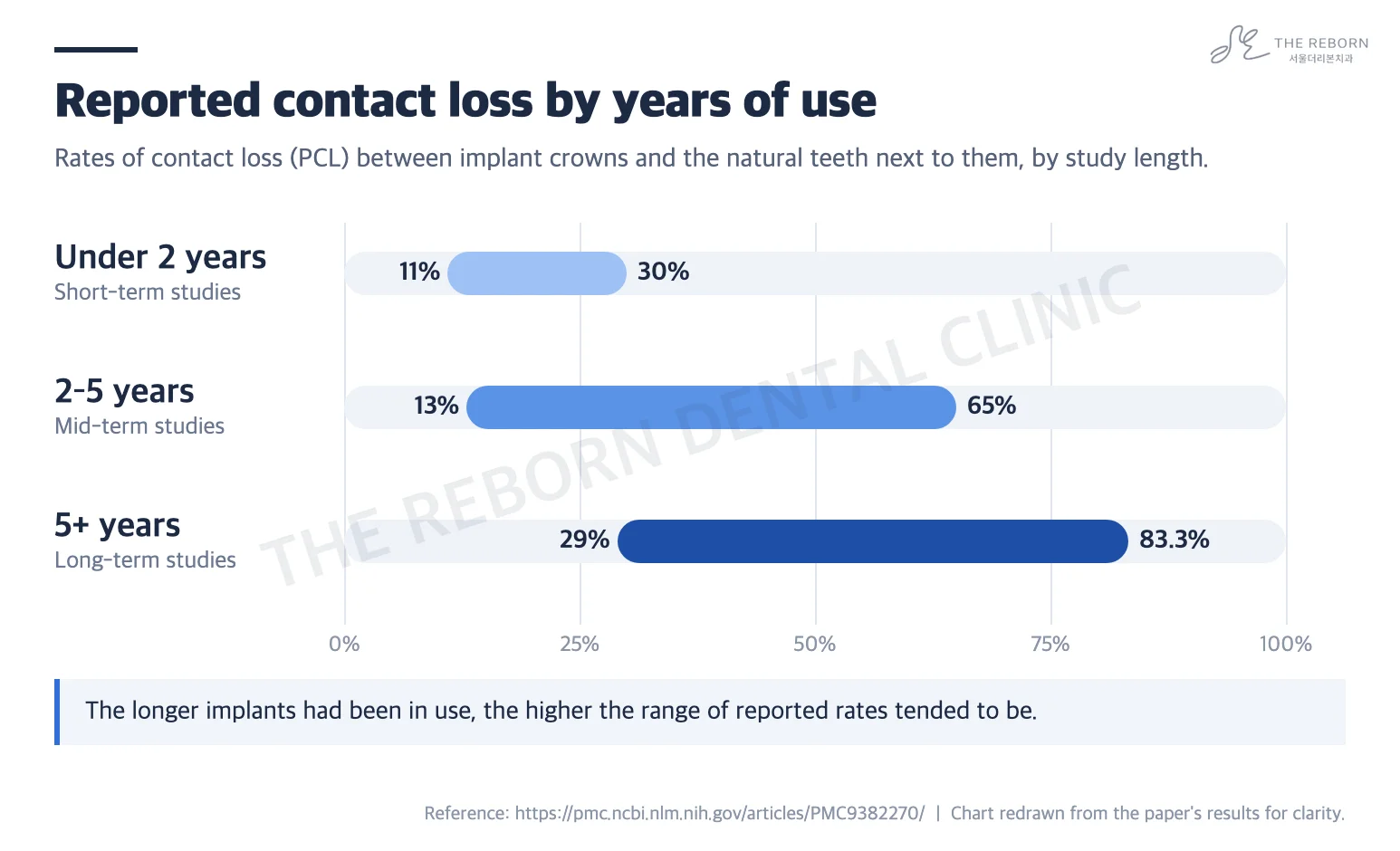
A literature review that analysed 19 studies found that the reported rate rose with the length of time the implant had been in use.
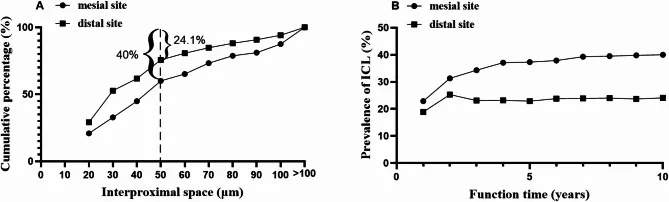
A retrospective study published in 2025 looked at 445 implants in 204 patients treated over a 10-year period. At least one contact had opened in 59.8% of the patients.
A study at a Korean university hospital, published in 2025, examined 142 implants that had been in use for more than 10 years. Contact loss was found at 53.7% of the sites next to the implants.
In both studies it happened more often at the front side of the implant. In the 445-implant study, teeth grinding (bruxism) was linked with it; in the Korean study, implants in the back of the mouth were.
Each study used different patients and different ways of measuring, so the numbers can't be applied directly to any one person. They are best read as showing a general trend.
What happens if food is left stuck there?
Food getting stuck around an implant is not only a nuisance at mealtimes. It can also affect the tissues around it.
If the food is not removed in time, a layer of bacteria (plaque) builds up. The gum can become inflamed, swollen or bleed.
For the natural tooth next to the implant, the risk of decay on the surface that touches the implant also needs to be considered.
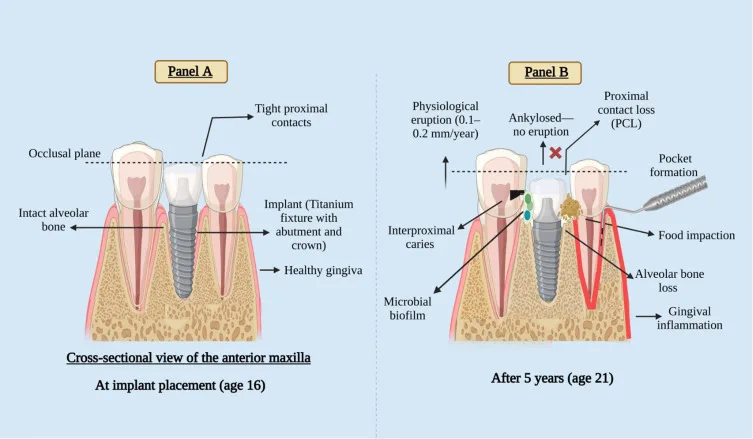
A literature review published in 2026 summarised that contact loss may be linked with food getting stuck, decay on the neighbouring tooth surface, gum inflammation and loss of the bone around it. It is a review of earlier studies, so it describes possible links rather than how often they happen.
In the 10-year study mentioned above, the gum pockets at sites where the contact had opened were on average 0.46 mm deeper than at sites where it had not.
Of course, a slightly loose contact does not cause problems in every case. But if food keeps getting stuck, or your gum is swollen or bleeds, it is a good idea to have it checked.
If a gap has already opened, how is it managed?
At a check-up, the dentist looks at how far the contact has opened and the condition of the gum around it, and then decides how to manage it.
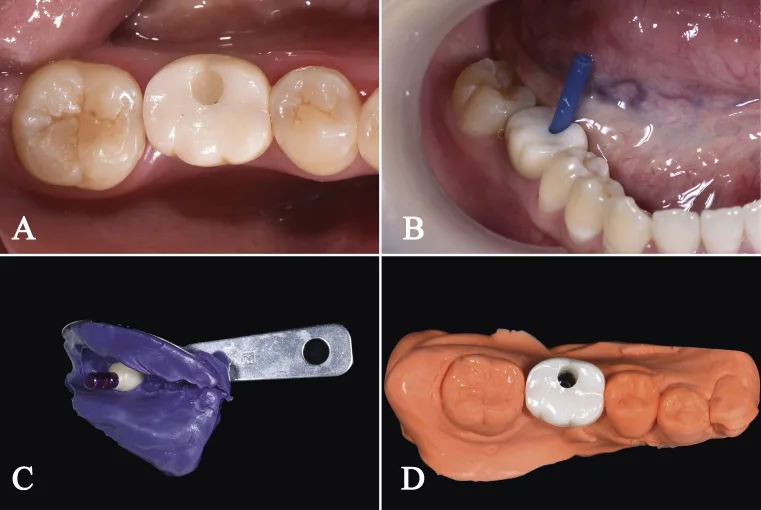
If the implant crown is held by a screw, it can be removed. Material can then be added to the contact area, or a new crown can be made.
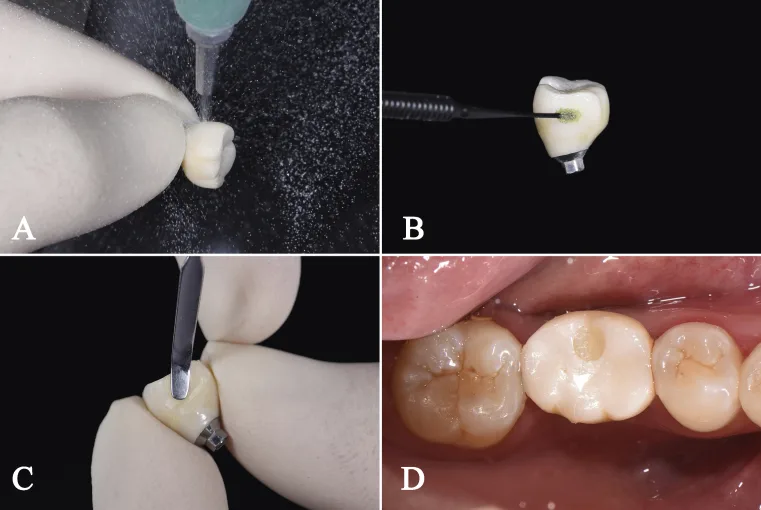
A clinical report published in 2019 described this process of adding resin to the contact surface of a removed crown to close the gap. However, even after the contact is restored, the teeth around it can keep moving, so a gap may open again over time.
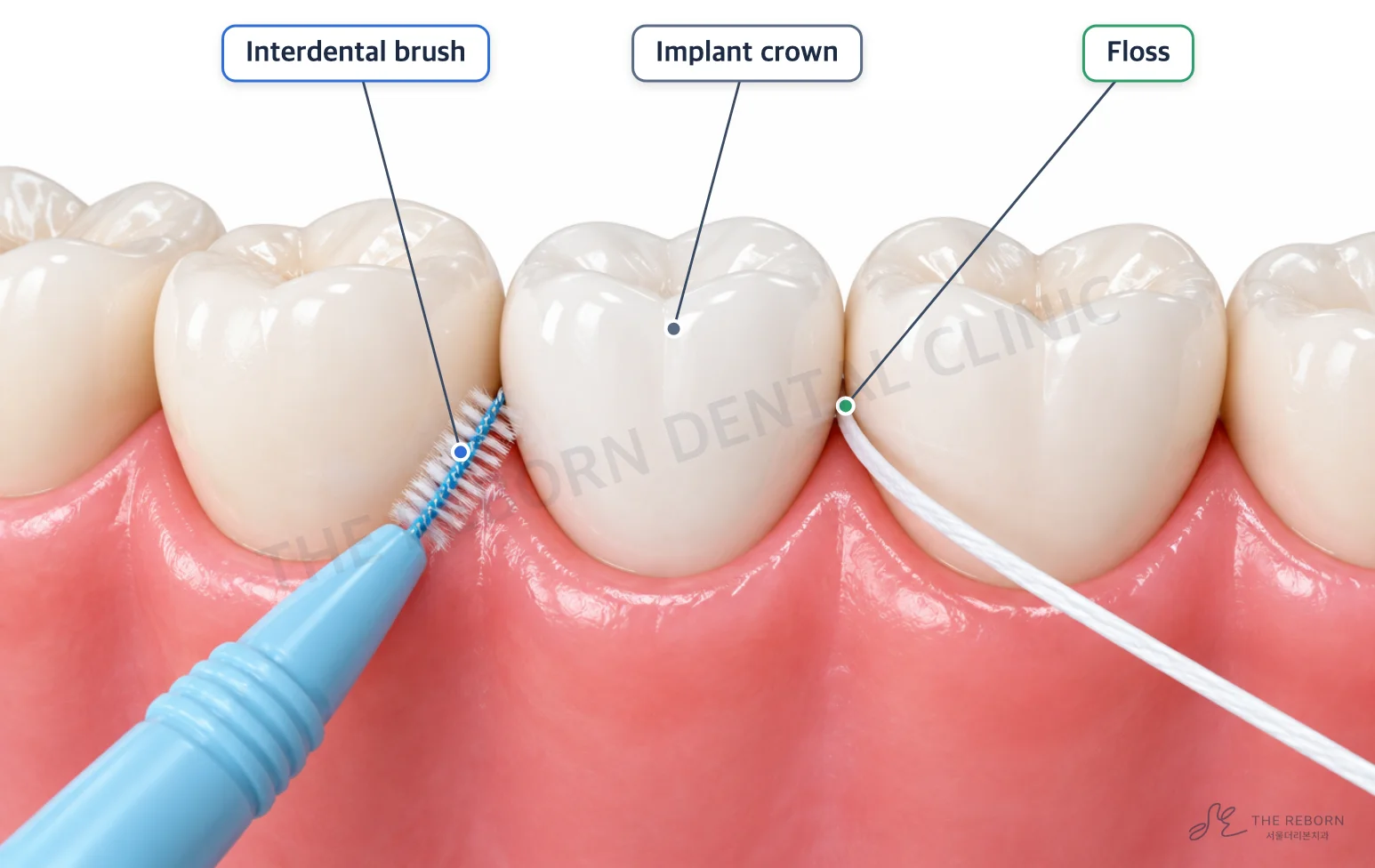
| What to do | Why |
|---|---|
| Use an interdental brush or floss | Removes food between the implant and the next tooth |
| Regular check-ups | To check the contact and look for gum inflammation |
| Manage teeth grinding | A protective night guard may be considered if needed |
| Keep a note of discomfort | Remember where and when food gets stuck and tell your dentist |
Day to day, it is important to clean carefully between the implant and the next tooth with an interdental brush or floss.
At regular check-ups, the dentist can also check how much the floss catches and the condition of the gum, so changes can be found relatively early.
Food getting stuck around an implant can appear even after treatment is finished, because of changes in the teeth around it. That is why care after treatment matters too.
If food keeps getting stuck in the same place after meals, rather than putting up with it, have the contact checked at a dental check-up.
Email us at rbdent@naver.com and Dr. Park will reply personally. You can also call 031.225.1410 (+82-31-225-1410) during opening hours. We are near Suwon City Hall Station — directions.
- Contact loss next to implants — 10-year follow-up study (2022)
- Prevalence of implant contact loss — systematic review of 19 studies (2022)
- Contact loss next to 445 implants — retrospective study (2025)
- Contact loss after 10+ years at a Korean university hospital — retrospective study (2025)
- Consequences of implant contact loss — literature review (2026)
- Closing an open contact on a screw-retained crown — clinical report (2019)
This article is general health information about contact loss and food getting stuck around dental implants, not a diagnosis. Whether it happens and how it is managed depend on the implant's position, the condition of the nearby teeth and gums, your bite and your oral hygiene. Research results describe what was observed under each study's conditions and do not guarantee any individual outcome.