26 November 2026 · 9 min read
Night Guard for Teeth Grinding: What It Does and How to Care for It
By Dr. Park Junsun, Korean board-certified specialist in Integrated Dentistry
Hello, I'm Dr. Park Junsun, director of The Reborn Dental Clinic in Suwon.
When someone tells you that you grind your teeth in your sleep, or you hear that your teeth are worn, a night guard is often the first thing that comes to mind.
Many people call it a mouthguard for grinding. They often ask whether wearing one makes the grinding go away, and how it differs from one bought at a pharmacy.
A night guard can help reduce the damage caused by grinding, but there is a clear line between what you can expect from it and what it can't do.
Following on from our article on the causes of teeth grinding, this article covers what a night guard does, the different types, what to watch for if you have sleep apnoea, and how to look after it.
- A night guard keeps the upper and lower teeth from touching during sleep, to reduce damage from grinding.
- It does not stop the grinding habit itself, and teeth can still wear slightly while you use one.
- If you snore heavily or stop breathing in your sleep, mention it before a night guard is made.
- Wear it every night, clean and dry it daily, and bring it to check-ups so wear and fit can be checked.
What is a night guard?
A night guard is a thin, plate-like appliance worn over the upper or lower teeth during sleep. Dentists may also call it an occlusal stabilisation splint, or simply a splint.
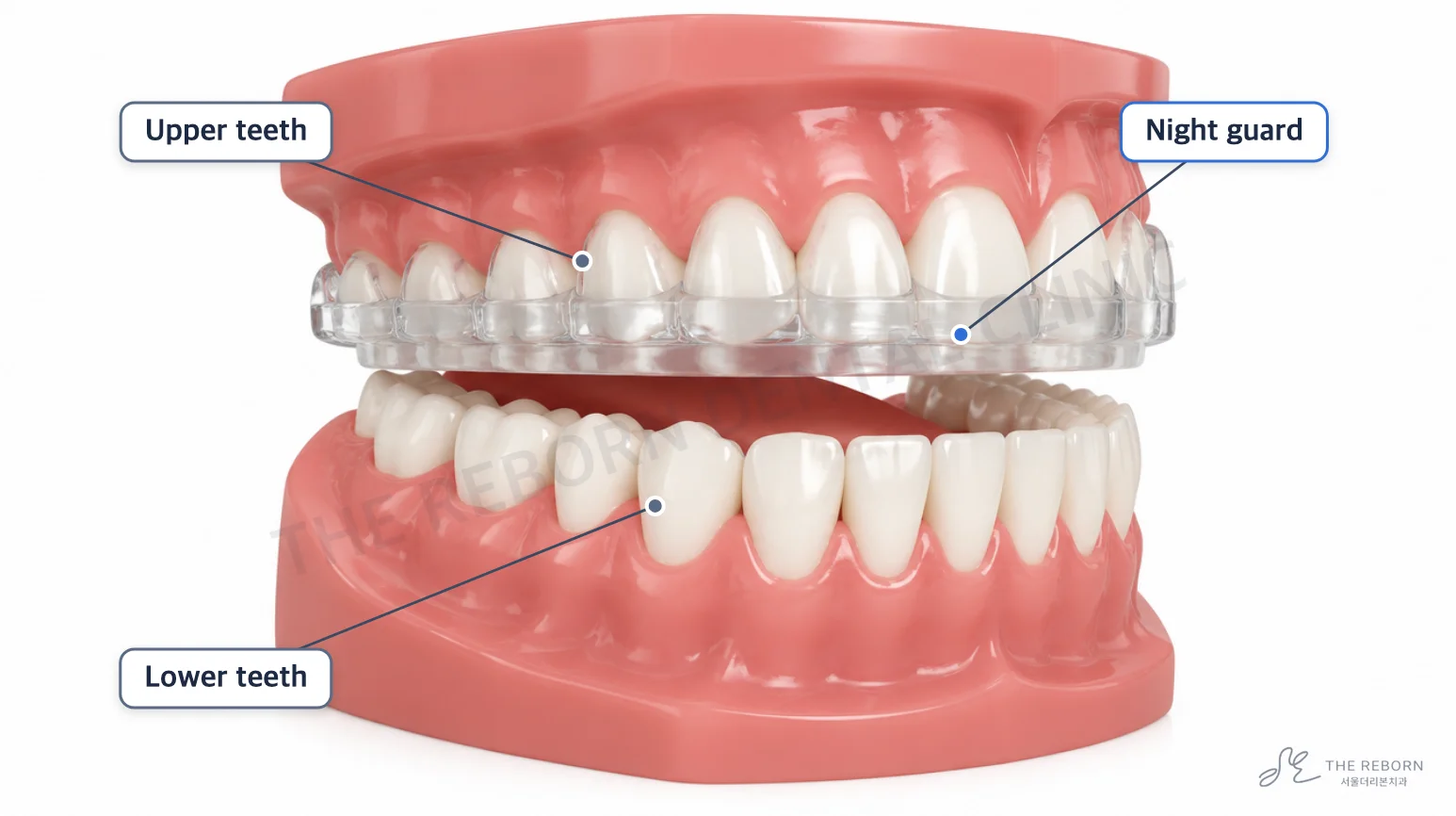
During grinding, the upper and lower teeth can hit or slide against each other with much more force than when you are awake.
The guard sits between them and acts as a protective layer, so the teeth don't touch directly.
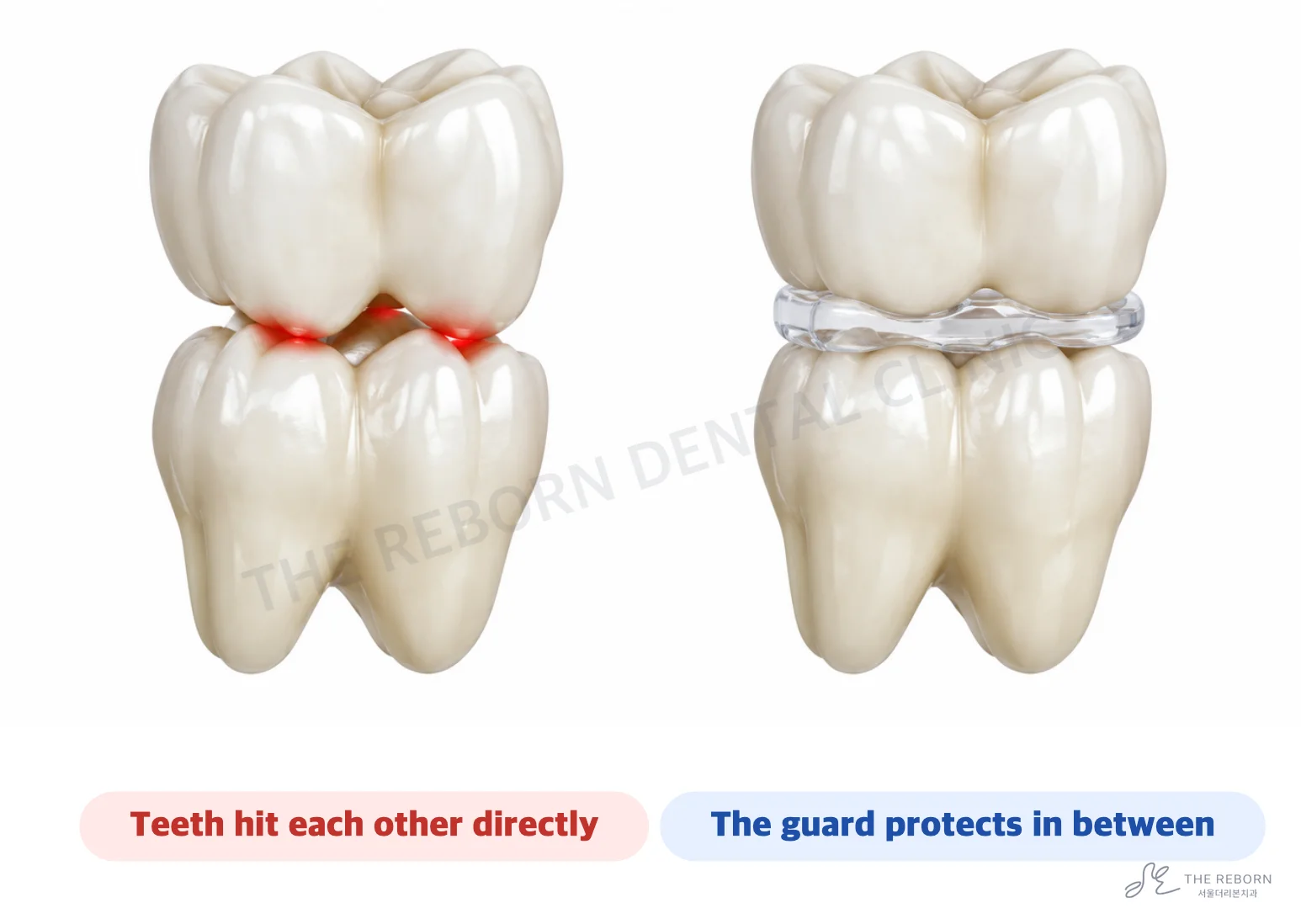
A systematic review published in 2024 also described the main aim of a night guard as preventing the teeth from touching during sleep, to reduce damage from grinding.
Night guards come in different materials and shapes, and the choice depends on the condition of your teeth and jaw.
| Type | Features | Things to consider |
|---|---|---|
| Hard guard | Made of acrylic; the bite can be adjusted | May feel bulky at first |
| Soft guard | Soft, flexible material that feels gentle | May wear or change shape faster than a hard guard |
| Upper or lower | Chosen by how your teeth are arranged and where crowns or bridges are | Check the bite and any trouble speaking |
If you have crowns or implants, a night guard can also be used to help protect them from breaking.
Will a night guard stop me grinding my teeth?
This is a common misunderstanding. A night guard does not stop the grinding habit itself.
A literature review published in 2025 explained that a night guard is unlikely to cure or get rid of grinding, and that some people keep biting down while wearing one.
It can, however, help protect the teeth and reduce the sound of grinding. Some reports found that the frequency and intensity of grinding fell by about 30–40%.
The evidence for this is of low to moderate quality, so not everyone can expect the same effect.
A 2024 systematic review also found that the effect on jaw muscle activity varied between studies, depending on the type of device.
Teeth don't stop wearing completely while you use a guard, either.
In a 2025 study, 16 people who grind their teeth used a hard upper night guard for 18 months. Their canines and first molars were compared using digital scans.
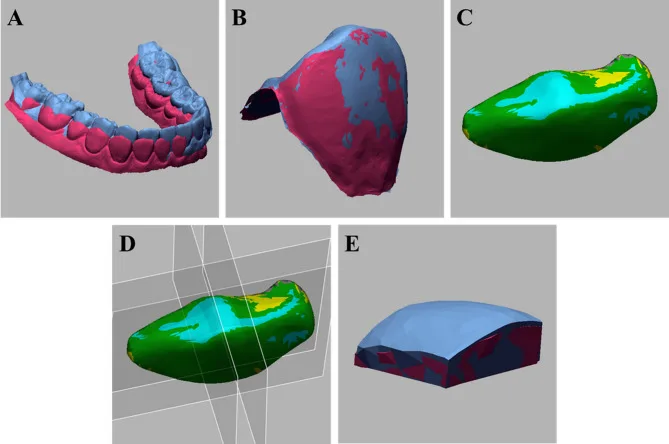
Every tooth showed a small but measurable loss of volume.
It was a small study of only 16 people, but it suggests that the teeth still need regular checks while you use a guard.
Custom-made or over-the-counter: what's the difference?
A night guard can be custom-made at a dental clinic from an impression or scan of your teeth. Or you can buy one, then shape it yourself or use it as it is.
A 2020 randomised clinical trial split 67 people into two groups: one used a self-made over-the-counter guard, and the other a guard made at a dental clinic. The groups were compared over 4 months.
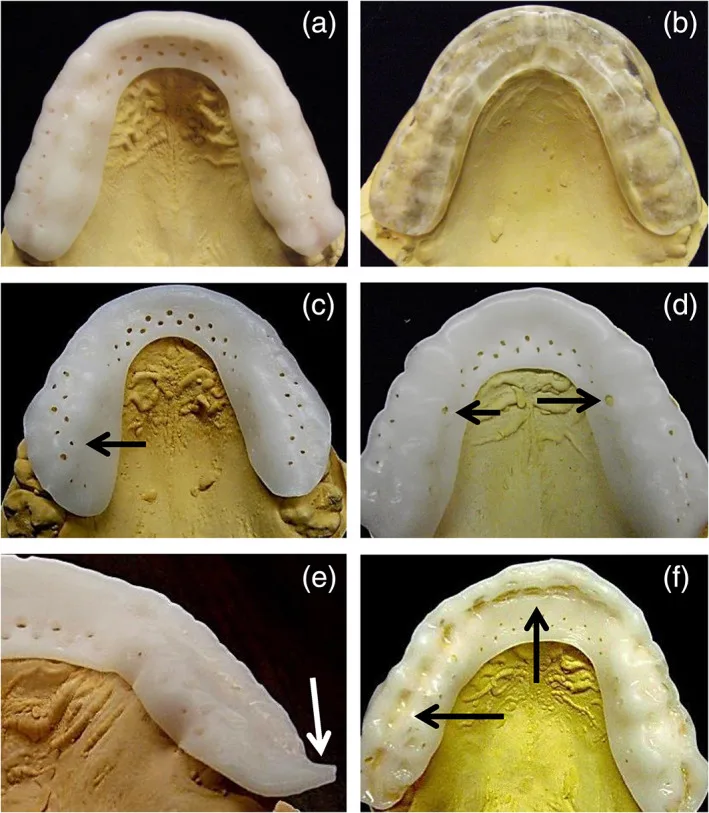
People in the over-the-counter group found it hard to make the guard to the required standard, and they had more jaw muscle contractions during the night.
Other measures, such as how long the guard was worn and gum health, were similar in the two groups. The trial lasted only 4 months.
The researchers concluded that even with an over-the-counter guard, it is important to have the bite and how you use it checked at a dental clinic.
In a 2026 study of 70 people with jaw joint pain, there was no clear difference after 12 weeks between a ready-made soft guard and a custom-made hard guard.
However, the researchers added that this does not mean the two are the same, and that the ready-made guard should be seen as a short-term option.
| Custom-made guard | Ready-made guard | |
|---|---|---|
| How it's made | Made after an impression or scan of your teeth | Bought, then shaped yourself or used as it is |
| Bite adjustment | Adjusted at the dental clinic | Hard to adjust yourself |
| Checking | Condition checked at regular check-ups | Problems are harder to notice |
When a custom guard is made at a dental clinic, the teeth and jaw are checked first, and then their shape is recorded with an impression or a scan.
Once the finished guard is fitted, the dentist checks that the upper and lower teeth touch it evenly and that no single spot presses too hard, and adjusts its height and contact surfaces.
If anything feels uncomfortable after you start using it, the guard can be adjusted again. It helps to describe in detail how it feels at your first follow-up visit.
What if I snore or have sleep apnoea?
Teeth grinding and sleep apnoea (repeated pauses in breathing during sleep) quite often occur together.
A 2025 literature review reported that the two are found together in 30–50% of adults.
It also described research suggesting that in people with sleep apnoea, a standard night guard may make breathing measures worse.
In one study, breathing measures got worse in 15–23% of young adults with mild sleep apnoea.
So the researchers recommended a sleep study if snoring or pauses in breathing are suspected. If both conditions are confirmed, they suggested considering a device that holds the lower jaw forward.
In one study in the same review, the grinding index fell by 65% after 30 days with a device that held the lower jaw forward by about half of its maximum.
However, this is the result of a single study, so not everyone can expect the same result.
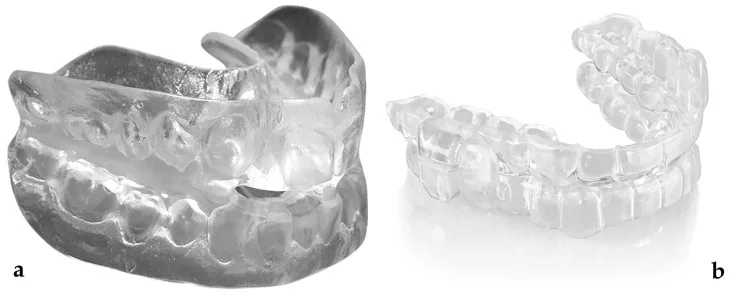
If you snore heavily, have been told that you stop breathing in your sleep, or often feel sleepy during the day, please mention it before a night guard is made.
How do I look after a night guard?
A night guard only helps if you wear it every night.
For the first few days it may feel bulky, you may make more saliva, and your bite may feel odd in the morning, so it can take time to get used to.
In a 2025 multicentre survey of 200 people who had received a guard 4–8 weeks earlier, 67% were wearing it regularly.
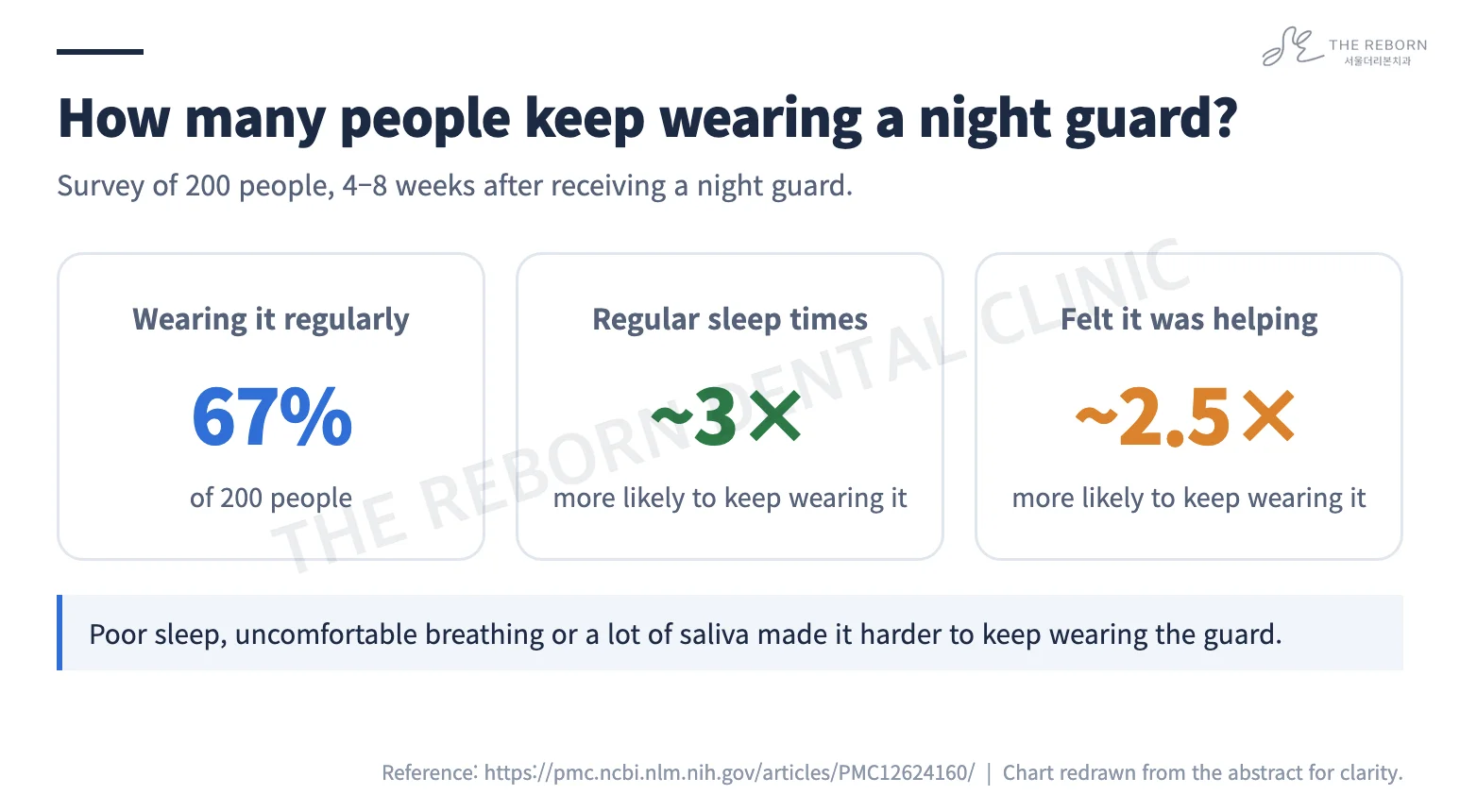
People with regular sleep times had about 3 times the odds of keeping it up, and people who felt it was working about 2.5 times the odds.
On the other hand, people who found it disturbed their sleep, made breathing feel uncomfortable or caused a lot of saliva found it harder to keep going. This was a survey based on what people reported.
If you have discomfort like this, rather than putting up with it, ask whether the guard can be adjusted.
A night guard is made for grinding during sleep, so a habit of clenching your teeth during the day should be looked at separately.
It may help to keep an eye on your jaw during the day: lips closed, upper and lower teeth slightly apart, and the jaw relaxed.
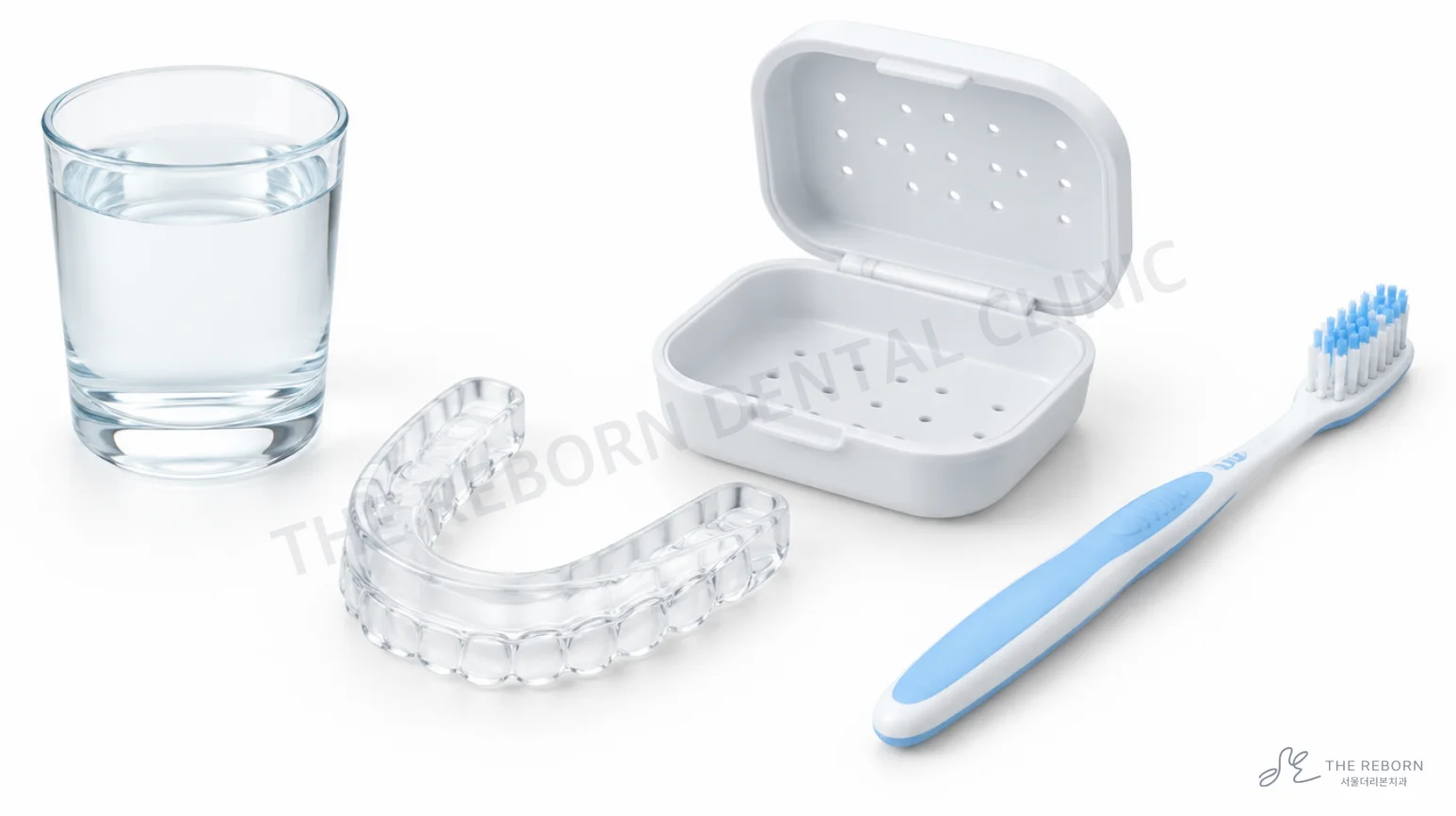
| Care | How |
|---|---|
| Cleaning | Take it out in the morning and clean it with a soft toothbrush and lukewarm water |
| Storage | Let it dry completely, then keep it in a ventilated case |
| Avoid | Hot water, strong cleaning products, leaving it in the sun |
| Checking | If you see cracks or worn spots, or it feels loose, bring it in to be checked |
The guard itself also wears down with use.
A 2025 study found measurable wear on the surface of guards over 6 months, and the amount of wear differed depending on how the guard was made. It was a small study of 30 people.
As a guard wears, the balance of your bite can change, so it is a good idea to bring it with you to regular check-ups.
A study that followed 153 people using guards for jaw joint pain for up to 9 years found that 72 of them went on to use a second guard, after about 14 months on average.
This was a specific group of patients, so the result can't be applied directly to everyone, but it shows that night guards also need replacing at some point.
A night guard is less a device that stops grinding and more a protective device that guards your teeth and restorations against it.
The type and design you need can depend on how much you grind, the condition of your teeth and your sleep.
At a check-up, we look at tooth wear, your bite and your jaw muscles together and discuss whether a guard is needed.
If you already use a guard, bring it with you to your check-up so we can look at how worn it is and how your bite meets it.
If your jaw feels stiff every morning or your teeth are worn, have them checked at a dental clinic rather than putting it off.
Email us at rbdent@naver.com and Dr. Park will reply personally. You can also call 031.225.1410 (+82-31-225-1410) during opening hours. We are near Suwon City Hall Station — directions.
- Oral appliances for sleep bruxism — systematic review (2024)
- Occlusal splints, bruxism and sleep apnoea — narrative review (2025)
- Tooth wear during 18 months of splint use — clinical study (2025)
- Over-the-counter vs dentist-made splints — randomised trial (2020)
- Ready-made soft vs custom hard splints for jaw pain — exploratory randomised trial (2026)
- Devices that hold the lower jaw forward — figure source (2023)
- Keeping up with night guard use — multicentre survey (2025)
- Surface wear of occlusal splints — clinical study (2025)
- Long-term splint use and replacement — follow-up study (2024)
This article is general health information about the role and care of night guards (occlusal splints) for teeth grinding, not a diagnosis. Whether you need a guard, and which type, depends on how much you grind, the condition of your teeth and jaw joints, and whether you have sleep apnoea. Research results describe what was observed under each study's conditions and do not guarantee any individual outcome.