26 November 2026 · 6 min read
Pain After a Root Canal: What's Normal and When to Get It Checked
By Dr. Park Junsun, Korean board-certified specialist in Integrated Dentistry
Hello, I'm Dr. Park Junsun, director of The Reborn Dental Clinic in Suwon.
After a root canal, many people expect the tooth to stop hurting. Instead, it may throb for a few days or feel sore when they bite.
You may wonder why a tooth hurts when its nerve has been treated, or whether something went wrong. Pain after a root canal is more common than many people think, and in most cases it slowly eases over time.
This article explains why the pain happens, how long it usually lasts, and which signs mean the tooth should be checked again.
- Pain is usually strongest right after treatment and eases over a few days.
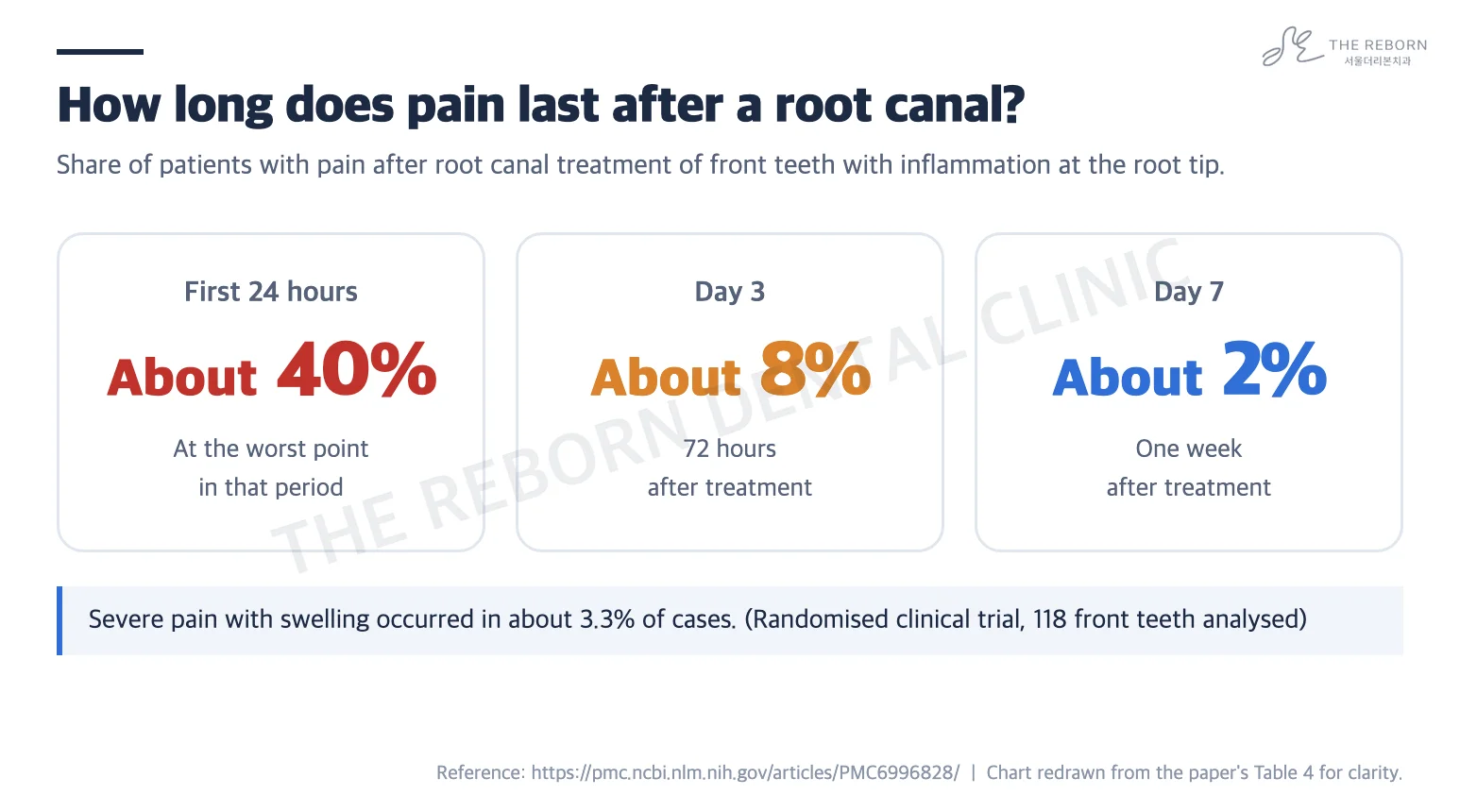
- In one trial, about 40% had pain in the first 24 hours, about 8% on day 3 and about 2% on day 7.
- Strong pain before treatment, lower teeth and molars are linked with more pain afterwards.
- Swelling, pain that keeps getting worse, or pain that lasts more than a week should be checked.
Why does a tooth hurt after a root canal?
A root canal (endodontic treatment) removes the inflamed or infected nerve and blood vessels inside the tooth. The space inside the root is then cleaned, disinfected and filled.
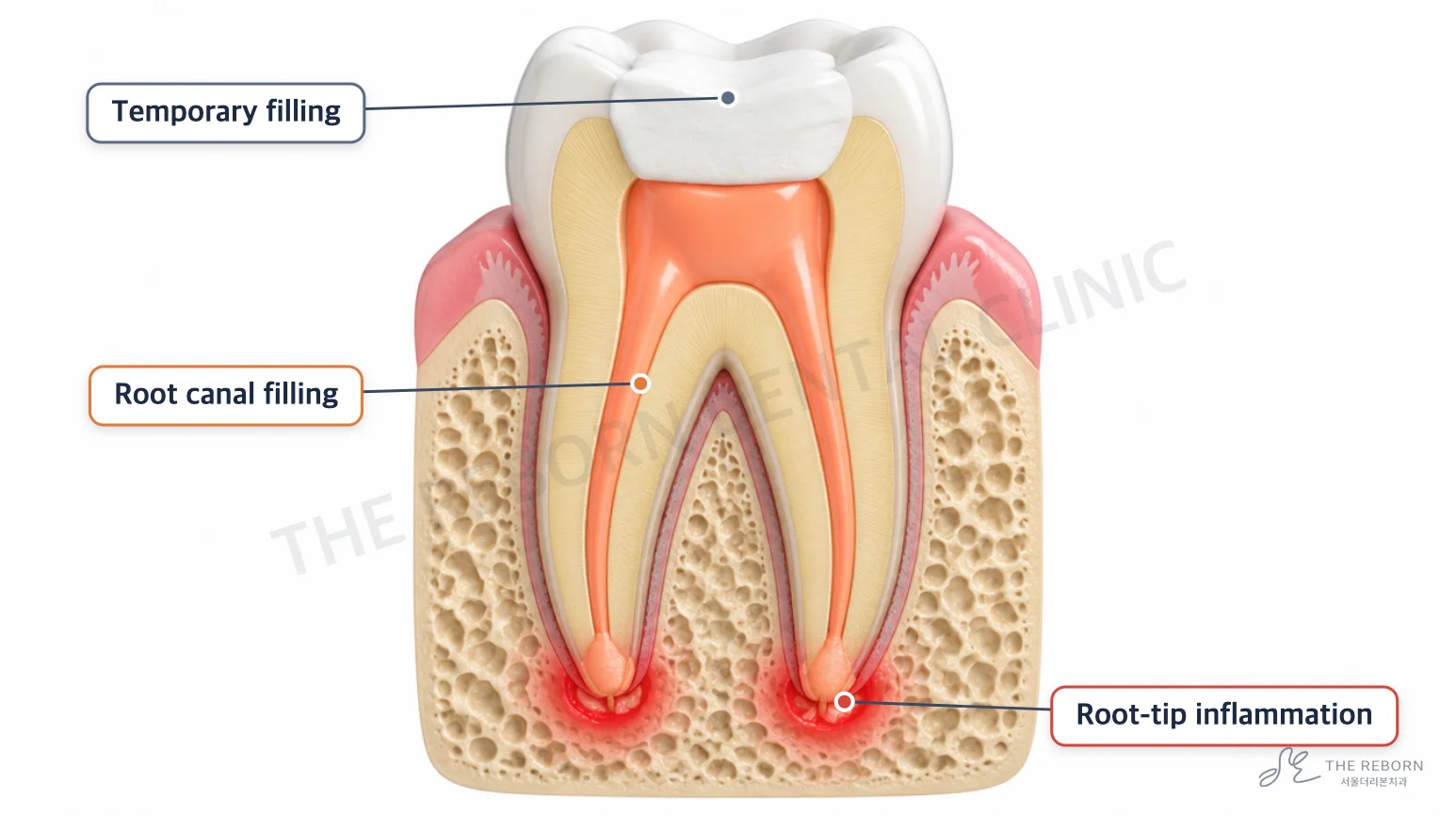
The nerve inside the tooth is removed, but the tissue around the tip of the root still has nerves that sense pain. This area can be irritated during treatment, and leftover inflammation takes time to settle. While it does, you may feel temporary pain.
That is why pain after a root canal often feels like soreness when you bite, or as if the tooth is slightly raised.
A root canal is usually done over several visits. Between visits, medicine is placed inside the root and the tooth is sealed with a temporary filling. If this temporary filling wears down or comes out, the tooth can become more uncomfortable, so avoid hard or sticky food on that side.
How long is pain after a root canal normal?
Several studies that followed pain after root canal treatment report the same pattern: pain is strongest right after treatment and goes down over a few days.
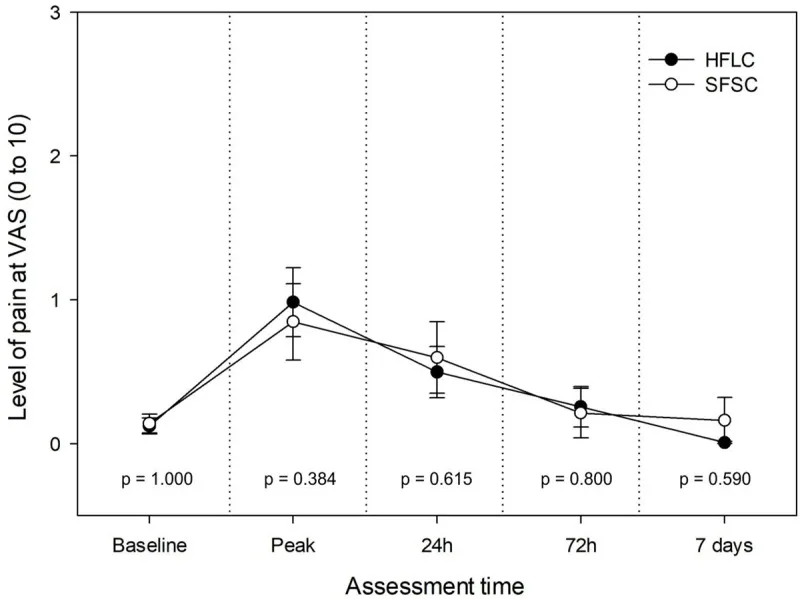
In a randomised clinical trial published in 2020, 120 front teeth with inflammation at the root tip had a root canal, and pain was recorded for 7 days.
The average pain score was around 1 out of 10, so the pain was mild in most cases.
However, studies differ in which teeth they look at and how they define pain. Reported rates of pain in the first 24–48 hours range from 3% to 69%, so these numbers can't be applied directly to any one person.
Feeling as if the tooth is slightly raised for 2–3 days after treatment is common. During this time, try not to bite hard on that side.
Are some teeth more likely to hurt afterwards?
Even with the same treatment, how much pain people feel afterwards differs from person to person and from tooth to tooth.
A systematic review published in 2017 found that if the tooth hurt a lot before treatment, it may also hurt more afterwards. It also reported that pain after treatment tends to be more common in lower teeth and in molars. These are tendencies seen across studies, not rules for every tooth.
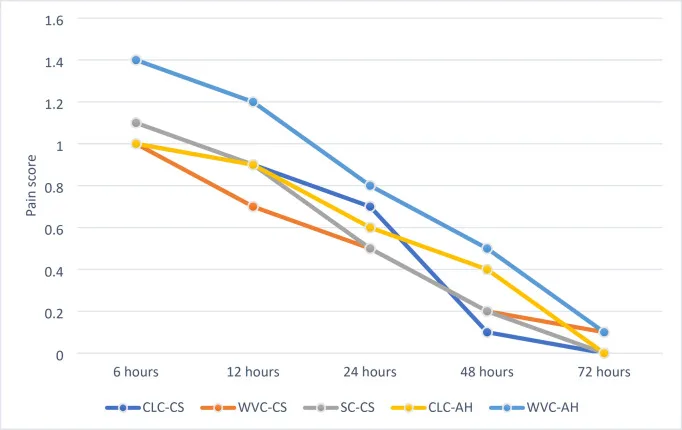
In a clinical study published in 2025, 150 teeth were split into five groups, each filled with a different method, and pain was compared. Early pain scores differed slightly between methods, but in all groups pain was close to zero by about 72 hours. This was a single trial with a limited number of teeth, so the results may not apply to every tooth.
A 2025 study that brought together 45 systematic reviews on pain after root canal treatment listed 8 factors that may help reduce pain. However, most of the evidence was of low to moderate quality, and the authors added that no single method can be called better for every case.
| Factor | What to know |
|---|---|
| Pain before treatment | If the tooth hurt a lot before, it may hurt more afterwards |
| Tooth position | Reported more often in lower teeth and molars |
| Stage of treatment | Temporary discomfort is possible between visits |
| Bite | If the tooth touches too high, biting may keep hurting |
If you were prescribed a painkiller, take it as instructed, and avoid chewing hard food on the treated side for a while.
Which signs mean the tooth should be checked again?
Most pain after a root canal eases within a few days, but in some cases the tooth needs to be checked.
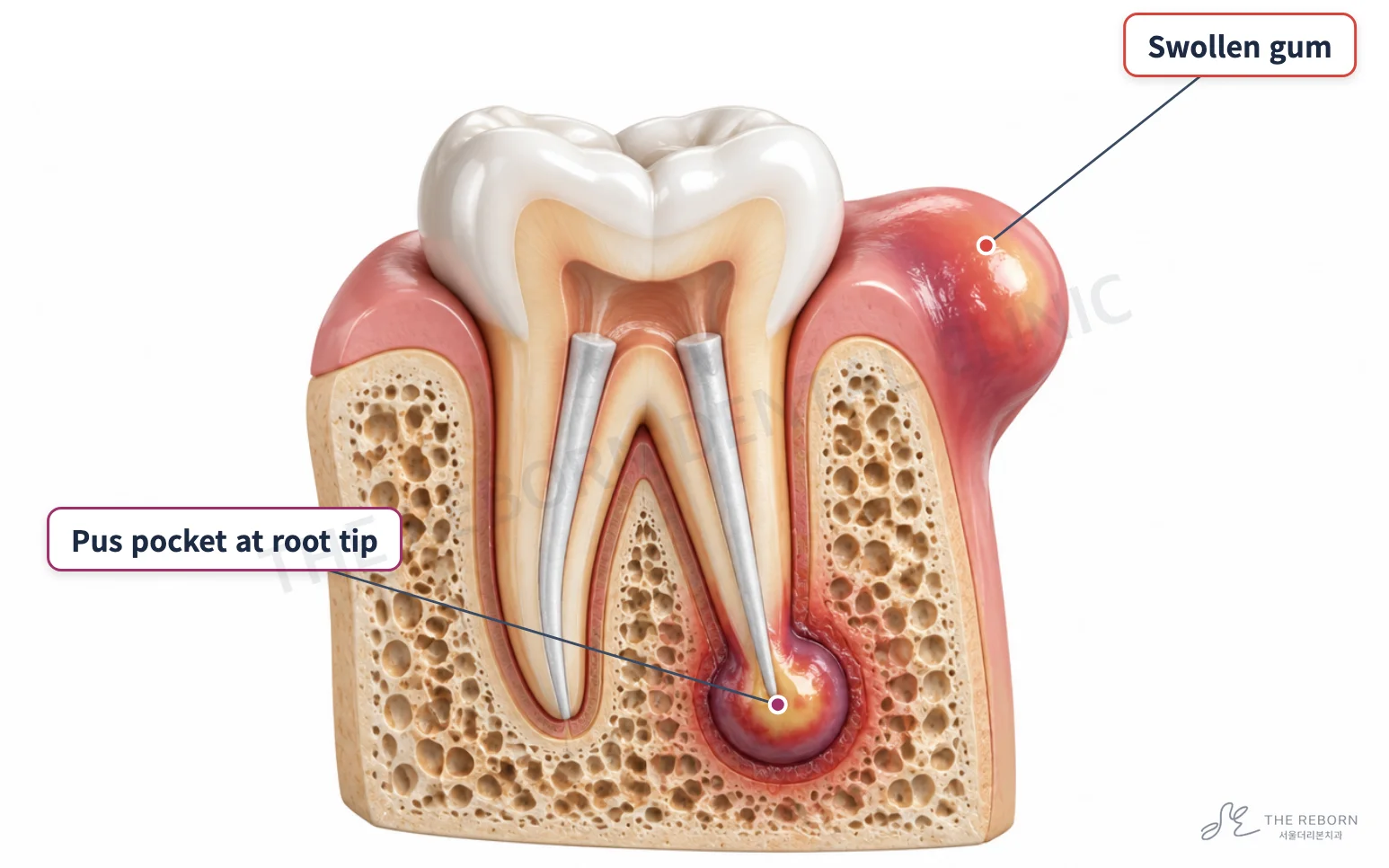
In the 2020 trial above, severe pain together with swelling occurred in about 3.3% of cases.
If your gum or face swells, the pain keeps getting worse, or it does not ease after a week, have the tooth checked again.
The dentist will look at an X-ray and the height of your bite, and then decide whether to drain pus, prescribe medicine, or clean the inside of the root again.
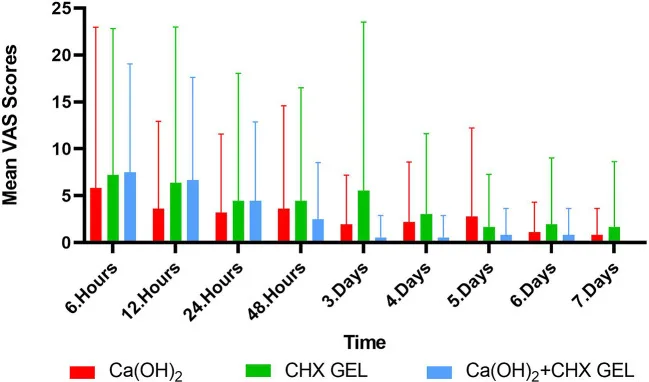
In a 2024 study of root canal retreatment, 1 of 120 patients had severe pain with swelling, and pain went down over time. This was a single study of retreatment cases, so the figure can't be applied directly to every tooth.
A tooth that has had a root canal can also become weaker against biting forces, so take care that it doesn't crack before it is covered.
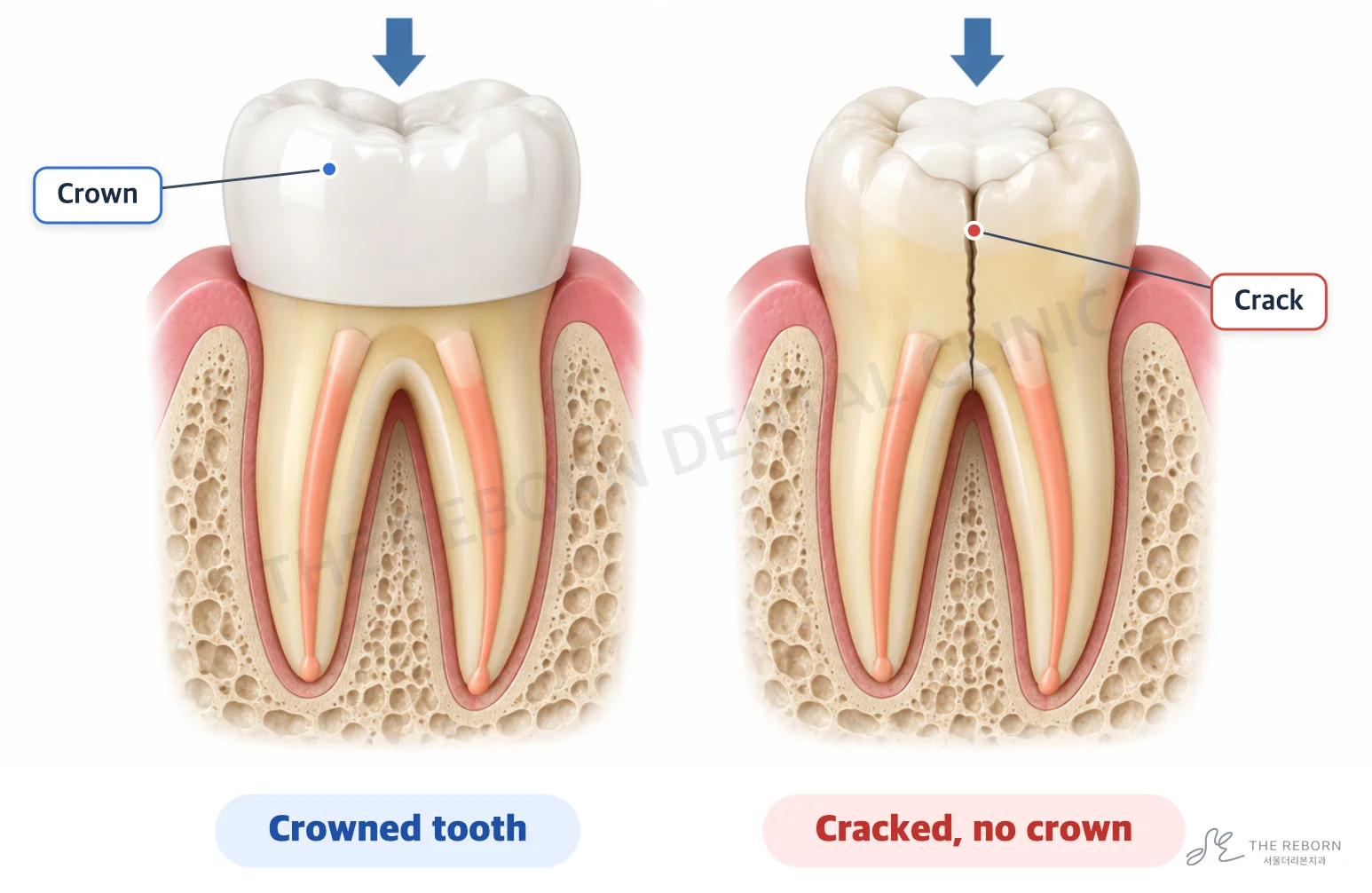
Molars take a lot of biting force, so after a root canal they are often covered with a crown to protect them.
If most of the pain has gone but you feel a sharp pain only when biting on one particular spot, the tooth may need to be checked for a crack.
| Usually fine to watch | Get it checked | |
|---|---|---|
| Pain | Gradually eases over 2–3 days | Keeps getting worse, or lasts more than a week |
| Swelling | Little or none | Swollen gum or face, or pus |
| Biting | Sore at first, but gets more comfortable | Sharp pain on one particular spot |
Pain after a root canal can differ depending on the condition of the tooth and the stage of treatment.
Try to remember when and how it hurt and whether there was any swelling, and tell your dentist at your visit. This helps them find the cause.
If the discomfort continues, have the tooth checked rather than putting up with it.
Email us at rbdent@naver.com and Dr. Park will reply personally. You can also call 031.225.1410 (+82-31-225-1410) during opening hours. We are near Suwon City Hall Station — directions.
- Pain after root canal treatment of front teeth — randomised trial (2020)
- Factors linked to pain after root canal treatment — systematic review (2017)
- Root filling methods and pain after treatment — randomised trial (2025)
- Pain after root canal retreatment — randomised trial (2024)
- Reducing pain after root canal treatment — review of systematic reviews (2025)
This article is general health information about the usual course of pain after root canal treatment, not a diagnosis. How much it hurts and for how long depend on the position of the tooth, how inflamed it was before treatment, the stage of treatment and how your teeth bite together. Research results describe what was observed under each study's conditions and do not guarantee any individual outcome.