26 November 2026 · 6 min read
What Causes Gum Inflammation? Bleeding, Swollen Gums and the Stages to Know
By Dr. Park Junsun, Korean board-certified specialist in Integrated Dentistry
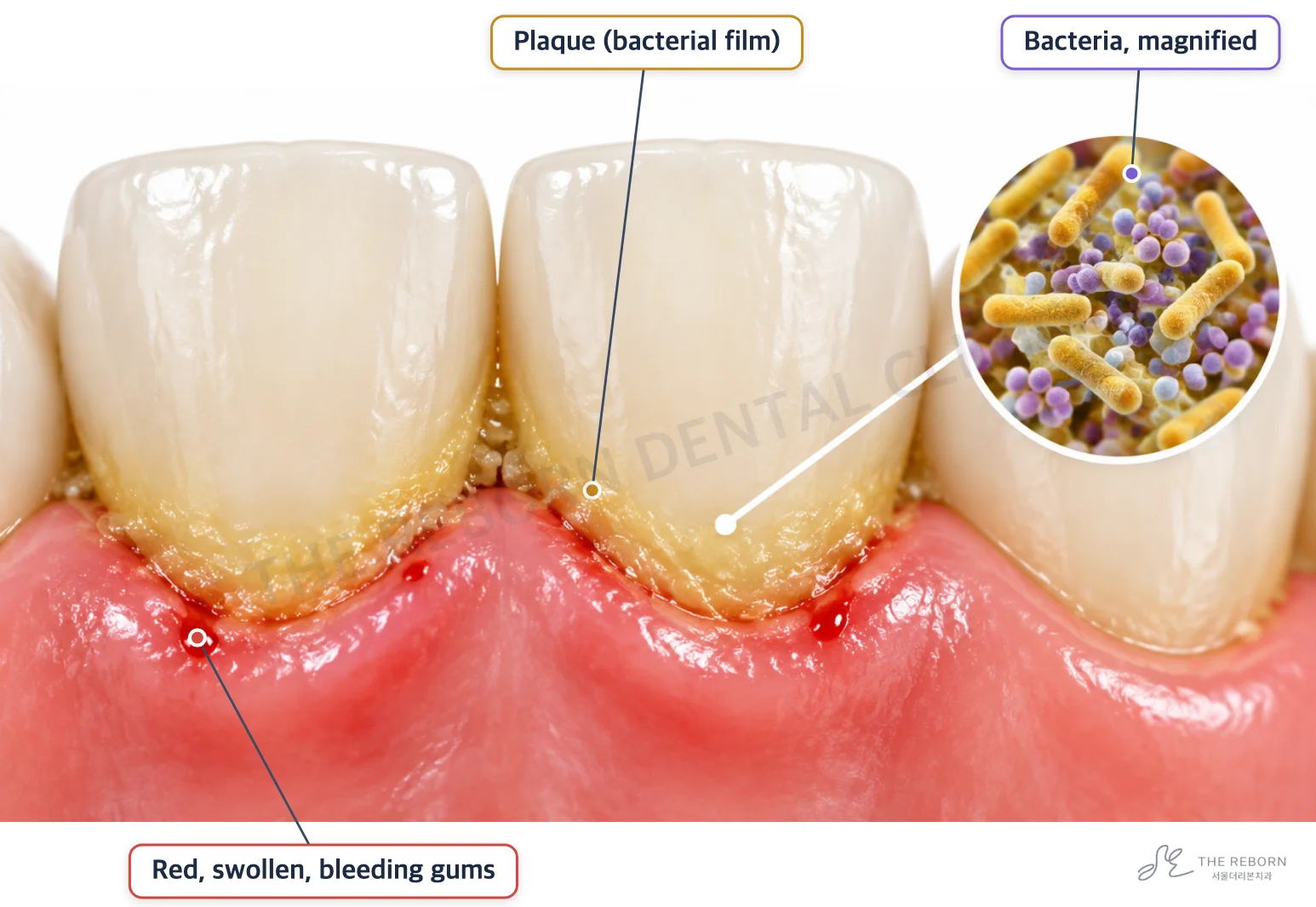
Hello, I'm Dr. Park Junsun, director of The Reborn Dental Clinic in Suwon.
Many people notice blood on their toothbrush or see that their gums look red and puffy, and think, "I'm probably just tired." Because it often settles down after a few days, it can seem like nothing serious.
But once you know what causes gum inflammation, it becomes clearer why it keeps coming back and at which stage it needs attention.
In this article I'll go through the causes of gum inflammation, how it progresses, the risk factors that make it worse, and how to look after your gums.
- The main cause of gum inflammation is plaque, a sticky film of bacteria that builds up where the teeth meet the gums.
- Gingivitis affects only the gums and can be expected to recover with good care; in periodontitis, treatment focuses on stopping it from getting worse.
- Smokers can have less gum bleeding, so no bleeding does not always mean no inflammation.
- If bleeding lasts more than 1–2 weeks despite careful cleaning, or there is pus or a loose tooth, have it checked for periodontitis.
What is the main cause of gum inflammation?
The first thing to look at is plaque: a sticky film of bacteria that clings to the surface of the teeth.
Within just a few hours after eating, plaque starts to build up again along the line where the teeth meet the gums. If this film isn't removed in time, the body's immune system reacts, and the gums become red, swollen and bleed easily.
When substances in saliva harden the plaque, it turns into tartar (calculus), which a toothbrush cannot remove. Plaque sticks even more easily to the rough surface of tartar, so the inflammation tends to keep coming back.
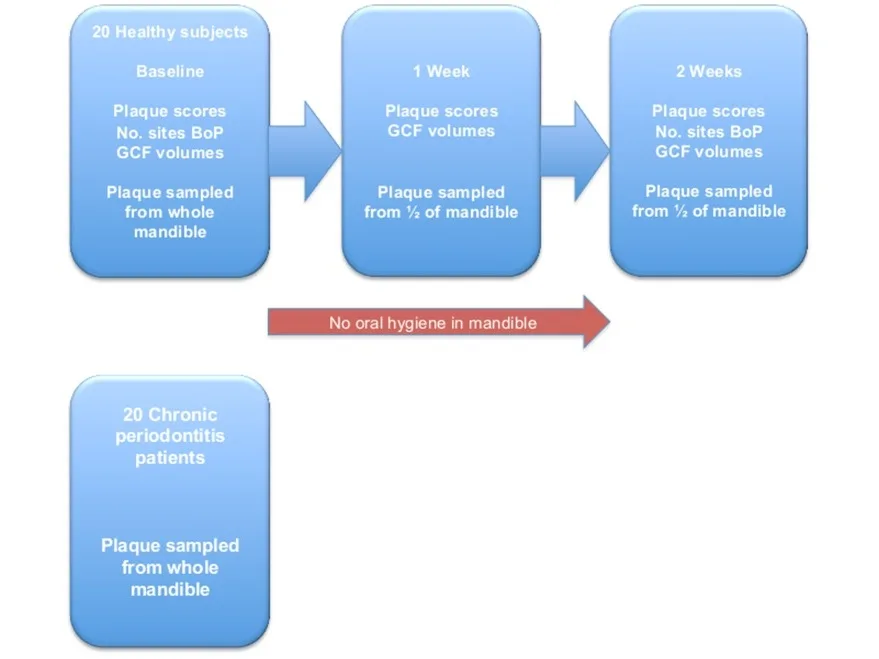
In a study published in 2013, 20 adults with healthy gums stopped brushing their lower teeth for two weeks, and the researchers watched what happened.
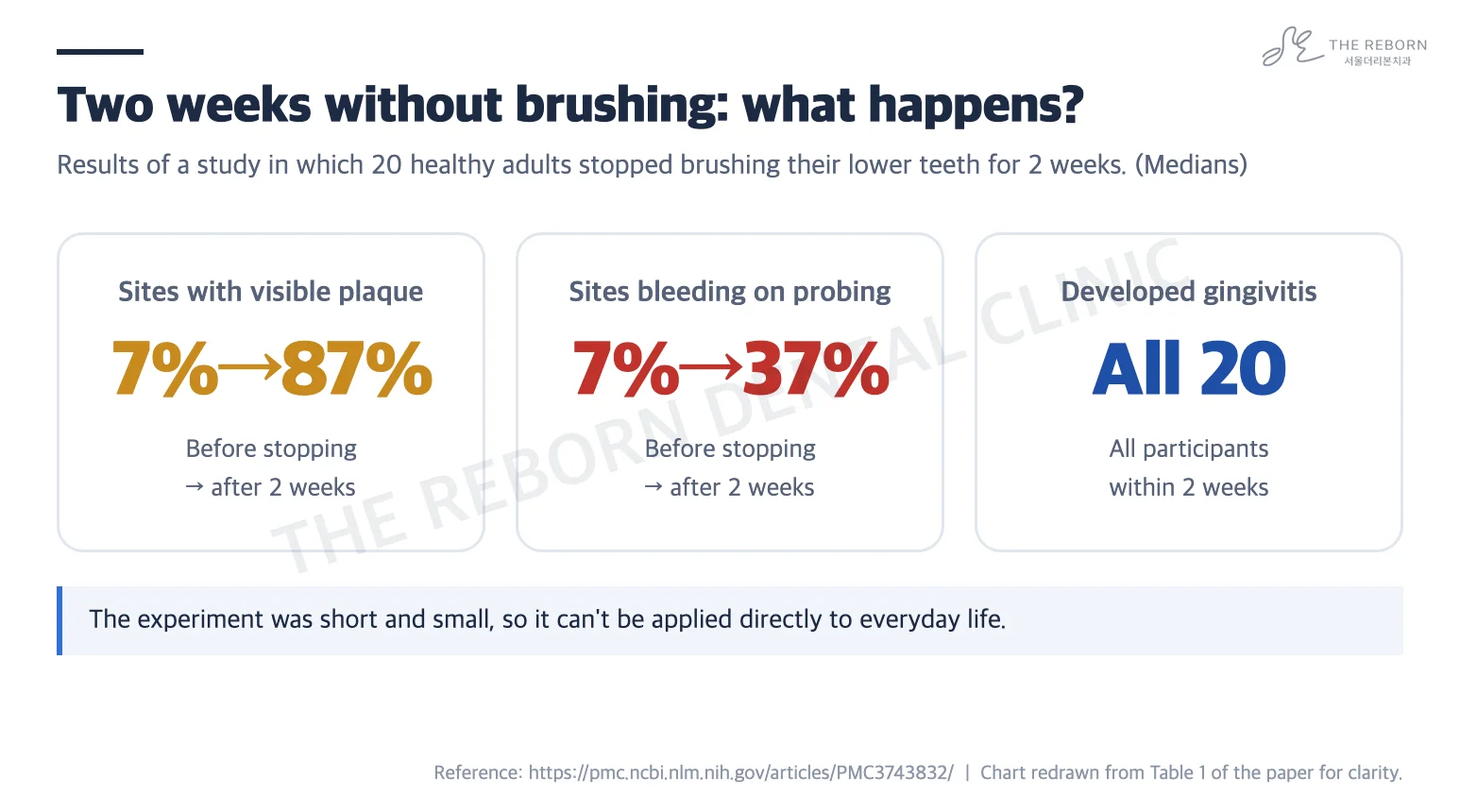
The experiment was short and included only a few people, so it can't be applied directly to everyday life. It is best understood as evidence of the link between plaque and gum inflammation.
How does gum inflammation progress?
Gum inflammation is broadly divided into two stages: gingivitis, where the inflammation is limited to the gums, and periodontitis, where it has spread to the tissues below the gums.
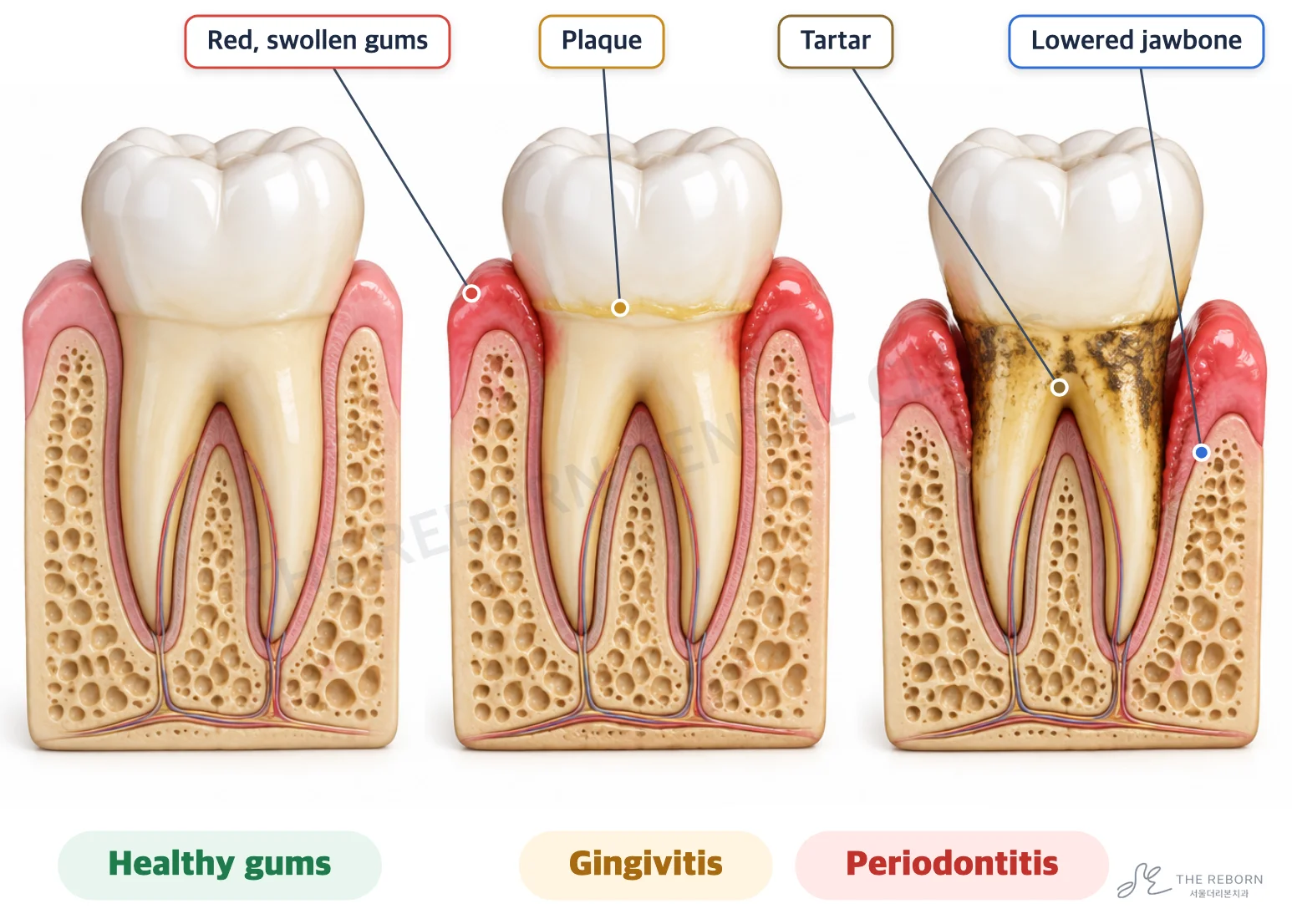
At the gingivitis stage, the gums are swollen and bleed, but the bone that supports the tooth is still intact, so recovery can be expected with good care.
A 2019 review of 22 experimental studies like the one above also explained that once people start brushing again, plaque and gum inflammation scores drop quickly. These were short, planned experiments rather than everyday situations.
At a check-up, the dentist tells the two stages apart by measuring the depth of the gum pockets and checking the height of the bone on X-rays.
| Gingivitis | Periodontitis | |
|---|---|---|
| Where the inflammation is | The gums | The tissues below the gums and the jawbone |
| Main signs | Swelling, bleeding when brushing | Gum pockets, pus, loose teeth |
| Jawbone | Intact | May be lost |
| Recovery | Can be expected with good care | Treatment focuses on stopping it from getting worse |
If the inflammation continues for a long time, the gap between the gum and the tooth gets deeper, tartar builds up inside it, and the jawbone can gradually shrink.
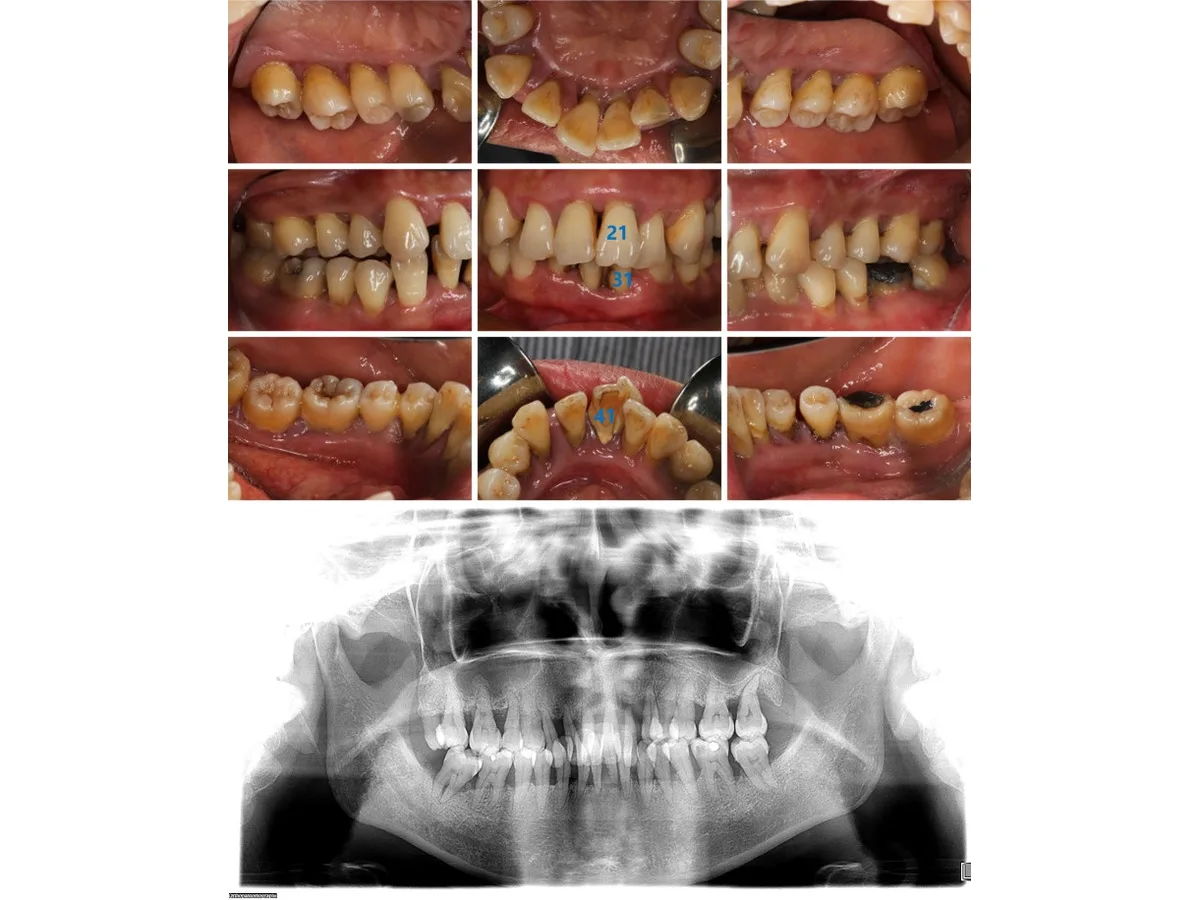
A case report published in 2022 described a patient who came to the clinic with loose teeth and a heavy build-up of tartar and plaque. It is a single case, so it shows one example rather than how often this happens.
At an advanced stage like this, the focus of treatment is on controlling the inflammation and stopping it from going further, rather than bringing back the lost bone.
That is why finding the cause of gum inflammation early and starting care at the gingivitis stage helps you keep your teeth for longer.
Besides plaque, what else makes gum inflammation worse?
Even with the same amount of plaque, how much gum inflammation appears can differ from person to person.
Smoking is a key example. A 2021 review described smoking as the most important risk factor for gum disease. It also reported that smokers show less gum bleeding than non-smokers, even with the same amount of plaque.
This is because nicotine narrows the blood vessels in the gums. It shows that gums which don't bleed are not necessarily free of inflammation. As a review, it summarises earlier research and does not predict the risk for any one person.
| Risk factor | What to know |
|---|---|
| Smoking | Less bleeding, so inflammation may be noticed later |
| Diabetes | The inflammatory response can differ depending on blood sugar control |
| Hormonal changes | Gums can swell easily at times such as pregnancy |
| Shape of the mouth | Plaque is easily left around overlapping teeth or crowns and bridges that don't fit well |
Your gums can also be affected if your mouth is often dry or if you take certain medications.
During pregnancy, hormonal changes can make the gums swell easily even with the same amount of plaque, so this is a time for extra-careful cleaning.
If you have diabetes, blood sugar control and gum health can affect each other, so it's good to look after both together.
These factors are not the cause of gum inflammation itself. They are conditions that make inflammation start more easily or become worse, so the basics are still about controlling plaque.
What should I do when my gums bleed?
Some people avoid brushing the area that bleeds. But this leaves more plaque behind and can keep the inflammation going, so it's important to clean the gumline gently.
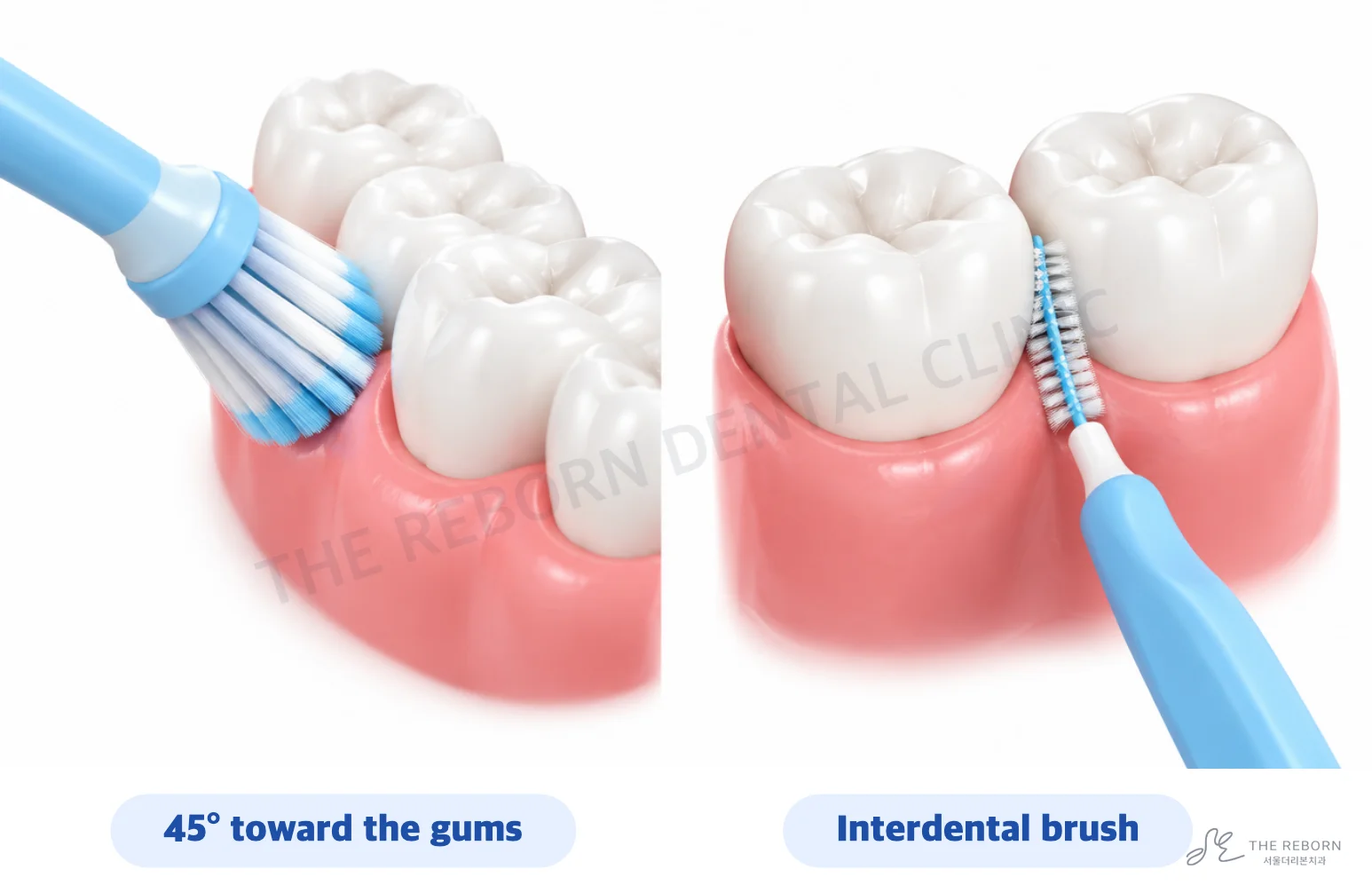
Tilt your toothbrush about 45 degrees toward the gums and brush in small circles. Clean between the teeth with floss or an interdental brush as well.
Scrubbing hard because of the bleeding can injure the gums, so it's better to brush slowly with a soft toothbrush.
Tartar that has already hardened can't be removed with a toothbrush, so it is managed with regular scaling (professional cleaning). How often you need scaling depends on the condition of your gums and how quickly tartar builds up, so it is decided at your check-up.
If bleeding continues for more than 1–2 weeks despite careful cleaning, or you notice pus coming from the gums or a loose tooth, it needs to be checked whether the inflammation has progressed to periodontitis.
The causes and extent of gum inflammation differ from person to person. If symptoms keep coming back, it's worth having your gum pocket depths measured and X-rays taken.
Email us at rbdent@naver.com and Dr. Park will reply personally. You can also call 031.225.1410 (+82-31-225-1410) during opening hours. We are near Suwon City Hall Station — directions.
- Experimental gingivitis in healthy adults — clinical study (2013)
- Experimental gingivitis studies — review (2019)
- Advanced periodontitis — case report (2022)
- Smoking and periodontal disease — review (2021)
This article is general health information about the causes and stages of gum inflammation, not a diagnosis. Your actual gum condition and the right way to care for it depend on your oral hygiene habits, whether you smoke, your general health, the alignment of your teeth and the condition of any crowns or bridges. Research results describe what was observed under each study's conditions and do not guarantee any individual outcome.