26 November 2026 · 7 min read
What Causes Teeth Grinding at Night? Bruxism and Your Teeth
By Dr. Park Junsun, Korean board-certified specialist in Integrated Dentistry
Hello, I'm Dr. Park Junsun, director of The Reborn Dental Clinic in Suwon.
Some people wake up with a stiff jaw or a heavy feeling around the temples. Many only find out they grind their teeth when a family member tells them, "You grind your teeth at night."
Teeth grinding happens while you are asleep, so it is easy to miss. Over time, though, it can leave marks on your teeth and jaw.
This article looks at the causes of teeth grinding, the changes it can leave on your teeth, and the signs that mean it's worth getting checked.
- Sleep bruxism is jaw muscle activity during sleep. It is not always harmful, but it can wear down or crack teeth.
- There is no single cause: insomnia, sleep apnoea, smoking and younger age have all been linked to it.
- Worn teeth are not always caused by grinding. Acid reflux and acidic food can also wear teeth.
- A tired jaw or aching temples in the morning, and comments from family, are useful clues.
Why do people grind their teeth in their sleep?
Teeth grinding (bruxism) is when the jaw muscles tighten again and again during sleep, so that you grind or clench your teeth.
Some people also clench their teeth while awake, but this article focuses on grinding during sleep.
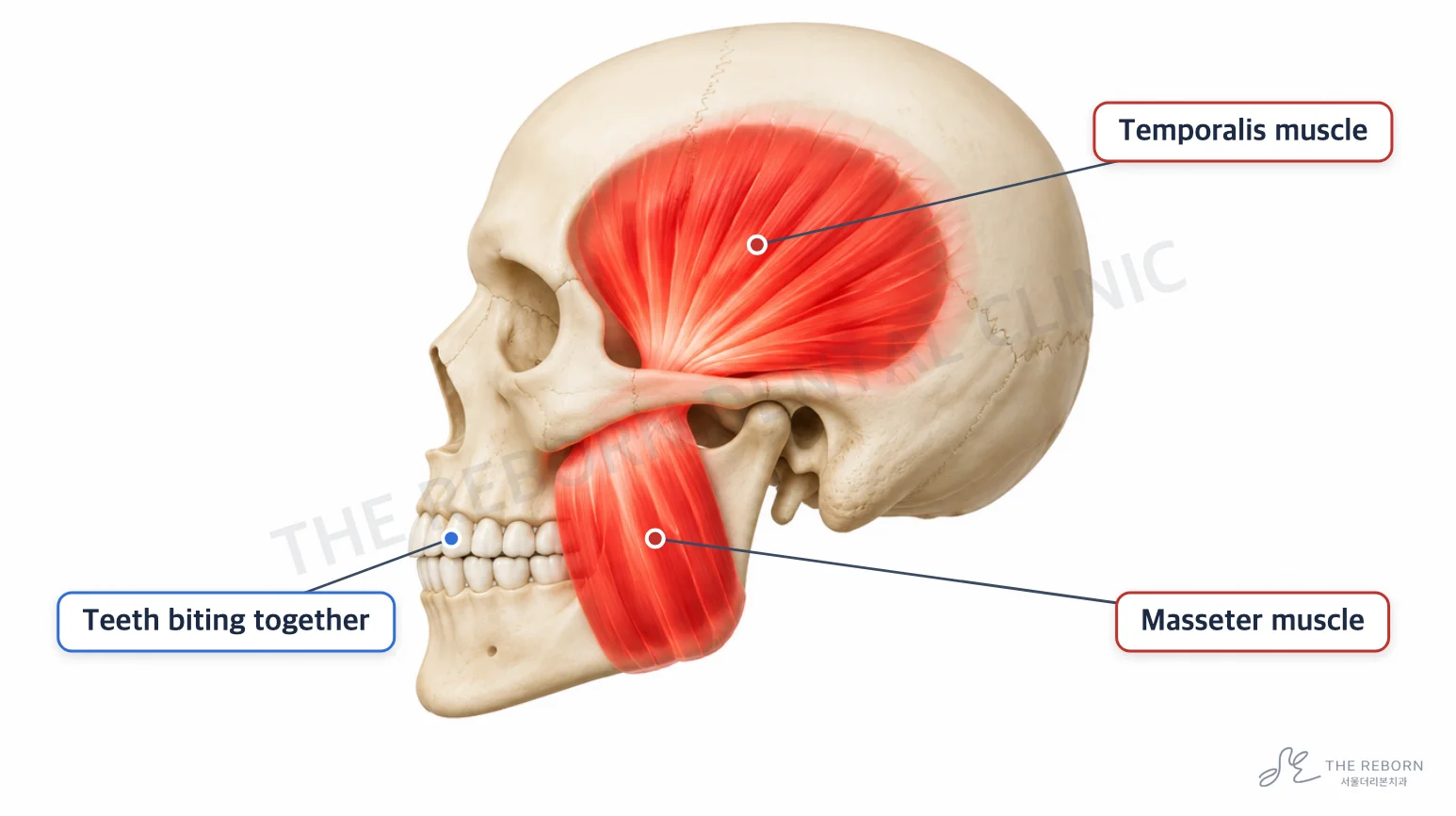
An international consensus report published in 2025 defined sleep bruxism as jaw muscle activity during sleep, not as a sleep disorder or a movement disorder.
The report noted that grinding can sometimes be a risk factor for tooth wear or jaw pain, but that in other cases it has no clear effect on health.
Grinding is also often preceded by a rise in sympathetic nerve activity, the part of the nervous system that speeds up the heart. So it is thought to be linked to the body's brief arousal responses during sleep.
That's why it matters to look at what has changed in the teeth and jaw, not just at the grinding itself.
Teeth grinding is more common than many people think. In a 2019 survey of 1,209 adults in the Netherlands, 16.5% said they grind their teeth during sleep.
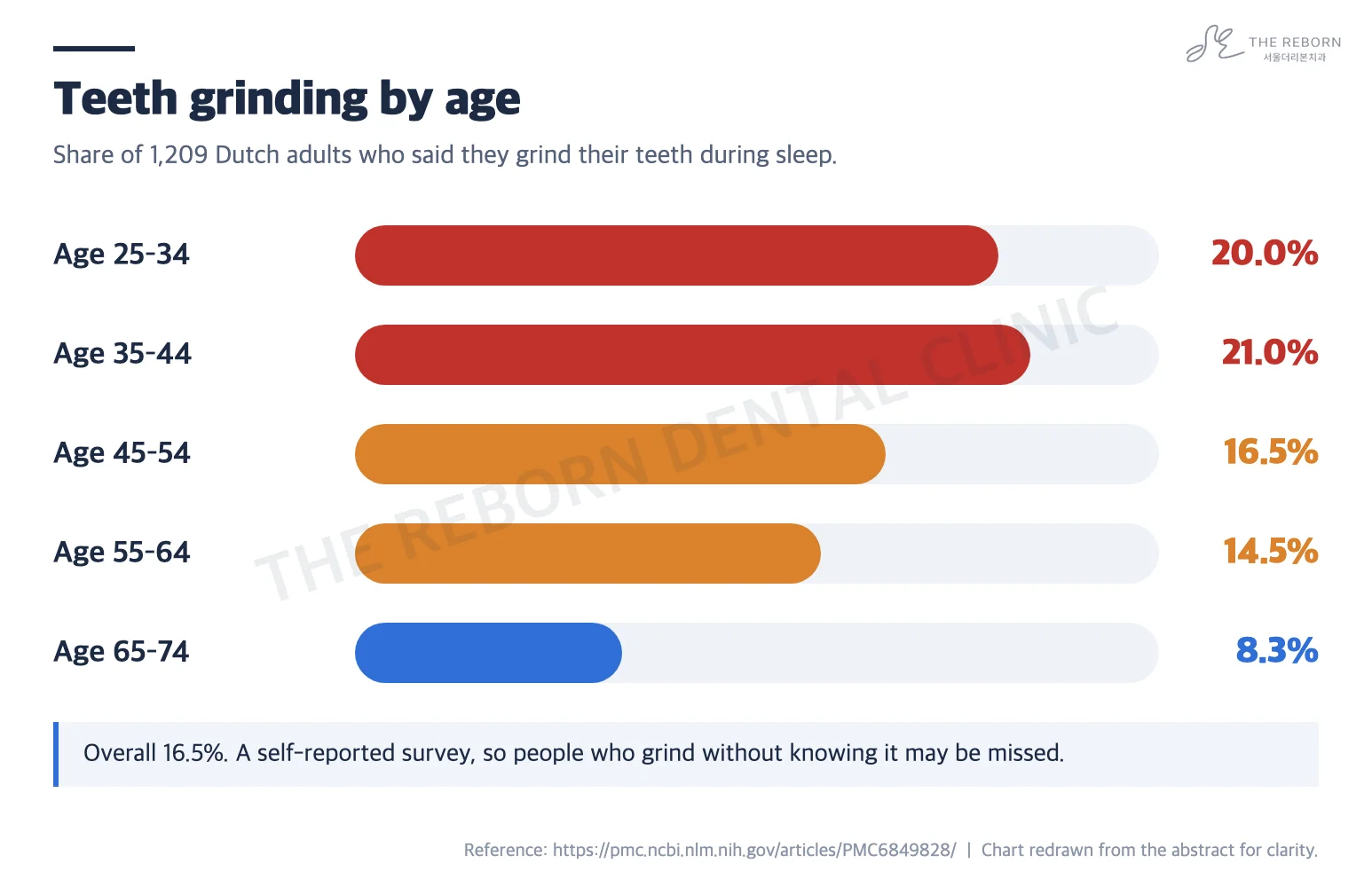
The rate was higher, at about 20%, in people aged 25–44 and lower, at 8.3%, in people aged 65–74. Women reported it more often than men.
However, the survey relied on people's own answers, so it can't fully count people who grind without knowing it.
What causes teeth grinding?
There is no single cause of teeth grinding. It is thought to be linked to several factors acting together.
In a 2026 study in Brazil, 686 adults had an overnight sleep study.
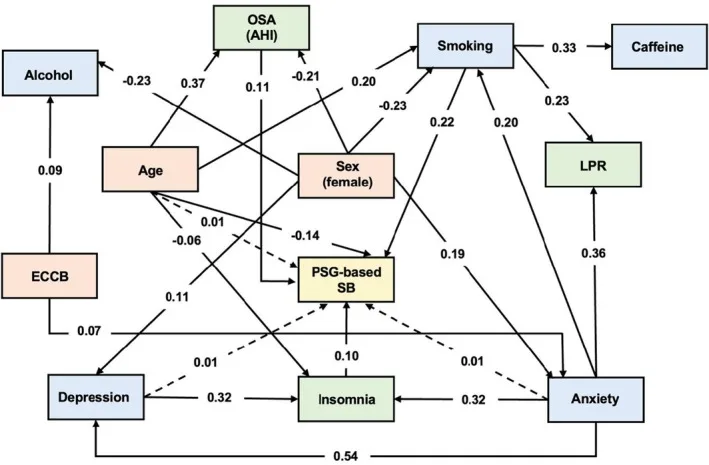
The sleep study found grinding in 30.5% of people. That was higher than the 17.1% who said they grind their teeth.
More severe insomnia, younger age, sleep apnoea and smoking were all linked to grinding. Anxiety and depression appeared to be linked indirectly, through insomnia.
But this study looked at one point in time, so it can't show which factor comes first, and it is hard to point to a single cause.
| Area | Factors reported |
|---|---|
| Sleep | Insomnia, sleep apnoea |
| Lifestyle | Smoking, coffee |
| Mood | Anxiety, depression (through insomnia) |
| Age | More common in younger adults |
Some studies have also looked at lifestyle habits. In a 2022 sleep study, smokers had 5.50 grinding episodes per hour, compared with 3.83 in non-smokers. Drinking alcohol made no difference.
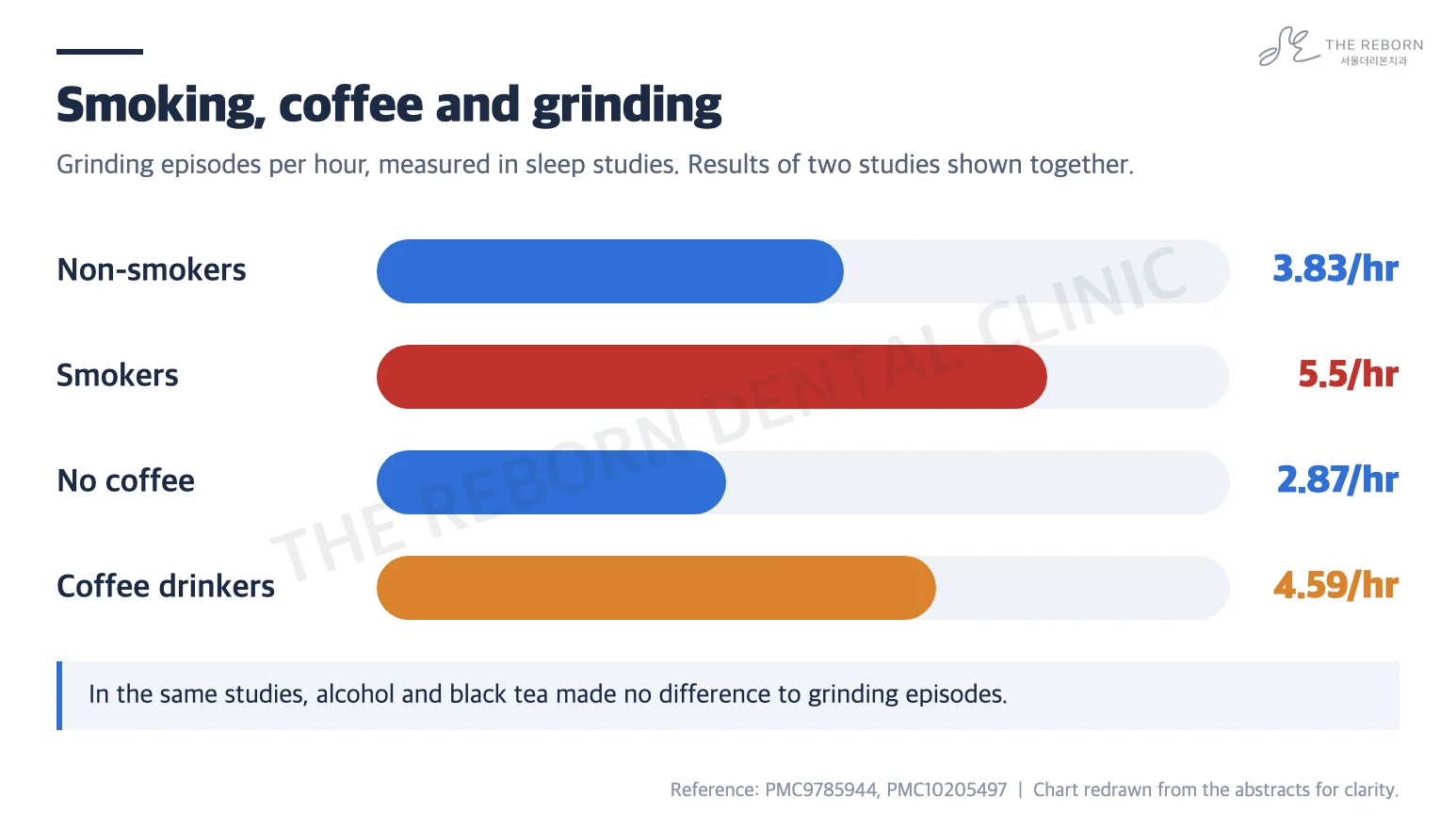
A 2023 study likewise found 4.59 episodes per hour in coffee drinkers, compared with 2.87 in people who didn't drink coffee. Black tea made no difference.
However, each of these studies compared people with a single test, so they can't prove that these habits cause grinding.
What can teeth grinding do to your teeth?
If grinding goes on for a long time, the teeth rub hard against each other and the biting surfaces can wear down.
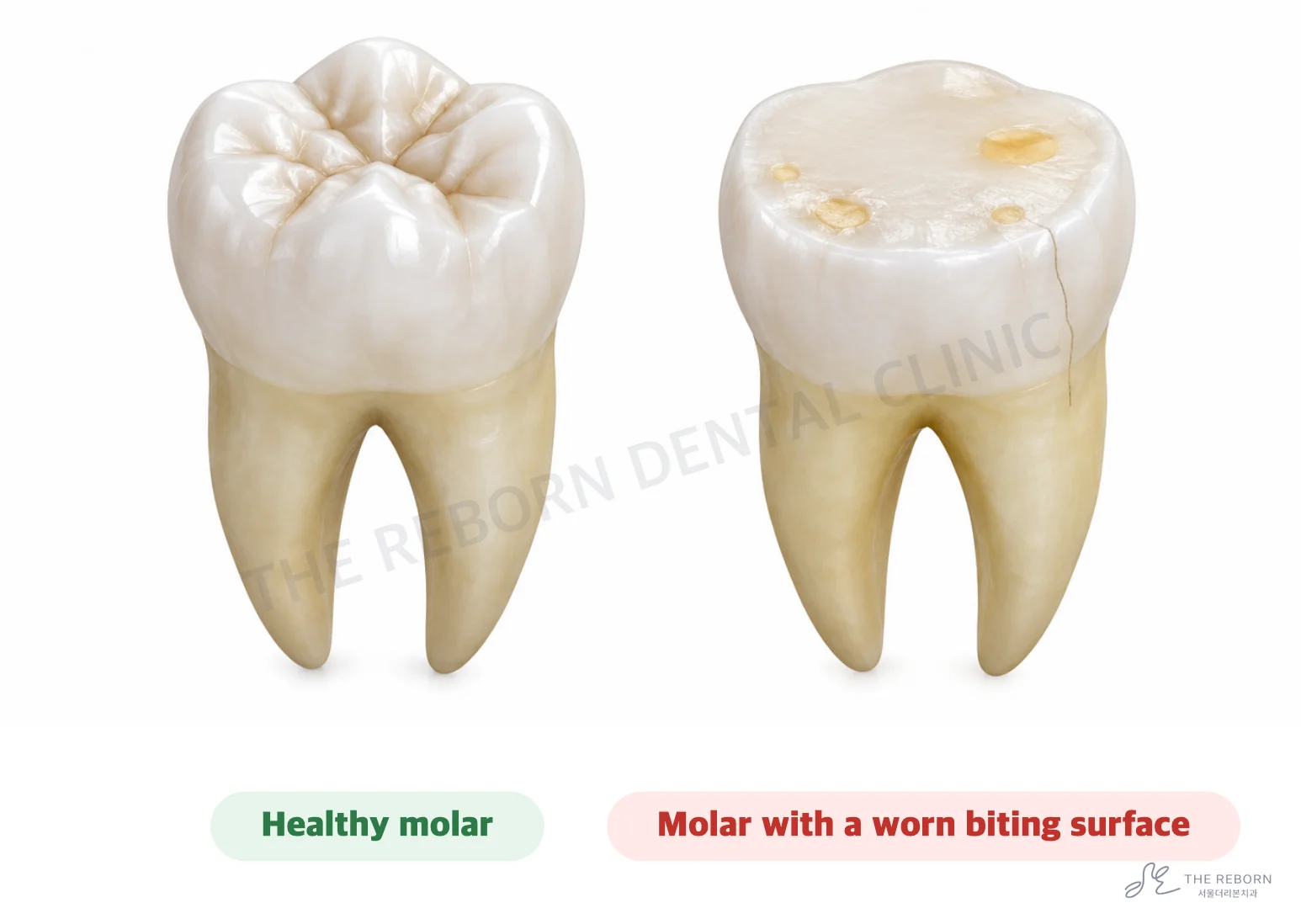
The pointed parts of the back teeth can become flat, and the edges of the front teeth can wear down or chip.
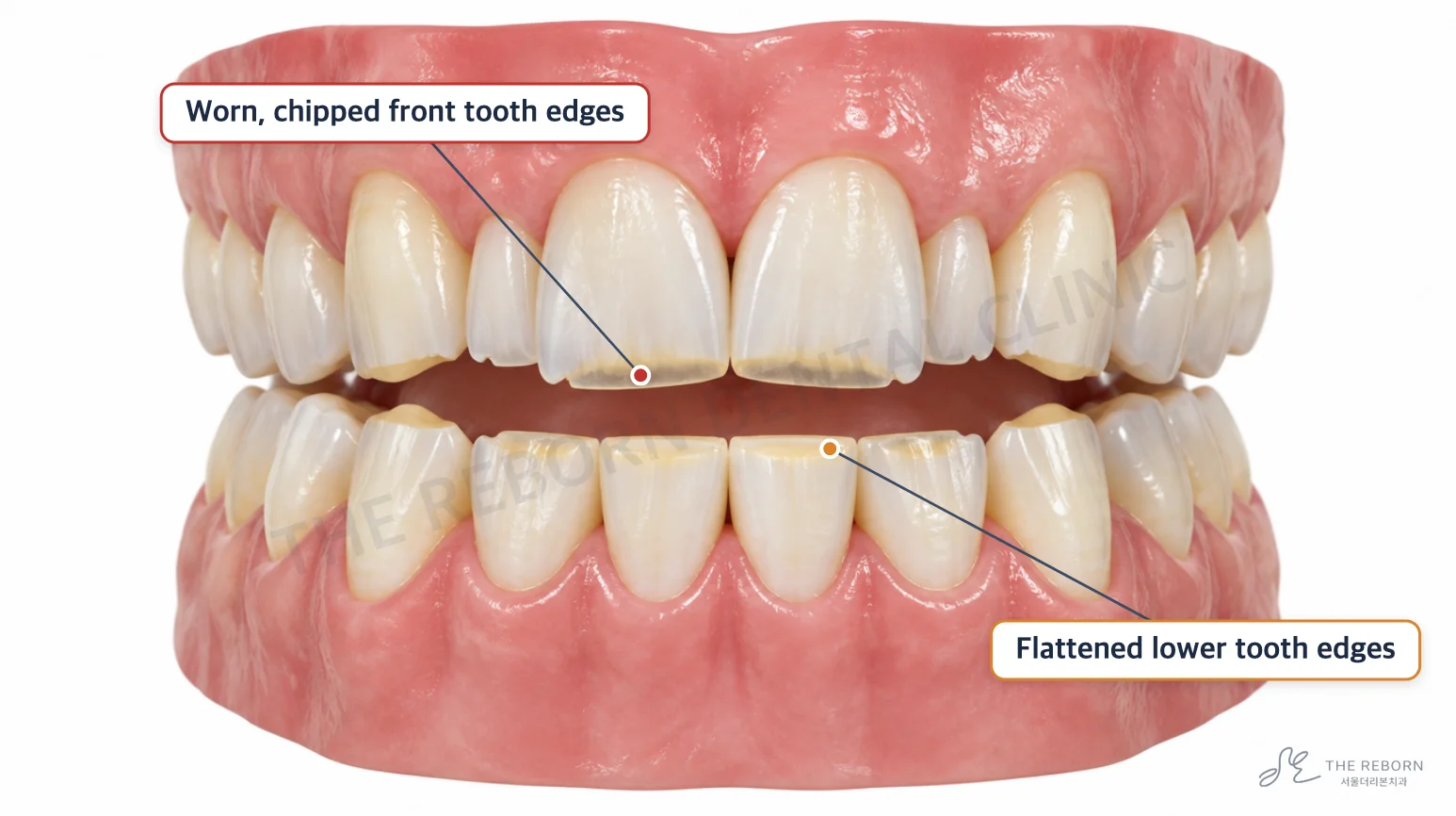
Teeth can crack, crowns and other restorations can break, teeth can become sensitive to cold, and the jaw muscles may ache in the morning.
If you have crowns or implants, strong forces can be passed to them again and again, so it is a good idea to have them checked regularly.
Not all worn teeth are caused by grinding, though. In a 2021 study, 63 people thought to grind their teeth had a sleep study.
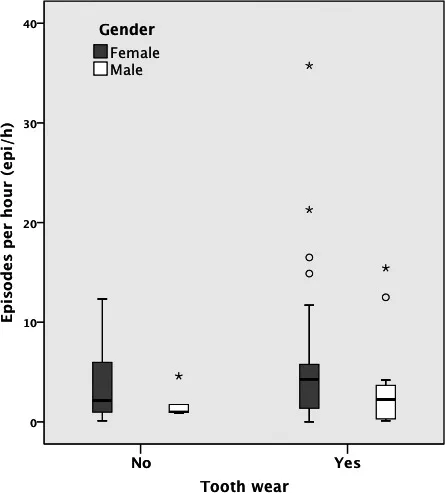
There was no clear difference in grinding episodes per hour between people with and without tooth wear. It was a small study of 63 people.
Tooth wear can also come from other causes, such as acid reflux or acidic food, so several possibilities need to be considered together. Where a tooth is worn, and the shape of the wear, can give clues to the cause.
What signs mean you should get checked?
Grinding is hard to notice yourself, so what other people tell you and how you feel in the morning are useful clues.
In a 2026 study in Egypt, grinding was found in 13.0% of 991 people, and the researchers also asked about morning symptoms.
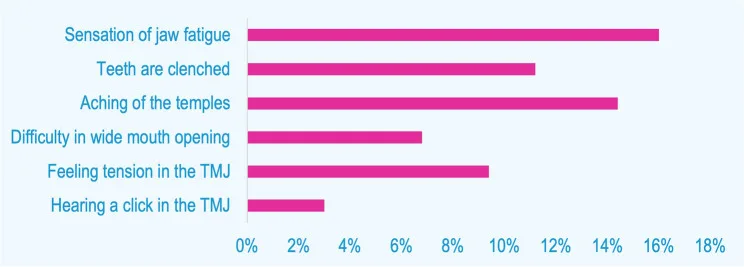
A tired jaw in the morning was the most common answer, at about 16%, followed by aching temples. These were the answers of people visiting dental clinics in one country, so they are only a rough guide.
| Sign | What to look for |
|---|---|
| What family say | The sound of grinding during sleep |
| Morning symptoms | Stiff jaw, aching temples, difficulty opening your mouth |
| Changes in teeth | Worn surfaces, chipped front teeth, cracked teeth |
| Sleep | Heavy snoring, stopping breathing during sleep |
If you also snore heavily or stop breathing in your sleep, it is worth checking for sleep apnoea. If the grinding is linked to a sleep problem, you may also need advice from the relevant medical specialty.
At a dental check-up, we look for worn or cracked teeth, the condition of crowns and other restorations, and the state of the jaw muscles and joints. We also discuss whether a device such as a night guard is needed.
A night guard is a thin appliance worn over the teeth during sleep. It stops the upper and lower teeth from hitting each other directly, with the aim of reducing wear and fractures.
It is not a treatment that stops grinding itself. A 2024 systematic review also found that the effect on muscle activity varied between studies, depending on the type of device.
The types of night guard and how to look after them are covered in a separate article.
The causes of teeth grinding differ from person to person, so it's important to look at the teeth, the jaw and your sleep habits together.
Whether your teeth are worn or cracked can be checked directly at a dental check-up. Telling your dentist about sleep habits such as snoring also helps in looking for the cause.
If your jaw feels stiff or your teeth feel sensitive every morning, it is a good idea to have your teeth checked rather than putting it off.
Email us at rbdent@naver.com and Dr. Park will reply personally. You can also call 031.225.1410 (+82-31-225-1410) during opening hours. We are near Suwon City Hall Station — directions.
- Definition of sleep bruxism — international consensus report (2025)
- Sleep bruxism in Dutch adults — survey study (2019)
- Factors linked to sleep-study-confirmed bruxism — cross-sectional study (2026)
- Smoking, alcohol and sleep bruxism — sleep study (2022)
- Coffee, tea and sleep bruxism — sleep study (2023)
- Tooth wear and sleep bruxism — sleep study (2021)
- Causes of tooth wear — narrative review (2019)
- Bruxism and morning symptoms — survey study (2026)
- Oral appliances and jaw muscle activity — systematic review (2024)
This article is general health information about the causes of sleep bruxism and the changes it can leave on the teeth, not a diagnosis. The causes and effects of teeth grinding can vary with your sleep, lifestyle, any medication you take, and the condition of your teeth and jaw joints. Research results describe what was observed under each study's conditions and do not guarantee any individual outcome.