DIFFICULT CASES
Bone grafting and ridge augmentation
Where jawbone is insufficient, bone is regenerated using autogenous or synthetic graft material before the implant is placed. Depending on bone volume, placement may be simultaneous or staged.
What is implant treatment with bone regeneration (grafting)?
A successful implant needs sufficient jawbone. Where there is not enough, autogenous or synthetic bone is grafted to increase the volume before the implant is placed — this is bone regeneration.
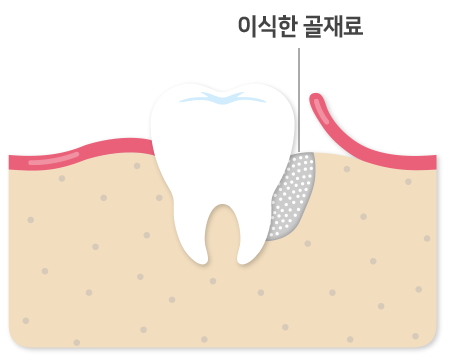
When only a small graft is needed
The graft and the implant can be carried out at the same time.
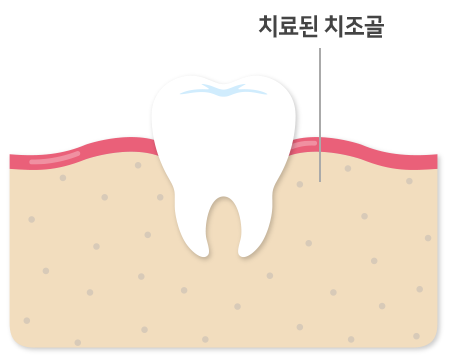
When a large graft is needed
The implant is placed three to six months after grafting.
How we approach bone regeneration
Bone badly destroyed by periodontal disease or a damaged tooth will not regenerate adequately without proper treatment, and that affects how long the implant lasts. We select graft material suited to the patient and place the implant once bone has formed.
Graft material matched to the patient
We use the graft material best suited to each individual.
Carried out together with extraction
Bone regeneration and implant placement are carried out at the same time as extraction, reducing the number of procedures.
Fewer anaesthetics, shorter treatment
The number of anaesthetics and the length of treatment are kept to a minimum.
The bone regeneration procedure
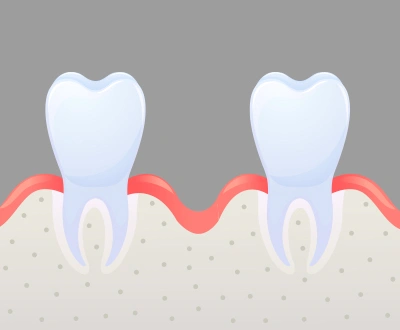 01We assess how much bone is lacking.
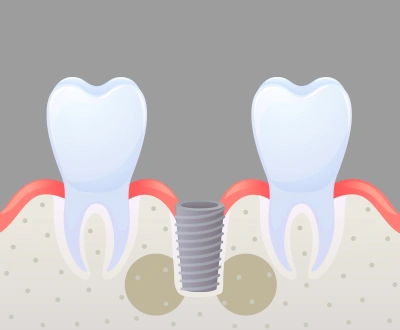 02Grafting is carried out with the most suitable material — with simultaneous implant placement where conditions allow.
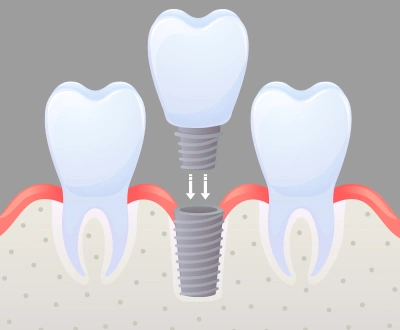 03Once new bone has formed, the implant and restoration are connected to complete the treatment.
Graft materials
Natural bone graft material (Geistlich Bio-Oss®)
Highly biocompatible and osteoconductive, with a stable resorption rate and excellent volume preservation, supporting blood vessel formation and the attachment of new bone.
Autogenous bone / the patient's own tooth
Uses an extracted tooth, a wisdom tooth or bone from the lower jaw. There is no rejection response and bone-forming capacity is excellent.
Allograft / xenograft / synthetic bone
Allograft is donated human bone from a tissue bank; xenograft is sterilised bone of animal origin; synthetic bone is manufactured to resemble human bone.
Why bone regeneration is worthwhile
Restores the tooth's natural function
Once enough bone has formed, it can support the implant, restoring the tooth's natural function.
A better appearance
Building up deficient bone before placement also allows a natural balance between tooth and gum.
Fewer procedures
Carrying out the graft and the placement together shortens treatment and reduces the number of procedures.
Makes implants possible for more patients
It opens up implant treatment to patients for whom bone loss had made it difficult.
Bone regeneration may suit you if
You lost the tooth a long time ago
Your bone is too thin or too shallow
You need an implant placed straight after extraction
You lost the tooth to periodontal disease
Case notes from our director
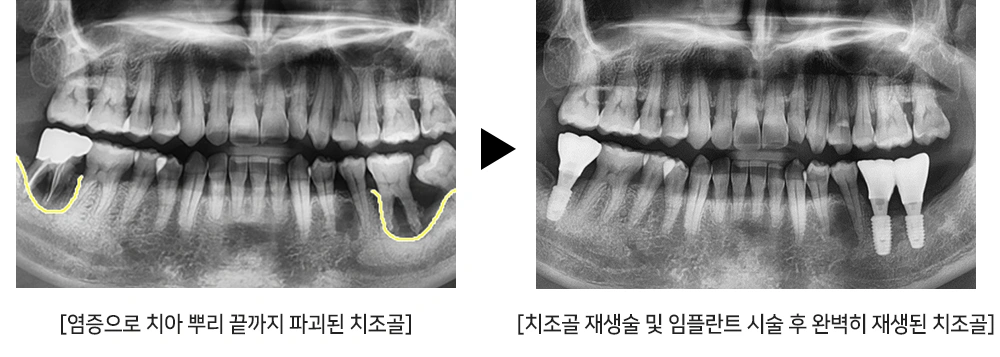
Actual before & after photographs
Bone grafting in an area of lost jawbone, followed by implant placement.
Bone damaged by periodontal disease was regenerated before the implant was placed.
Bone grafting in an area of insufficient ridge, with new bone formation achieved.
These are actual cases treated at our clinic. Results vary from person to person, and side effects may occur.
← Back to complex implant cases