Case notes
A case in which the implant and the neighbouring teeth were removed, and bone regeneration together with new implants restored both gum health and the pleasure of chewing
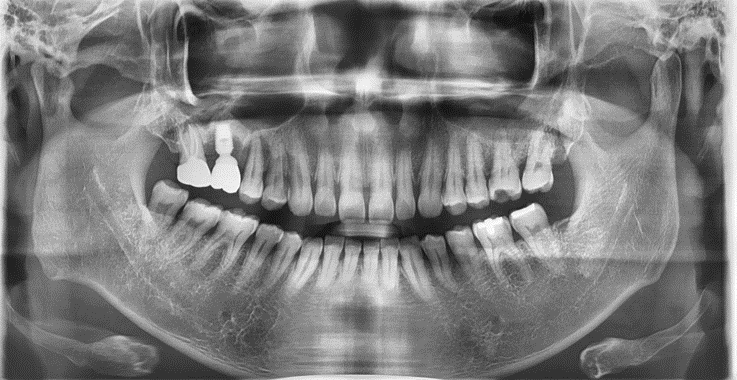
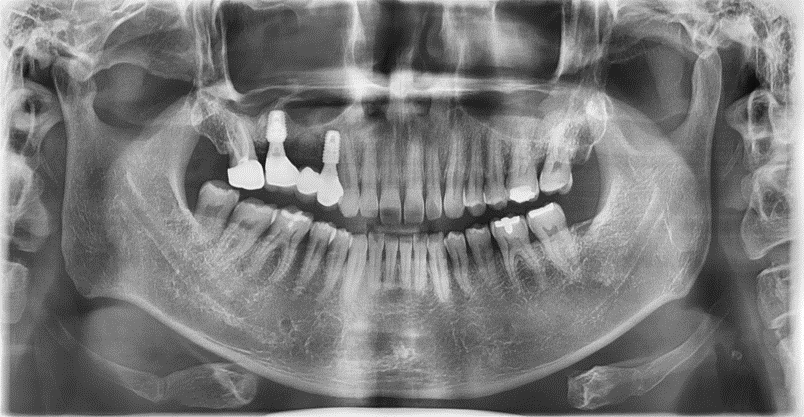
<Initial panoramic X-ray>
An implant is an artificial component made of metal, so it does not decay the way a natural tooth does. But the gum around it can become diseased exactly as it can around a natural tooth. That condition is called peri-implantitis.
Peri-implantitis around an implant has three main causes: 1. poor oral hygiene, 2. partial fracture of the implant components, and 3. excessive biting force. The first is something the patient has to work at; the second and third can be prevented by the clinician through choosing an implant of the right size, placing it in the right position, and adjusting the restoration carefully.
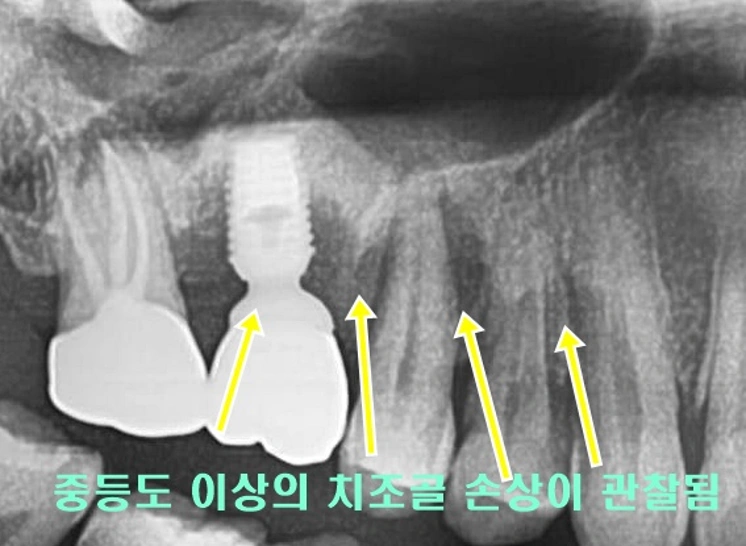
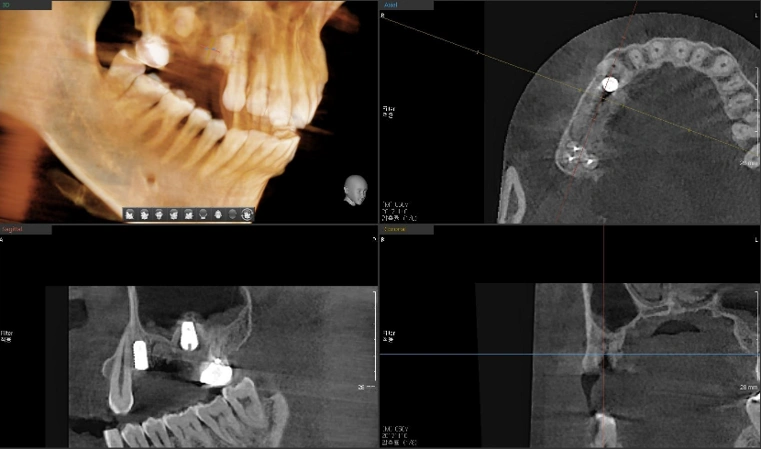
The implant site in question
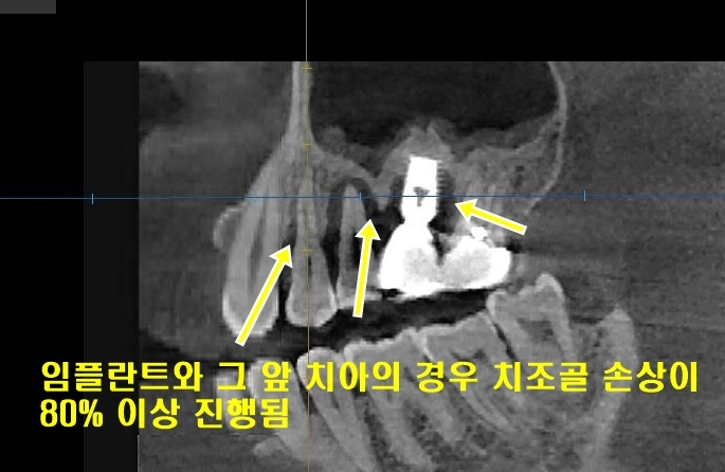
Initial CT scan
Depending on how much bone around the implant has been lost, it may be possible to treat and keep the implant — or it may need to be removed and replaced alongside bone regeneration. In this case not only the implant but the bone around the neighbouring teeth was badly affected, so the implant and those teeth were removed, and bone regeneration together with new implants restored both gum health and the pleasure of chewing.
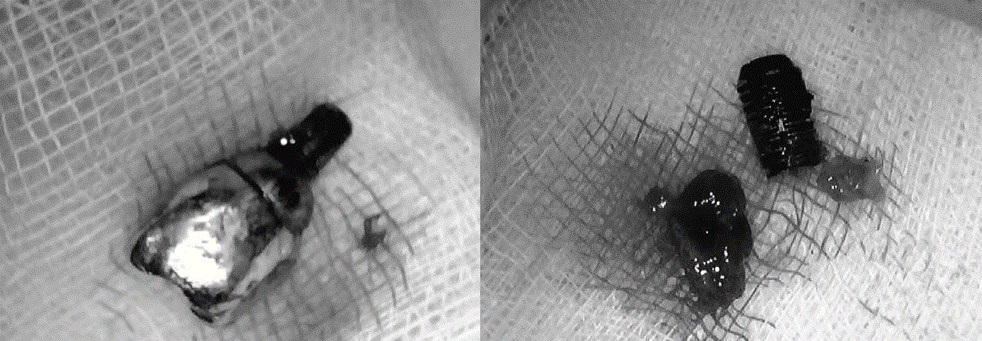
The failed implant after removal
Bone regeneration carried out at the same time as implant placement
Removing an implant is rather more demanding than extracting an ordinary tooth, and where a new implant is to go in straight away it is vital to preserve as much of the remaining bone as possible. Here the new implant and the bone graft were carried out immediately after removal. Everything was completed under a single anaesthetic, so no further anaesthetic was needed later. We then waited about three months for the bone to regenerate and the implant to integrate before completing the restoration.
After the implant restoration was completed
An implant is an excellent treatment that can last a very long time — provided the surgery and the restoration are done properly and it is looked after well afterwards. If either of those is missing, problems follow. Producing the best possible surgical result is my part; the care that follows is the patient's. To avoid revision surgery like this, it is important to look after an implant as carefully as you would a natural tooth.
These are actual cases treated at our clinic. Results vary from person to person, and side effects may occur.