DIFFICULT CASES
Sinus lift
In the upper back jaw, the maxillary sinus often leaves too little bone, so the sinus floor must be lifted and bone grafted in a precise surgical procedure.
What is an implant with a sinus lift?
The maxillary sinus is an air-filled cavity in the upper jaw, one of the paranasal sinuses around the nose. A sinus lift raises the floor of that cavity and grafts bone beneath it, creating enough bone to place an implant.
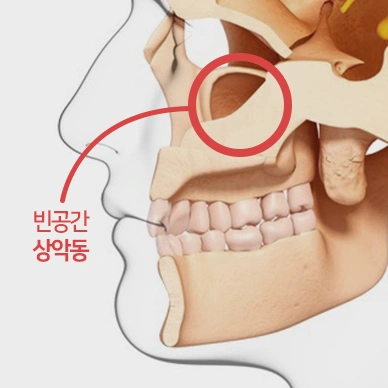
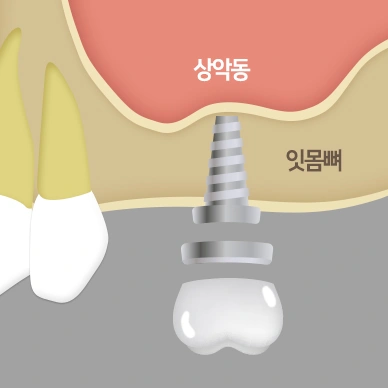
The sinus lift procedure
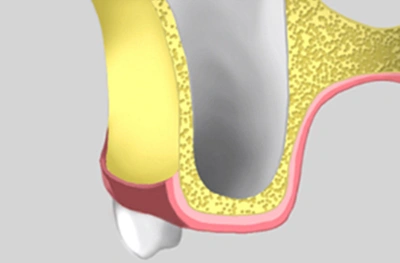 01An access window is made on the cheek side of the upper molar region for the bone graft.
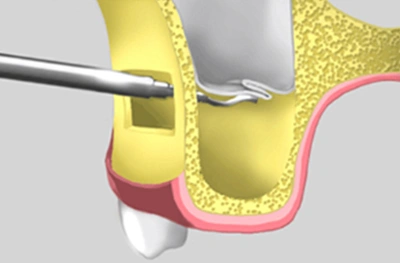 02Through this small window, instruments are used to lift the thin sinus membrane.
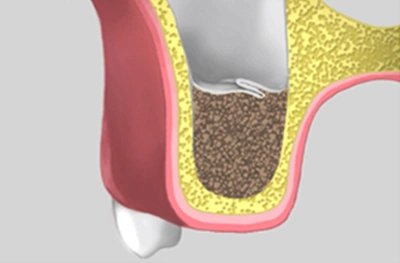 03Graft material suited to the patient is placed into the space created.
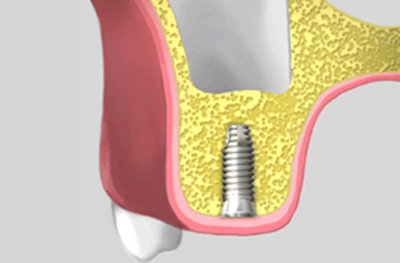 04The implant is placed safely at the appropriate time.
Why a sinus lift is demanding
The membrane lining the sinus is as thin as the skin inside an eggshell. Tearing it and passing through into the sinus during placement can cause perforation and other complications.
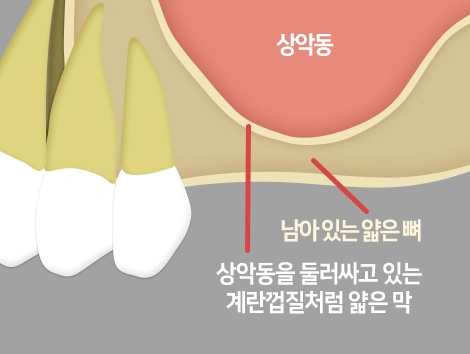
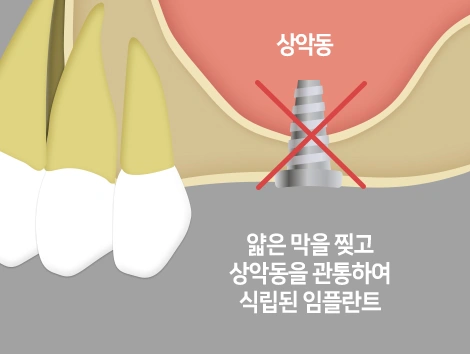
Sinus infection and inflammation
A perforation makes bleeding and inflammation considerably more likely.
Risk of fracturing the jawbone
Where the bone has become thin, there is a risk of fracture during placement.
Early implant failure
With too little bone, the implant may not withstand biting forces and can fail early.
A high level of surgical skill is needed
Managing these risks calls for experienced surgical technique.
Minimally invasive sinus lift
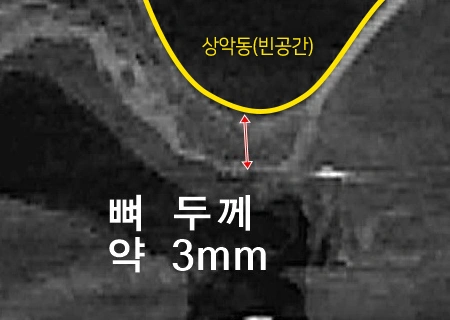 01CT imaging is used to examine the bone at the surgical site in detail.
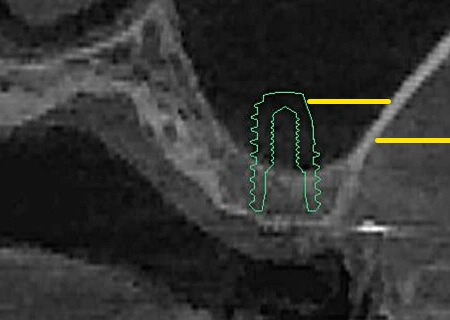 02A simulated procedure based on the CT data confirms whether placement is feasible.
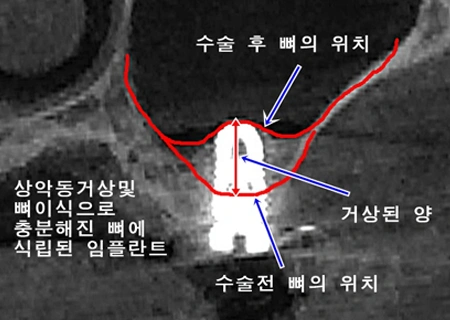 03Through a minimal incision, an appropriate volume of bone is grafted and the implant placed.
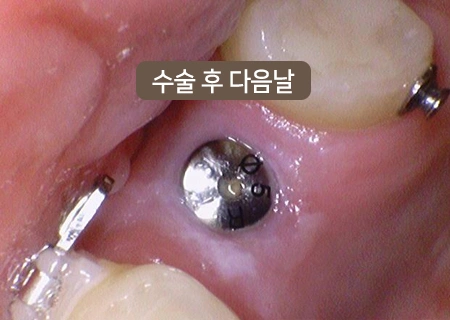 04Working through an opening no larger than the implant itself keeps swelling and suture marks to a minimum.
Who a sinus lift is for
Those who lost an upper molar a long time ago
Those who have worn a denture on the upper molars for years, with considerable bone resorption
Those who lost an upper molar to severe periodontitis
Those whose sinus has dropped low, leaving too little bone
Case notes from our director
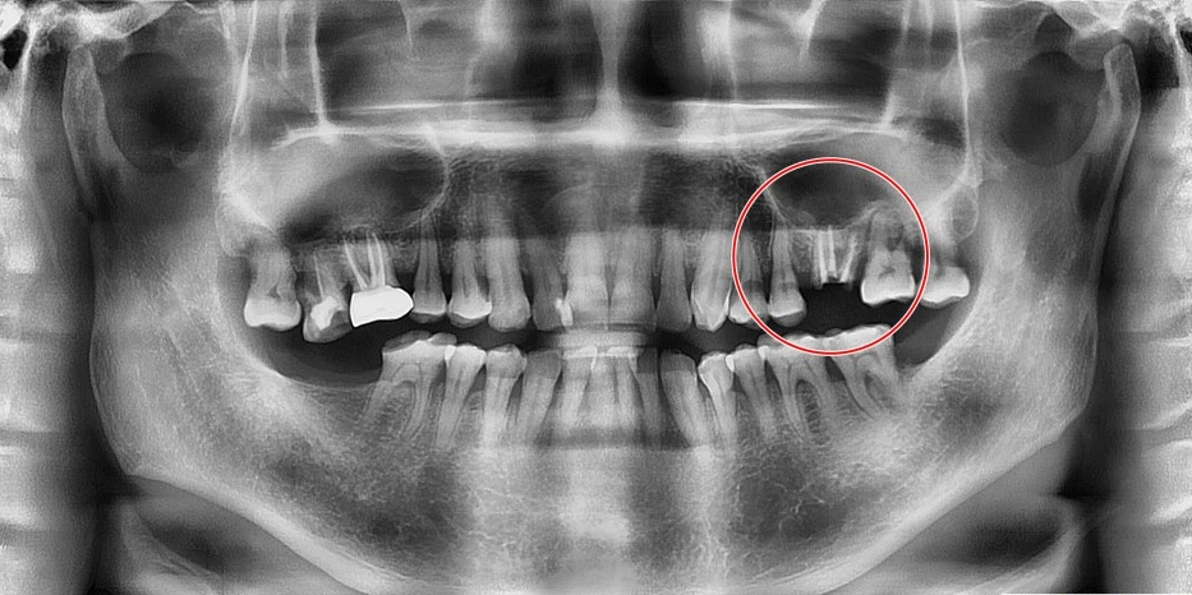
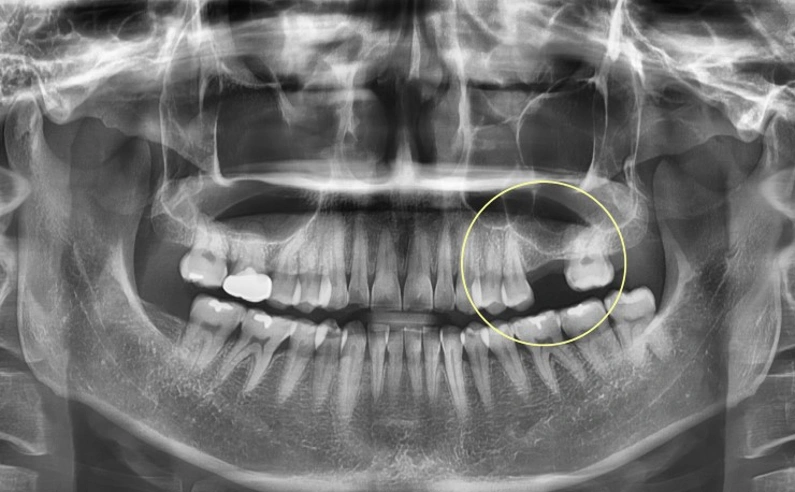
Actual before & after photographs
With insufficient bone beneath the maxillary sinus in the upper molar region, a sinus lift and implant placement were carried out together.
A lateral-approach sinus lift with bone grafting, followed by implant placement.
These are actual cases treated at our clinic. Results vary from person to person, and side effects may occur.
← Back to complex implant cases