DIFFICULT CASES
When revision surgery is needed
When an existing implant has to be removed, careful re-assessment is needed to account for bone loss and the risk of nerve damage. We review the bone with 3D CT imaging before planning treatment.
Why implants sometimes need to be redone
Peri-implantitis
The surgery went well, but poor maintenance allowed bacteria to build up around the implant, causing peri-implantitis.
Insufficient clinical experience
The clinician lacked the experience needed to place the implant for long-term stability.
Failure of osseointegration
Osseointegration — the process by which the implant fuses with the jawbone — did not take place properly, so the implant came loose or fractured.
Why revision surgery is harder than the first placement
Placing a new implant after removing an old one is classified as a complex procedure: the bone is no longer in its original condition, often with extensive damage.
The bone is in poorer condition
Even where nerve damage has caused altered sensation, if the implant has already integrated, bone can be damaged in removing it.
Significant loss of jawbone
The bone was already drilled for the first implant, so it is not in its original state.
Bone damage during removal
Bone damaged by peri-implantitis has to be removed, which can mean losing still more jawbone.
Placing an implant where treatment has already failed once is more demanding than a first placement. It matters that it is carried out at a clinic with precise imaging such as 3D CT to assess the bone, and with clinicians experienced in implant surgery.
Why patients come to us after treatment elsewhere has failed
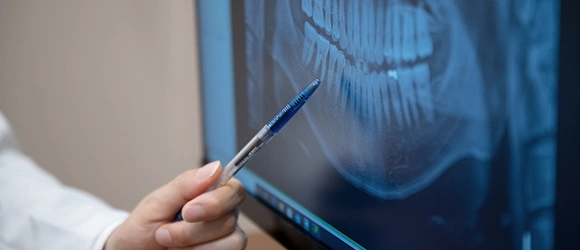
We analyse exactly why it failed
We examine carefully why the previous implant failed and plan treatment so that this can be your last implant.
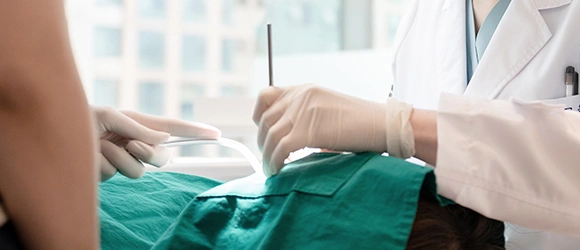
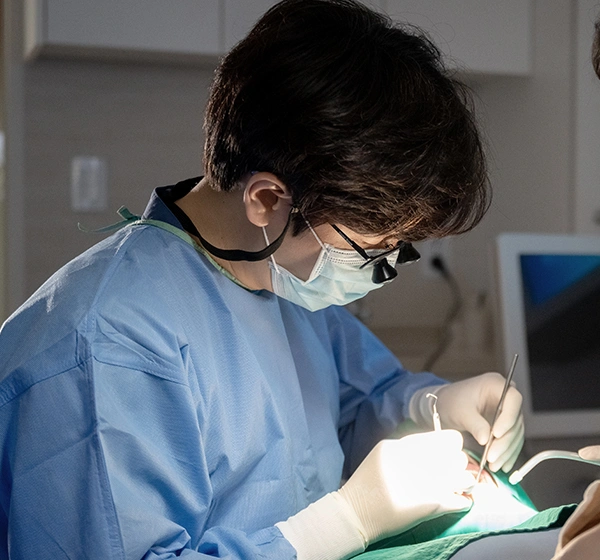
Surgery by a clinician experienced in revisions
Because the technique is demanding, the director — who has extensive experience with revision cases — carries out the treatment personally.
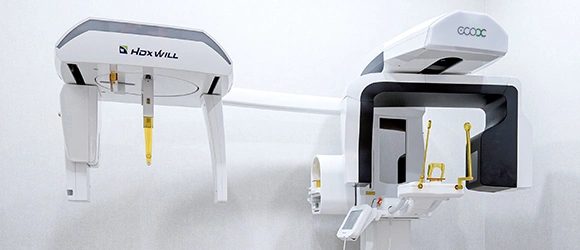
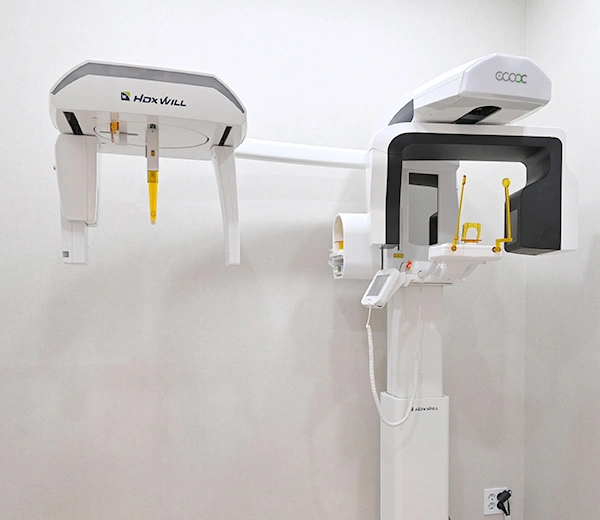
Accurate assessment with precise equipment
We assess the site with 3D CT and other precise imaging to plan treatment with as little margin for error as possible.
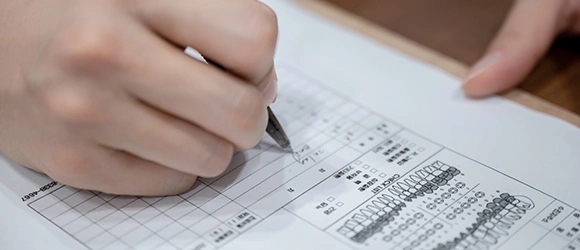
Aftercare is part of the treatment
Since neglected maintenance is a leading cause of revision, we run a regular check-up system to prevent it.
A video of an actual case in which an implant that failed at another clinic was re-assessed and revised.
Case notes from our director
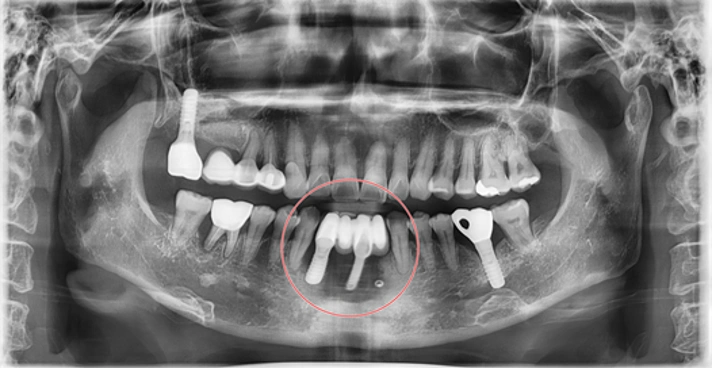
Most of the bone around the implants had been lost, leaving them loose, with the surrounding gum tissue badly damaged as well
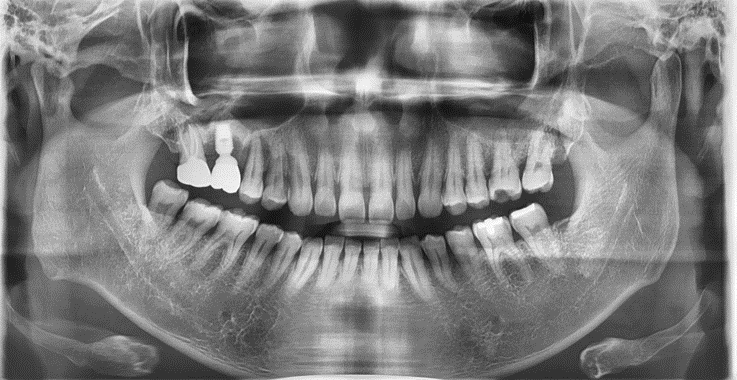
A case in which the implant and the neighbouring teeth were removed, and bone regeneration together with new implants restored both gum health and the pleasure of chewing
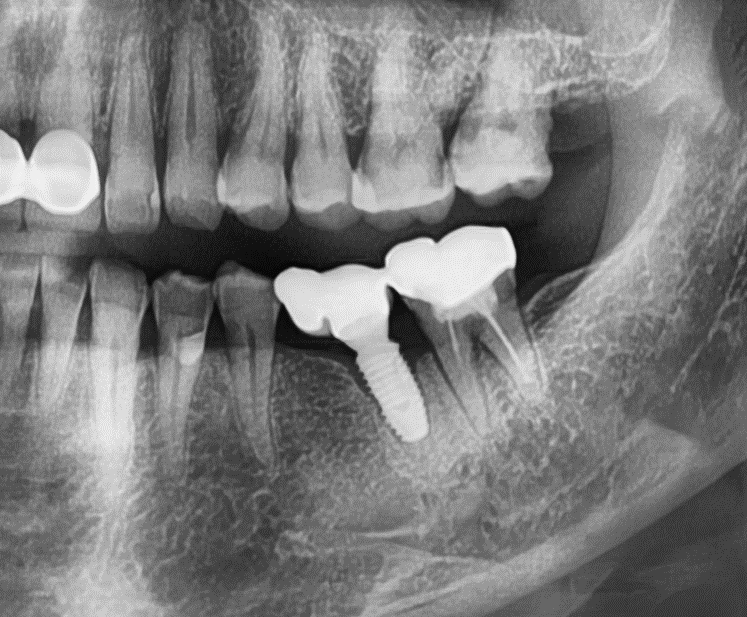
The implant had been placed at the wrong angle, breaking down the bond between implant and bone so that it could no longer function
Actual before & after photographs
The existing implant was removed, the bone re-assessed and a new implant placed.
Inflamed tissue around the failed implant was cleared and revision surgery carried out with bone grafting.
These are actual cases treated at our clinic. Results vary from person to person, and side effects may occur.
← Back to complex implant cases